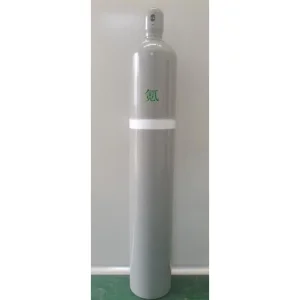


Direct factory allocation from our certified synthesis lines. Fully integrated logistics with batch-specific COA, GHS-compliant SDS, and dangerous goods maritime transit documentation.
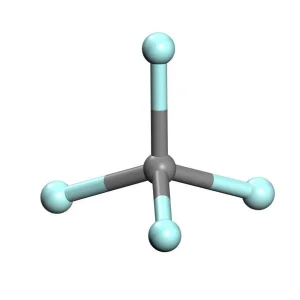
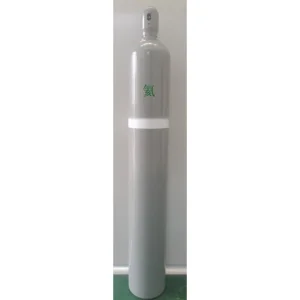
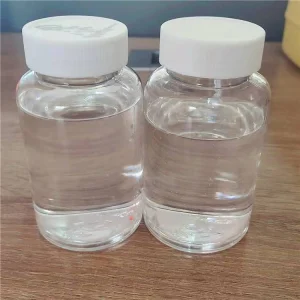


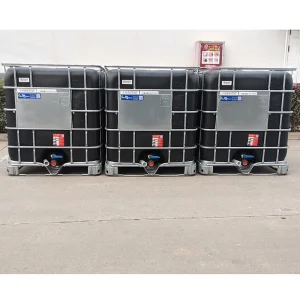
Engineering cetane number enhancement, ignition delay reduction, and thermal decomposition dynamics across next-generation compression-ignition engines.
2-Ethylhexyl Nitrate (CAS Number: 27247-96-7; EINECS: 248-363-6; Formula: C8H17NO3), commonly abbreviated as 2-EHN, is the definitive industry-standard organo-nitrate additive leveraged globally to manipulate the combustion kinetics of middle distillates. Structurally synthesized via the controlled esterification of 2-ethylhexanol with mixed nitric and sulfuric acids, the molecule features a lipophilic branched branched-octyl carbon backbone combined with an energetic nitrate ester functional group (–O–NO2).
In diesel compression-ignition engines, spontaneous ignition depends strictly upon pre-combustion radical accumulation within the compressed fuel-air spray boundary. The O–NO2 bond within 2-EHN displays an exceptionally low dissociation energy (approx. 150–160 kJ/mol) relative to traditional hydrocarbon C–C and C–H bonds (>350 kJ/mol). Consequently, under compression temperatures hovering between 200°C and 300°C, 2-EHN undergoes homolytic fission well ahead of base diesel autoignition:
The resulting alkoxy radicals (RO•) immediately abstract hydrogen atoms from adjacent paraffinic, naphthenic, and aromatic fuel molecules, producing secondary alkyl radicals (R•) that cascade into immediate chain-branching oxidation loops. This sequence significantly shortens the physical-chemical ignition delay period (IDP), enabling controlled, uniform deflagration, minimizing violent peak cylinder pressure spikes (dP/dθ), and reducing parasitic engine vibration and acoustic knock.
Procurement teams evaluating China chemical manufacturers must align analytical acceptance thresholds with ASTM D613, ASTM D4052, and ISO 5165 certifications:
| Analytical Parameter | Test Standard | Export Commercial Grade | High-Purity Refinery Grade |
|---|---|---|---|
| Assay (2-Ethylhexyl Nitrate) | Gas Chromatography (GC-FID) | ≥ 99.20 wt% | ≥ 99.60 wt% |
| Total Nitrogen (Bound Organo-Nitrate) | Kjeldahl / Chemiluminescence | ≥ 7.80 wt% | ≥ 7.95 wt% |
| Residual Free 2-Ethylhexanol | GC-MS Screening | ≤ 0.50 wt% | ≤ 0.20 wt% |
| Water Content (Karl Fischer) | ASTM E1064 | ≤ 500 mg/kg (ppm) | ≤ 200 mg/kg (ppm) |
| Density @ 20°C | ASTM D4052 (Oscillating U-tube) | 0.960 – 0.970 g/cm³ | 0.962 – 0.968 g/cm³ |
| Flash Point (Closed Cup) | ASTM D93 (Pensky-Martens) | ≥ 75.0 °C | ≥ 76.5 °C |
| Inorganic Acidity (as HNO3) | Titrimetric | ≤ 0.003 wt% | ≤ 0.001 wt% |
| Color (Pt-Co / APHA Scale) | ASTM D1209 | ≤ 30 | ≤ 15 (Water-white) |
Evaluating refinery crude oil slate degradation, stringent Tier 4/Euro VI emissions policies, and continuous Cetane Improver demand curves.
Global sweet and light crude reserves are steadily depleting, compelling multi-national refineries to crack heavier, more sour vacuum gas oils and hydrocracker bottoms. Secondary hydrocracked and catalytic cycle oils (LCO) are saturated with refractory condensed multi-ring aromatics exhibiting naturally abysmal Cetane Numbers (often below 25–35). Upgrading these streams purely through high-pressure deep hydrotreating requires immense capital expenditure (CAPEX) in hydrogen units. Dosing with 2-EHN provides an elastic, direct operating expense (OPEX) mechanism to elevate finished diesel above the mandatory 51 CN threshold.
Stringent tailpipe mitigation protocols strictly penalize cold-start unburnt hydrocarbon (HC), carbon monoxide (CO), and nitrogen oxide (NOx) formation. Elevating the Cetane Number through micro-dosing of 300 to 1,500 ppm 2-EHN ensures consistent combustion phasing across transient engine operating points. By mitigating early-cycle kinetic over-enrichment, particulate matter (PM) and soot precursors are suppressed at the source, preventing rapid Diesel Particulate Filter (DPF) differential pressure saturation.
With the rapid adoption of renewable fuel mandates, refineries and blenders increasingly handle high-blend Hydrotreated Vegetable Oil (HVO) and Fatty Acid Methyl Esters (FAME). Variations in feedstock unsaturation create fluctuating autoignition delays. Incorporating 2-EHN acts as a precision stabilizing buffering agent, standardizing ignition timing across complex transesterified biological matrices and heavy marine diesel oil (MDO) blends alike.
Targeted industrial integration regimes designed by chemical chemical engineering practitioners to solve real-world refining and blending bottlenecks.
Refinery finished product blenders utilize in-line skid injection systems directly at the finished rundown line upstream of marine or pipeline manifolds. Dosing rates are modulated in real-time by linking automated optical near-infrared (NIR) octane/cetane feedback analyzers directly to positive displacement dosing skids. Yanxatech supplies low-viscosity, water-scavenged batches that prevent crystallization or droplet coalescence within automated proportioning manifolds across ambient operating temperatures ranging from -25°C to +50°C.
Downstream terminal operators combine Cetane Improvers with complex multifunctional additive packages containing lubricity improvers (fatty acids or synthetic esters), cold flow improvers (comb polymers like EVA), corrosion inhibitors, and demulsifiers. Impure 2-EHN exhibiting free residual acid or unbound 2-ethylhexanol triggers disastrous clouding, phase-separation, or precipitation of amine-carboxylate salts. Our ultra-purified, triple-washed distillation standard guarantees complete physicochemical neutrality in multi-component blends.
Because 2-EHN is an energetic chemical containing an organic oxidizer moiety, bulk storage terminals must guard against autocatalytic thermal degradation triggered by contamination with rust, transition metal ions, or concentrated acids. Yanxatech provides custom passivation protocols, dedicated isotank surface linings, and technical integration blueprints that prevent runaway exotherms, maintaining full chemical activity throughout multi-month strategic reserve storage.
Navigating UN hazardous cargo classifications, dangerous goods sea container stowage, REACH registrations, and factory audit transparency.
2-Ethylhexyl Nitrate is strictly codified under international maritime guidelines as UN 3122, Toxic liquid, oxidizing, n.o.s. (Class 6.1 with subsidiary Class 5.1 risk, Packing Group II), or UN 1993/UN 3082 depending on exact isomer formulations and localized regional exemptions. Yanxatech guarantees full packaging compliance using UN-approved heavy-gauge epoxy-lined steel drums (1A1/Y1.8) and insulated, heating/cooling-monitored ISO Tanks.
Our deep operational expertise prevents expensive maritime vessel rejections. We coordinate strictly with major carriers for Category D/E on-deck segregation away from radiant heat sources, organic peroxides (Class 5.2), and strong mineral acids (Class 8). Every booking is audited against current International Maritime Dangerous Goods (IMDG) amendment updates, guaranteeing smooth customs transits.
Yanxatech operates with comprehensive compliance integrity, maintaining full EU REACH registration dossiers, UK REACH coverage, and US EPA TSCA active inventory listing for commercial distribution. Every shipment is accompanied by an extended Safety Data Sheet (eSDS) covering localized exposure scenarios, DNEL/PNEC ecological benchmarks, and industrial hygiene protocols.
Operating under rigorous ISO 9001, ISO 14001, and ISO 45001 management systems, each production lot undergoes multi-stage GC/MS analysis. Dual retention samples are hermetically sealed and maintained in climate-controlled archives for a minimum of 24 months, providing an immutable audit trail for downstream defense and aviation logistics partners.
YANXA's multi-year research and engineering milestones modernizing organo-nitrate synthesis, micro-reactor safety, and renewable carbon integration.
Transitioning our core plants from conventional bulk stirred-tank reactors (CSTR) to cutting-edge microchannel continuous flow chemical reactors. This micro-structured architecture provides surface-area-to-volume ratios exceeding 10,000 m²/m³, guaranteeing instant heat dissipation during the intensely exothermic nitration phase. Results in zero runaway risk, near-zero generation of dangerous multi-nitrated byproducts, and superior yield stability.
Commissioning vacuum distillation and electrochemical stripping recovery loops for spent sulfuric and nitric acid effluents. By stripping trace organics and restoring acid concentration back to 98% in-house, we eliminate traditional neutralization lime sludges, cutting industrial water consumption by 65% and delivering a significantly lower cradle-to-gate carbon footprint across all export tonnage.
Synthesizing 100% bio-derived 2-Ethylhexyl Nitrate via bio-2-ethylhexanol generated from agricultural residue syngas and biomass fermentation. Developing bio-identical cetane boosters allows multinational refiners to supply premium renewable diesel fuels without introducing fossil carbon back into the combustion calculation, meeting net-zero lifecycle mandates.
Direct technical clarification for refinery engineers, global sourcing managers, and dangerous goods logistics directors.
Complementary industrial portfolios manufactured to rigorous global specifications with certified supply chain integrity.