

China Liquid Styrene Butadiene Rubber (LSBR)
Explore Material


Batch-verified precursors, functional co-polymers, and advanced inert atmospheres engineered for safety-critical integration.
China Liquid Styrene Butadiene Rubber (LSBR)
Explore Material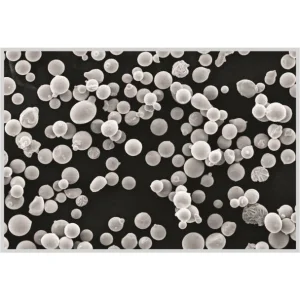
Atomized Spheroid Al-Based Alloy Powder
Explore Material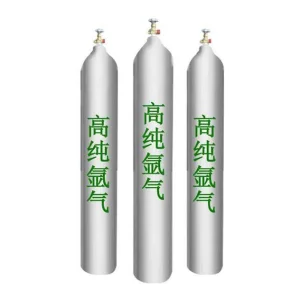
High Purity Argon (Ar) Certified Grade
Explore Material
Electronic Helium for Semi & Lab Applications
Explore Material
High Purity Xenon (Xe: 5N, 5.5N, 6N)
Explore Material
Strontium Acetate Hemihydrate Specialist Salt
Explore Material
Liquid Rubber HTBS Random Copolymer
Explore Material
Wholesale High-Spec Alloy Powder Solutions
Explore MaterialA comprehensive evaluation of CAS [13465-08-2], next-generation green monopropellants, and modern electro-synthesis systems.
Hydroxyl Ammonium Nitrate ([NH3OH]NO3, often abbreviated as HAN) represents one of the most critical energetic ionic liquids and chemical intermediates in modern industrial chemistry. Operating at the intersection of aerospace propulsion, specialized nuclear fuel reprocessing, and advanced organic synthesis, HAN has gained universal momentum as the cornerstone of “Green Monopropellant” formulations. For decades, hydrazine (N2H4) has served as the baseline propellant for satellite attitude control and orbital maneuvering; however, hydrazine’s acute inhalation toxicity, volatile vapor pressure, and stringent handling protocols incur massive operational costs. Hydroxylammonium nitrate formulations—such as the AF-M315E (ASCENT) benchmark and comparable SHP blends—exhibit approximately 50% higher volumetric density-impulse (Isp × ρ) than hydrazine, transforming orbital logistics and payload configurations.
As the international space ecosystem transitions toward commercial mega-constellations, in-space servicing, and green satellite architectures, procurement officers and propulsion engineers face severe shortages in obtaining stable, ultra-low metal impurity Hydroxyl Ammonium Nitrate aqueous solutions. Producing HAN at high purity requires extraordinary process engineering. Because the hydroxylammonium cation contains nitrogen in an intermediate (-1) oxidation state while the nitrate anion features nitrogen at (+5), HAN contains both an internal reducing agent and an oxidizing agent within the identical ionic pair. Minimizing autocatalytic thermal decomposition demands precise control over transition metal contaminants (notably Iron, Copper, and Nickel), chloride ions, and ambient pH levels.
Eliminates toxic volatile outgassing. HAN-based aqueous propellants possess higher boiling points, minimal vapor risk in cleanroom fueling, and significantly reduced ground support footprint compared to hypergolic hydrazines.
Moving beyond traditional nitric acid and hydroxylamine neutralization, Chinese manufacturing lines deploy multi-stage cathode electro-reduction of nitric acid, stabilizing yield and achieving ultra-tight batch uniformity.
Stabilized liquid formulations shipped under Class 8 (Corrosive) / Class 5.1 (Oxidizer) UN-certified dangerous goods standards, protected via ultra-clean fluoropolymer or specialized passivated 316L containers.
How modernized upstream integration, automated distributed control systems (DCS), and raw material clusters minimize supply volatility.
Historically, Hydroxyl Ammonium Nitrate was manufactured in modest laboratory quantities or batch pilots across Western laboratories, resulting in prohibitive procurement prices often exceeding several thousand dollars per kilogram. China’s chemicals and energetic materials sector has transformed this bottleneck through centralized raw-material clustering and high-efficiency synthesis infrastructure. By locating production within state-of-the-art chemical development zones, Chinese HAN manufacturers capitalize on unbroken upstream value chains: high-purity nitric acid synthesis, liquid ammonia supply, ultra-pure industrial gases (Argon, Helium, Xenon), and dedicated hazardous waste neutralization facilities.
Our operational ecosystem applies automated continuous electro-reduction and microchannel reactor technologies. Unlike oversized batch vessels that suffer from localized thermal hotspots—which can induce premature degradation of the hydroxylammonium radical—microchannel systems ensure isothermal conditions, microsecond mixing, and active heat dissipation. This process automation achieves three critical buyer advantages: unprecedented batch-to-batch consistency, dramatically compressed production lead times, and industrial scale capability that lowers the barrier to entry for commercial smallsat constellations and industrial civil engineering blasters.
| Analytical Parameter | Propellant-Grade HAN Solution | Industrial Synthesis Grade | Analytical Methodology |
|---|---|---|---|
| HAN Concentration (w/w %) | 78.0% – 82.5% (Customizable) | ≥ 70.0% / ≥ 98% (Solid Crystal) | Potentiometric Titration / Redox |
| Free Nitric Acid (HNO3) | ≤ 0.05% | ≤ 0.20% | Acid-Base Back Titration |
| Transition Metals (Fe, Cu, Ni, Cr) | < 0.5 ppm Total | < 5.0 ppm Total | ICP-MS (Inductively Coupled Plasma) |
| Chloride (Cl-) Anion Content | < 5 ppm | < 20 ppm | Ion Chromatography |
| Sulfate (SO4 2-) Impurities | < 10 ppm | < 50 ppm | Turbidimetric / Ion Chromatography |
| Visual Appearance | Clear, colorless, particulate-free | Clear to slight pale tint | Visual Inspection Under Lightbox |
Direct pipeline connectivity to high-purity nitric acid and liquid ammonia minimizes transportation handling risks and guarantees raw material continuity.
Strict temperature feedback loops and real-time ORP monitoring prevent runaway reactions during electrolytic hydroxylamine formation and subsequent salification.
Advanced sub-micron filter cartridges and specialized cation exchange beds extract catalytic iron species down to parts-per-billion thresholds.
UN-approved passivated drums, fluorinated HDPE containers, and pressure-vented caps adapted specifically to avoid pressure build-up from micro-offgassing.
Where Hydroxyl Ammonium Nitrate drives performance across propulsion, metallurgy, and civil engineering.
The industrial consumption profile of Hydroxyl Ammonium Nitrate expands well past conventional satellite thrusters. In the nuclear fuel cycle (PUREX/UREX processes), HAN serves as a premier reductive stripping agent. When separating plutonium from uranium in tributyl phosphate solvent extractions, HAN selectively reduces tetravalent Plutonium [Pu(IV)] to trivalent Plutonium [Pu(III)], which smoothly partitions into the aqueous phase without introducing non-volatile metal salts (such as ferrous sulfamate). Consequently, the downstream calcination of nuclear waste yields substantially smaller solid volumes, drastically reducing geological containment expenses.
In addition, the civil blasting and micro-thruster manufacturing sectors are actively synthesizing HAN-water-fuel ternary blends. These non-cryogenic liquid formulations demonstrate high stability under mechanical shock yet deliver rapid deflagration when introduced to specialized porous platinum/iridium catalytic beds. From an international procurement standpoint, sourcing teams prioritize four critical pillars: verified lot-to-lot homogeneity, comprehensive Dangerous Goods packaging that conforms to IMDG/IATA mandates, full transparency regarding storage stabilizers, and reliable batch COAs backed by accredited third-party lab verifications.
Primary oxidizer constituent in monopropellants (such as ASCENT and SHP). Offers superior density impulse, non-toxic fueling conditions, and compatibility with compact CubeSat geometries.
Reductive partitioner of choice in modernized PUREX facilities. Thermally decomposes into gaseous N2, N2O, and H2O, leaving zero metallic residue in vitrified waste streams.
Acts as a mild, controllable reducing agent and precursor for oximes, hydroxamic acids, and specialized energetic plasticizers across specialty pharmaceuticals and polymer synthesis.
Detailed answers addressing safety, chemical stability, transportation compliance, and custom batch options.
Hydroxyl Ammonium Nitrate is most commonly synthesized and supplied as a stabilized high-concentration aqueous solution (ranging between 70% and 82% w/w) because liquid formulations are inherently more stable during transit and easier to handle in propellant blending. For research laboratories and specialized chemical synthesis, pure crystalline HAN (≥99.0% dry basis) can be prepared under rigorous climate-controlled vacuum crystallization.
Transition metals, specifically ferric iron (Fe3+), cuprous/cupric ions (Cu+/Cu2+), and nickel (Ni2+), catalyze the autocatalytic decomposition of the hydroxylammonium ion into nitrous oxide, nitrogen, and nitric acid. Maintaining total heavy metal content strictly below 0.5 ppm prevents internal pressure build-up in storage vessels and guarantees the thermal shelf-life demanded by long-duration space missions.
Depending on aqueous concentration and custom additive loading, HAN solutions are classified under UN Model Regulations as Class 8 (Corrosive substances) with subsidiary Class 5.1 (Oxidizing substances) or Class 1.4C (Energetic liquids under high confinement). Certified manufacturers provide compliant UN-stamped passivated drums, GHS-compliant Safety Data Sheets (SDS), and sea/air documentation (IMDG / ICAO).
Yes. Leading factories support customized blending involving Triethanolammonium Nitrate (TEAN), water, and proprietary burn-rate modifiers or stabilizers to mirror specific density, specific impulse, and freezing-point requirements. Every custom formulation is validated via rigorous density, viscosity, and decomposition onset testing.
High-specification materials verified for electronics, specialized coatings, and extreme industrial environments.
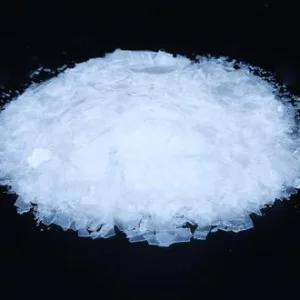
China High-Grade Polyethylene Glycol (PEG)
Explore Material
Random Carboxy Nitrile Butadiene (L-XNBR)
Explore Material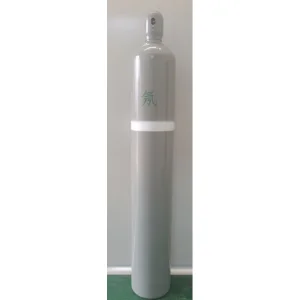
Pure Neon & High Purity Neon (Ne: 5N, 6N)
Explore Material
Epoxy Modified Epoxidized Polybutadiene
Explore Material
Wholesale Flake Zn-Al Alloy Anti-Corrosive Powder
Explore Material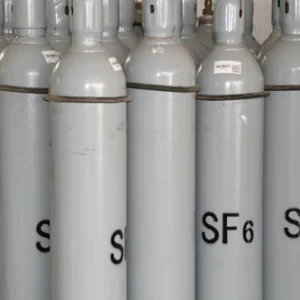
China Dielectric Sulfur Hexafluoride (SF6)
Explore Material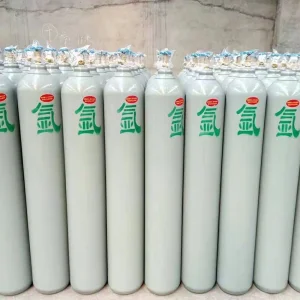
Electronic Industry Argon Gas (Ar) High Purity
Explore Material
High Molecular Weight PET Specialty Polyether
Explore Material