


Engineered to satisfy mission-critical industrial criteria across additive manufacturing, dielectric insulation, polymer compounding, and precision dipping.




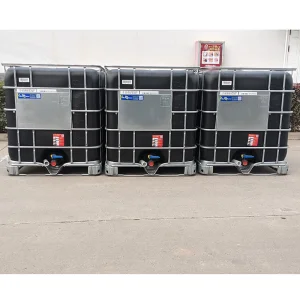



Understanding the rheological, mechanical, and interfacial behavior of high-ammonia (HA) and low-ammonia (LA) cis-1,4-polyisoprene dispersions.
Liquid natural rubber latex exists as a polydisperse colloidal suspension where micro-sized polyisoprene globules are encapsulated by an amphiphilic protective bilayer of proteins and phospholipids. Our processing controls electrokinetic surface charge, maintaining Zeta potential values below -45 mV to completely inhibit premature gelation and spontaneous micro-flocculation during continuous pumping or long oceanic transit.
MST serves as the ultimate diagnostic parameter for latex processability in dipping plants and extrusion lines. We modulate the natural enzymatic decomposition of non-rubber elements through high-speed disc-stack de-sludging and stabilized secondary ammoniation. This achieves standard MST thresholds exceeding 1000–1200 seconds, guaranteeing flawless compounding shear resistance under aggressive industrial blending.
The accumulation of volatile fatty acids—chiefly formic, acetic, and propionic acids generated via bacterial metabolism—compromises dry rubber content and increases coagulant sensitivity. Our production sites maintain stringent anaerobic storage conditions alongside biocidal stabilization systems, yielding VFA indices consistently below 0.040, dramatically surpassing standard ISO 2004 benchmarks.
| Analytical Parameter | High Ammonia (HA) Grade | Low Ammonia (LA-TMTD/ZnO) Grade | Standard Test Method | Operational Impact |
|---|---|---|---|---|
| Dry Rubber Content (DRC) | ≥ 60.0% w/w | ≥ 60.0% w/w | ISO 126 / ASTM D1076 | Yield density per m³ & film formation rate |
| Total Solids Content (TSC) | ≥ 61.5% w/w | ≥ 61.5% w/w | ISO 124 | Non-volatile residue calibration |
| Alkalinity (as NH₃ on latex) | 0.60% – 0.80% | ≤ 0.29% | ISO 125 | Odor abatement & coagulant dipping velocity |
| Mechanical Stability Time (MST) | ≥ 1,000 Seconds | ≥ 1,200 Seconds | ISO 35 | Shear threshold in automated agitators |
| VFA Number (Volatile Fatty Acids) | ≤ 0.045 | ≤ 0.035 | ISO 506 | Freshness baseline & aging prevention |
| KOH Number (Potassium Hydroxide) | 0.50 – 0.70 | 0.50 – 0.65 | ISO 127 | Sensitivity to divalent metal activators |
Combining automated separation centrifugal batteries, inline viscometric telemetry, and zero-defect logistics to deliver uncompromising reliability worldwide.
Our intelligent facilities utilize high-G disc-stack centrifuges regulated by PLC feedback algorithms. By precisely executing two-stage centrifugation and wash-cycles, we dynamically separate non-rubber serum, achieving sub-ppm levels of free heavy ions and reducing water-extractable antigenic proteins to align with hypoallergenic medical standards.
China's comprehensive chemical processing corridors provide upstream reagent optimization, high-purity vulcanization accelerators (ZDBC, ZDEC), and specialized sulfur masterbatches. This dense infrastructure ensures that every batch of liquid natural latex exhibits repeatable cure curves, scorch safety, and zero production bottlenecks.
Latex emulsions are sensitive to thermal shock below 10°C and above 40°C. We employ temperature-monitored ISO tank containers, anti-slosh flexitanks, and heavy-duty steel drums lined with oxygen barrier coatings. Real-time GPS telemetry tracks temperature and transit vibrations from our loading bays straight to international ports of discharge.
Custom-tailored latex polymer systems engineered to satisfy the specific rheological, elongation, and vulcanization demands of global Tier-1 converters.
Engineered for high tensile elongation (>750%) and ultralow modulus at 300% strain. Pre-vulcanized latex variants allow thin, pinhole-free dipping without surface micro-defects, strictly complying with EN 455 and ASTM D3577 requirements for medical examination gloves and sterile barriers.
Unmatched green strength, instantaneous wet-tack, and rapid coalescence for waterborne paper-to-foil lamination, cold-seal packaging, and leather craft. When compounded with tackifying resin emulsions, our latex ensures permanent peel resistance and dynamic flex longevity.
Calibrated specifically for rapid mechanical foaming via foaming mixers. Uniform pore structure, high resilience index (ball rebound >60%), and exceptional recovery under compression cycling, delivering premium ergonomic performance in eco-certified bedding products.
Latex-modified bituminous compounds and elastomeric waterproofing slurries. Penetrates porous concrete and non-woven fabric matrices, providing crack-bridging elasticity, superior hydrostatic resistance, and complete barrier integrity against chemical sub-surface leaching.
Proactively addressing global decarbonization, non-leachable vulcanization, and advanced bio-nanocomposite architectures.
Eliminating classic sulfur accelerators and thiuram donors eliminates the risk of Type IV allergic contact dermatitis and nitrosamine formation. Our R&D pipeline integrates water-dispersible peroxide formulations that achieve cross-linking via low-temperature thermal curing or electron-beam radiation, ensuring clinical purity.
By functionalizing colloidal latex with multi-walled carbon nanotubes and functional cellulose nanocrystals (CNC), we are boosting tensile strength beyond 35 MPa without compromising elongation at break. This nano-engineering opens unprecedented applications in conductive sensors, anti-static cleanroom dipware, and radiation shielding.
Every metric ton of field latex is traceable back to certified plantations compliant with EU Deforestation Regulation (EUDR) criteria. Geospatial satellite verification, full mass-balance chain-of-custody documentation, and carbon footprint lifecycle assessments (LCA) ensure your raw materials seamlessly pass international eco-audits.
Backing your long-term supply contract with internationally audited laboratory facilities, regulatory dossiers, and transparent logistics support.
Shipments are certified compliant with EU REACH Annex XVII restricted substances lists, SVHC registrations, and FDA food-contact rubber standards. Our internal gas chromatography-mass spectrometry (GC-MS) units verify zero residual nitrosamines, extractable PAH, or restricted phthalate plasticizers prior to dispatch.
Our dedicated chemical application engineers work directly with your plant technicians. Whether you need pre-vulcanized compound customization, surfactant balancing for high-speed roller spreaders, or specialized pigment dispersions, our laboratories offer custom formulation support, bench prototyping, and line-trial calibration.
We mitigate shipping volatility with structured FOB, CIF, DDP, and warehouse-consignment pricing models. Strategic inventory buffers stored in bonded regional tank hubs guarantee your lines never face downtime during supply chain disruptions, raw material crunches, or peak seasonal shipping bottlenecks.
Essential guidance covering technical testing, logistics stability, formulation adjustments, and compliance validation.
Broadening your commercial purchasing advantages with fully certified chemical intermediate supply channels.








