Direct Industrial Factory Directives & Sourcing

China Liquid Rubber Seal Factory & Quotes

Enterprise Grade Elastomeric Precursors, Functional Polybutadienes, and Cold-Applied Fluid Polymer Formulations Engineered for Extreme Environmental Sealing

Global Liquid Rubber Seal Landscape: Chemical Matrix & Production Scale

The transition from sheet-applied waterproofing and mechanical compression gaskets to cold-curing, fluid-applied elastomeric sealants has altered industrial maintenance paradigms.

Polymer Topology & Elastomeric Memory

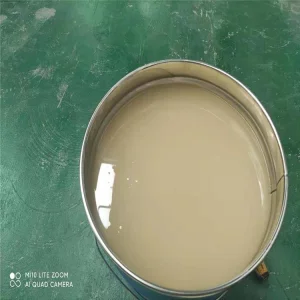
Modern liquid rubber formulations exploit hydroxyl-terminated polybutadiene (HTPB), medium-vinyl functional variants, and carboxylated nitrile copolymers to construct three-dimensional macromolecular networks upon room-temperature vulcanization (RTV).

  • Elongation capacity exceeding 850% without tensile failure
  • Cold-crack resistance verified down to -55°C per ASTM D2137
  • Monolithic barrier integration eliminating lap-joint vulnerabilities

Factory Direct Cost Reductions & Scalability

China's centralized petrochemical infrastructure provides significant raw material integration advantages, from butadiene monomer cracking to refined, low-polydispersity functional polymers.

  • Direct procurement discounts ranging 25%–40% under European blends
  • Customized viscosity modulation from 2,500 mPa·s to thixotropic pastes
  • Continuous bulk tank container supply lines for high-volume OEMs

Environmental Compliance & Zero-VOC Systems

Stringent decarbonization directives push the conversion toward solventless, 100% solids, and waterborne bituminous-rubber emulsions, preventing micro-void outgassing in confined operations.

  • Zero VOC volatile emissions compliant with EU REACH & EPA Rule 1113
  • Potable water storage compatibility (ANSI/NSF 61 certified)
  • Hydrophobic sealing unaffected by continuous hydrostatic pressure
850%
Ultimate Elastic Elongation
>1.8 MPa
Adhesive Pull-off Strength
-50°C ~ 140°C
Operational Thermal Envelope
100%
Batch Monitored QA / COA

Mission-Critical Industrial & Infrastructure Applications

From subterranean civil tunneling to offshore energy containment, fluid-applied rubber compounds deliver seamless mechanical resistance against corrosive media and cyclic deformation.

Civil Infrastructure & Foundation Sealing

Application to subterranean retaining walls, foundation footings, and bridge decks. Eliminates moisture migration along construction cold joints through chemical substrate interlock.

Automotive & EV Battery Encapsulation

Formulated with carboxylated liquid rubbers (L-XNBR) to generate thermal management sealants, acoustic dampeners, and IP68 moisture envelopes for lithium-ion battery containment trays.

Marine, Offshore & Ballast Lining

Resistant to high salinity, microbial sulfur attack, and cathodic disbanding. Provides self-healing, impact-tolerant barrier coatings across vessel hulls, ballast tanks, and splash zones.

Commercial Roofing Restoration

Direct spray or squeegee over weathered EPDM, bitumen, and corrugated standing-seam metal roofs. Creates continuous seamless UV-stable membranes that reflect solar heat and seal fastener leaks.

Technology Roadmap: Next-Gen Elastomeric Architecture

R&D allocations targeted at nano-phase reinforcement, intrinsic self-healing chemistries, and bio-based polymeric precursors.

PHASE I: 2024 - 2025

Hyper-Branched Epoxy Modification

Integration of epoxidized polybutadiene (EPB) with functional epoxy resin lattices to optimize lap shear bond strength (>8.5 MPa) while preserving cryogenic rubber elasticity.

PHASE II: 2025 - 2026

Graphene & Flake Reinforcement

Incorporation of surface-functionalized zinc flake and nano-graphene platelets to reduce water vapor transmission (WVTR) below 0.05 g/(m²·day) in marine applications.

PHASE III: 2026 - 2027

Reversible Dynamic Covalent Networks

Synthesis of Diels-Alder reversible crosslinking moieties allowing microscopic punctures and thermal fatigue micro-cracks to autogenously heal under ambient solar exposure.

PHASE IV: 2027 - 2028

Zero-Carbon Bio-Polyols & Monomers

Substitution of fossil-derived polybutadiene backbones with bio-based terpene and lignin monomer derivatives, achieving an audited 60% reduction in Scope 1 and 2 embodied carbon.

Enterprise Sourcing: Auditing China Liquid Rubber Manufacturers

A structured technical due diligence process ensures consistent molecular weight distribution, batch viscosity, and storage stability across global maritime shipments.

Gel Permeation Chromatography (GPC)

Evaluation of polydispersity indices (PDI). Tight PDI control (<1.8) prevents unpredictable batch viscosity fluctuations, maintaining consistent airless spray application on site.

Moisture Content & Degassing Controls

Moisture levels within polybutadiene matrices must remain strictly below 0.05% w/w via automated vacuum flash distillation to prevent micro-bubbling upon reaction with diisocyanates.

Inert Gas Blanketing & UN Packaging

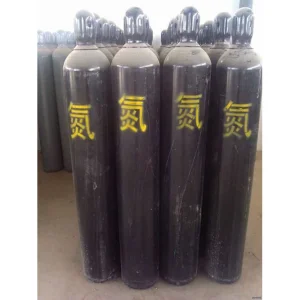
Oxidation-sensitive liquid polymers must be packaged under high-purity argon or nitrogen blankets in UN-rated steel drums or ISO bulk containers to preserve shelf stability up to 12 months.

Frequently Asked Questions: Specifications, Production & Quotes

Direct responses to common queries from chemical procurement teams, formulate chemists, and industrial facility managers.

What is the typical difference between standard liquid rubber and functionalized polymers like HTPB or L-XNBR?
Standard liquid rubber often refers to emulsified bituminous-styrene compounds used for simple waterproofing. In contrast, functional liquid polymers such as Hydroxyl-Terminated Polybutadiene (HTPB), Epoxidized Polybutadiene (EPB), and Liquid Carboxylated Nitrile Butadiene Rubber (L-XNBR) contain reactive chain-end functional groups. These participate directly in cross-linking polymerization, offering higher chemical resistance, cryogenic flexibility down to -55°C, and exceptional dynamic shear adhesion against substrates.
How does China factory pricing for liquid rubber seals compare with European or North American producers?
China manufacturers maintain an integrated upstream monomer refining advantage (such as butadiene and styrene synthesis), resulting in bulk wholesale pricelists typically 25% to 40% lower than Western counterparts. High plant automation and continuous synthesis reactors ensure reliable molecular weight control and batch consistency, supported by international batch COAs and full dangerous-goods export compliance.
Can formulations be tailored to specific viscosity and cure rate targets?
Yes. Formulation parameters including 1,2-vinyl isomer content, terminal hydroxyl or carboxyl functionality, and average molecular weight can be adjusted during anionic polymerization. Cure profiles can be tuned for fast-reacting dual-component plural spray systems (tack-free in under 3 minutes) or extended-pot-life moisture-cured systems suited for brush, roller, or automated robotic bead dispensing.
What documentation and quality checks accompany every overseas liquid rubber export?
Each shipped lot includes a factory-certified Certificate of Analysis (COA) detailing kinematic viscosity (at 25°C and 40°C), hydroxyl/acid value, residual moisture (Karl Fischer), and volatile organic content. In addition, shipments receive 16-section GHS-compliant Safety Data Sheets (SDS), Technical Data Sheets (TDS), and Dangerous Goods shipping declarations per IMDG/IATA guidelines when relevant.
What is the standard minimum order quantity (MOQ) and lead time for custom grades?
Standard inventory grades can be dispatched in pilot quantities starting from 200 kg steel drums. Custom-synthesized copolymer ratios or tailored molecular weight variants typically require an MOQ of 1 metric ton (5 x 200 L drums) or 20-ton ISO tanks. Production turnaround generally runs between 10 to 18 business days from final specification confirmation to port delivery.