Access factory-verified technical specifications, lot-traceable inorganic salts, reactive liquid elastomers, and electronic gases certified for precision industrial manufacturing.

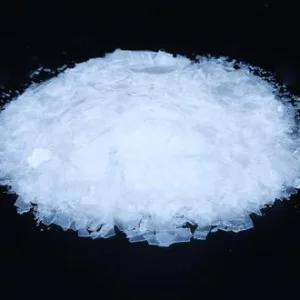
Monomethylhydrazine hydrochloride (often designated as Methyl Hydrazine Hydrochloride, formula: CH3NHNH2·HCl or CH7ClN2, CAS Number: 572-88-3 / 7339-53-9) serves as an irreplaceable nucleophilic organo-nitrogen building block across precision organic synthesis. Unlike volatile free-base methylhydrazine liquid, the monohydrochloride crystalline salt provides superior thermodynamic stability, mitigated atmospheric oxidation, and reduced vapor toxicity during storage and cross-border transport.
Vital in constructing specialized antineoplastic therapeutic agents, including Procarbazine Hydrochloride used extensively against Hodgkin's lymphoma. The bifunctional nitrogen skeleton facilitates stereoselective ring closures in multi-step cGMP active pharmaceutical ingredient (API) pathways.
Serves as a pivotal precursor for synthesized 1-methylpyrazoles, substituted pyridazinones, and pyrazole-derived acaricides/herbicides. The methyl group introduces targeted steric configurations that enhance enzyme inhibition and environmental bio-clearance efficiency.
Employed in solid gas-generating formulations, aerospace ignition precursors, and specialized non-volatile nitrogen-rich polymers. The stabilized hydrochloride matrix minimizes vapor-phase hazards while preserving vigorous reaction kinetics upon alkaline liberation.
Global sourcing directors face tight margins, volatile regulatory landscapes, and stringent purity hurdles when sourcing fine nitrogen salts. Chinese manufacturing facilities have evolved from simple batch synthesis into continuous, highly automated chemical synthesis complexes. The structural competitive advantage is driven by three main pillars:
China maintains raw material integration across basic ammonia, hydrazine hydrate, dimethyl sulfate, and chlorination reagents. By co-locating intermediate plants within unified national chemical parks, domestic producers eliminate cross-provincial haulage, reduce intermediate inventory markups, and shield global buyers from raw material volatility.
Traditional Raschig-based hydrazine methylation suffers from competitive over-alkylation, yielding undesired symmetrical dimethylhydrazine (SDMH) and trimethylhydrazine impurities. Modern Chinese synthesis units implement continuous microchannel reactors that deliver sub-second temperature control, driving product yields beyond 92% while cutting thermal degradation.
Environmental standards in China require closed-loop mother liquor recycling. Continuous anti-solvent crystallization combined with automated centrifuge-washing units produces uniform crystal size distribution (CSD). This eliminates cake crusting during international transit and ensures rapid dissolution in downstream batch reactors.
Every batch undergoes strict multi-point release inspection verified by validated testing methodologies (FTIR, potentiometric titration, GC-MS headspace for residual solvents, ICP-OES for heavy metal tracing). Below are standard technical grade and high-purity pharma-grade references:
| Analytical Parameter | Industrial Grade Standard | Pharma / Synthesis Grade | Analytical Test Protocol |
|---|---|---|---|
| Appearance | White to light crystalline powder | Pure white crystalline powder | Visual inspection (Colorimetric) |
| Assay (Purity) | ≥ 98.5% (w/w) | ≥ 99.5% (w/w) | Acid-base Potentiometric Titration / HPLC |
| Melting Point Range | 166.0 °C – 172.0 °C | 168.0 °C – 171.0 °C | Capillary Melting Apparatus (Decomposition) |
| Free Hydrazine (N2H4) | ≤ 0.20% | ≤ 0.05% (500 ppm max) | Spectrophotometric / Derivatized HPLC |
| Loss on Drying (LOD) | ≤ 0.50% | ≤ 0.20% | Vacuum Desiccator at 50 °C |
| Residue on Ignition (Sulfated) | ≤ 0.15% | ≤ 0.08% | Gravimetric Muffle Furnace (600 °C) |
| Heavy Metals (as Pb) | ≤ 20 ppm | ≤ 10 ppm | ICP-OES Spectrometry |
| Chloride Content (Cl-) | 42.0% – 43.5% | 42.5% – 43.2% | Silver Nitrate Argentometric Titration |
Due to the distinct nucleophilicity between the primary and secondary nitrogen atoms in monomethylhydrazine, the hydrochloride salt provides regiospecific control in organic condensations:
Condensation with 1,3-dicarbonyl compounds yields 1-methylpyrazoles. These ring systems form the structural core of new generation agrochemical fungicides (e.g., Penthiopyrad intermediates) and anti-inflammatory COX-2 inhibitors.
Precursor in the synthetic sequence of Procarbazine, an alkylating agent critical in treating Hodgkin's lymphoma and brain tumors. Purity limits on free hydrazine are vital to avoid genotoxic impurities (GTIs) in regulatory filings.
Acts as an active chain-extending and crosslinking core in liquid rubber systems, reactive polyurethanes, and modified energetic elastomers, giving tailored mechanical elasticity under cryogenic conditions.
Employed in reductive dehalogenation, transformation of hydrazones into functionalized diazo intermediates, and as a scavenger of reactive electrophilic byproducts in peptide coupling cascades.
Procuring fine hydrazine salts across international borders requires rigorous hazardous material handling and regulatory readiness. We safeguard our supply chain with complete audit compliance:
Methyl Hydrazine Hydrochloride is categorized as a Dangerous Good (Toxic Solid, Organic, N.O.S., UN 2811, Class 6.1, PG II). We pack in heavy-gauge UN-approved fiber drums (1G/Y) with double antistatic polyethylene inner liners and moisture-blocking foil barriers sealed under dry nitrogen blankets.
Shipments include batch-specific Certificate of Analysis (COA), 16-section GHS Safety Data Sheet (SDS) compliant with EU REACH, US OSHA, and China GB standards, alongside detailed BSE/TSE statements, Nitrosamine risk assessments, and non-animal origin confirmations.
Direct DG handling capabilities from major chemical gateways including Shanghai, Qingdao, and Ningbo ports. Coordinated maritime shipments (IMDG compliant) and air freight options (IATA DGR compliant where permissible) safeguard supply schedule integrity.
The international market for hydrazine derivatives is undergoing structural transformations toward cleaner production, automated manufacturing, and tighter purity standards:
Moving from conventional 5,000L glass-lined stirred batch reactors to micro-channel continuous flow chemistry limits explosive intermediate holdups and reduces byproduct formation.
Adoption of modern membrane nanofiltration and bipolar electrodialysis helps plants recycle wastewater salts into reusable chlorine gas and hydrochloric acid, mitigating effluent treatment overheads.
Global regulatory agencies (FDA, EMA) require testing for trace genotoxic impurities down to single-digit ppm levels. Producers now employ high-resolution LC-MS/MS testing for pharmaceutical grade materials.
Multinational buyers are shifting away from spot purchases toward annual volume allocation agreements, securing supply consistency against unexpected raw material allocation disruptions.
Answers to key questions from chemical purchasing agents, corporate formulation scientists, and supply chain analysts:
For standard 25 kg fiber drum configurations, routine factory lead times range between 10 to 15 business days from order confirmation to export port staging. Custom packaging or third-party SGS/BV pre-shipment inspections typically require 5 additional working days for analytical scheduling and certificate issuance.
Yes. Our manufacturing facilities offer controlled mechanical milling and classification under an inert nitrogen atmosphere to generate micro-pulverized grades (D90 < 50 μm) for fast reaction dissolution, or anti-caking coarse crystalline grades engineered for dry-powder automated feeding setups.
Store in cool, dry, well-ventilated storage rooms isolated from strong oxidizing agents, mineral acids, and alkali metals. Maintain storage ambient temperatures below 30 °C. Keep packaging tightly sealed when not in use; exposure to atmospheric moisture causes gradual caking and partial hydrolysis over extended periods.
When stored in unopened original UN fiber drums equipped with dual vacuum-sealed polyethylene barrier liners, our material maintains full assay compliance for 24 months from the date of manufacture. Moisture levels remain below 0.3% when outer drum security seals remain unbroken.
Yes. In addition to FOB Chinese ports (Shanghai, Ningbo, Qingdao), we provide CIF, CFR, and full DDP options with approved chemical forwarders handling destination clearance, inland hazmat trucking, and duty administration directly to your production site.
Representative 50g to 500g analytical samples accompanied by lot-specific COA, SDS, and technical data sheets are available for qualified R&D organizations and industrial buyers. Dangerous goods air courier regulations apply to chemical sample dispatch.
Explore additional certified industrial chemicals, semiconductor noble gases, and functionalized prepolymers manufactured to tight analytical specifications.
Submit your target specification, annual requirement volume, and target discharge port. Our chemical sales engineering group responds with full FOB/CIF pricing, lead times, and regulatory dossiers within 24 hours.