


Explore our specification-verified portfolio of high-purity inorganic salts, specialty rare gases, functional liquid elastomers, and precision-engineered atomized alloy powders produced under ISO 9001 quality audits.






An authoritative evaluation of synthetic polyether polyols, raw material integration, production capacities, and international demand vectors driving modern pharmaceutical, electronic, and industrial formulations.
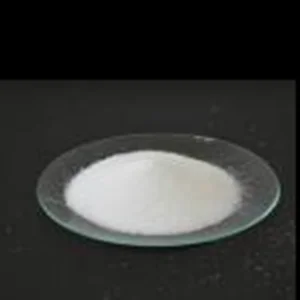
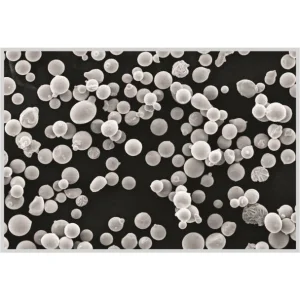
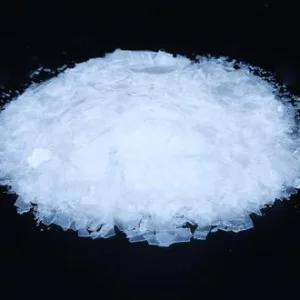
Polyethylene Glycol (PEG), represented chemically by the general formula H-(OCH₂CH₂)ₙ-OH, stands as one of the most chemically versatile, non-ionic hydrophilic polymers manufactured at global commercial scale. Synthesized primarily through the ring-opening addition polymerization of ethylene oxide (EO) with monoethylene glycol (MEG) or diethylene glycol (DEG) initiators in the presence of basic or double metal cyanide (DMC) catalysts, PEG bases bridge low-viscosity liquid oligomers (molecular weight 200–600 g/mol) through waxy semi-solids (PEG 1000–1500) to hard, free-flowing crystalline flakes and powders (PEG 3350, 4000, 6000, 8000, and ultra-high-molecular-weight PEO).
From a geopolitical and commercial supply chain perspective, China has consolidated its standing as the primary global hub for synthetic polyether polyols. China's mega-scale integrated petrochemical clusters located in coastal industrial zones—principally Jiangsu, Shandong, Zhejiang, and Guangdong—operate continuous tubular and multi-stage loop ethoxylation reactors directly linked via pipeline to upstream ethylene oxide cracking units. This upstream physical integration mitigates the significant transportation risks inherent to hazardous compressed ethylene oxide, providing unmatched production continuity, stable batch thermokinetics, and optimized economies of scale. As international procurement entities navigate structural inflationary pressures and stringent impurity regulations (such as residual 1,4-dioxane and free EO thresholds enforced by the FDA, EMA, and REACH), partnering directly with an audited Chinese PEG base manufacturer provides the essential intersection of cost leadership, regulatory documentation, and reliable volume scaling.
Standardized physicochemical benchmarks verified across laboratory batches via Gel Permeation Chromatography (GPC), Potentiometric Titration, and Gas Chromatography-Mass Spectrometry (GC-MS).
| Polymer Grade | Average MW (g/mol) | Physical Form (25°C) | Hydroxyl Value (mg KOH/g) | Kinematic Viscosity (cSt, @ 99°C / 20°C) | Free Water (% w/w) | Pharmacopeia Compliance |
|---|---|---|---|---|---|---|
| PEG 200 Base | 190 – 210 | Clear viscous liquid | 534 – 590 | 4.1 – 4.5 (@ 99°C) | ≤ 0.20% | USP / EP / ChP / Industrial |
| PEG 400 Base | 380 – 420 | Clear hygroscopic liquid | 267 – 295 | 6.8 – 7.8 (@ 99°C) | ≤ 0.15% | USP-NF / Ph.Eur / IP |
| PEG 600 Base | 570 – 630 | Semi-solid paste / liquid | 178 – 197 | 9.9 – 11.3 (@ 99°C) | ≤ 0.15% | USP / Ph.Eur / Reagent |
| PEG 1000 Base | 950 – 1050 | Soft waxy solid | 107 – 118 | 16.0 – 19.0 (@ 99°C) | ≤ 0.20% | USP / EP / Technical Grade |
| PEG 1500 Base | 1400 – 1600 | White waxy block/flake | 70 – 80 | 25.0 – 32.0 (@ 99°C) | ≤ 0.20% | Industrial / Intermediate |
| PEG 3350 Base | 3015 – 3685 | White free-flowing powder | 30 – 38 | 75.0 – 110.0 (@ 99°C) | ≤ 0.20% | USP API Laxative Grade |
| PEG 4000 Base | 3700 – 4400 | White flakes or spheres | 25 – 32 | 110 – 170 (@ 99°C) | ≤ 0.15% | USP / Ph.Eur / Battery Grade |
| PEG 6000 Base | 5400 – 6600 | Micro-crystalline flakes | 16 – 22 | 250 – 390 (@ 99°C) | ≤ 0.15% | USP / EP / Electronics Grade |
| PEG 8000 Base | 7300 – 8800 | Hard white powder / flakes | 12 – 16 | 540 – 820 (@ 99°C) | ≤ 0.10% | USP / Clean Chemical Spec |
| PEG 20000 Base | 18000 – 22000 | Coarse powder | 5.0 – 6.5 | 2500 – 3500 (@ 99°C) | ≤ 0.10% | Solid Electrolyte / Rheology |
Benchmark contract price bands, export packaging options, and mathematical cost driver formulas established for enterprise purchasing managers and supply chain directors.
| Polymer Series | Standard Packaging | Container Payload (FCL) | MOQ | FOB Chinese Port (USD/MT) | CIF Main Global Port (USD/MT) | Market Price Status |
|---|---|---|---|---|---|---|
| Industrial PEG 200 / 400 | 200 kg Steel Drums / 1000 kg IBCs | 16.0 MT (Drums) / 20.0 MT (IBC) | 2.0 MT | $1,220 – $1,420 | $1,360 – $1,580 | Competitive Baseline |
| Pharma PEG 400 (USP/EP) | 220 kg PVF-Coated Steel Drums | 17.6 MT / 20'GP | 1.0 MT | $1,650 – $1,980 | $1,810 – $2,180 | Audited Cleanroom |
| Industrial PEG 600 / 1000 | 200 kg Galvanized Iron Drums | 16.0 MT / 20'GP | 3.0 MT | $1,340 – $1,550 | $1,490 – $1,720 | Stable Inventory |
| Technical Flake PEG 1500 / 4000 | 25 kg Polyethylene Lined Kraft Bags | 14.0 MT (Palletized) / 20'GP | 2.0 MT | $1,420 – $1,680 | $1,580 – $1,860 | Steady Supply |
| Pharma PEG 3350 / 4000 (GMP) | 25 kg Fibre Drums with PE Inner Bag | 9.0 MT / 20'GP | 500 kg | $2,450 – $2,950 | $2,650 – $3,200 | High Value Excipient |
| Technical Powder PEG 6000 / 8000 | 25 kg Triple-Ply Kraft Poly Bags | 14.0 MT / 20'GP | 2.0 MT | $1,550 – $1,850 | $1,720 – $2,050 | High Flowability |
| Ultra-Purity Solid Battery PEO | 20 kg Hermetic Aluminum Foil Bags | 5.0 MT / 20'GP | 100 kg | $5,200 – $7,800 | $5,500 – $8,200 | Specialty Precision |
Industrial contract pricing for Polyethylene Glycol bases in China is governed by an objective formula tying production costs to commodity raw materials, reactor residence kinetics, and compliance burdens:
P(PEG) = α·P(Ethylene Oxide) + β·P(Initiator MEG/DEG) + C(Catalysis & Energy) + C(Stripping & Packaging) + Δ(Margin)
Because ethylene oxide makes up over 90% of the polymer's molecular mass in high-MW grades, shifts in regional Sinopec or PetroChina ethylene crack spreads directly dictate spot movements. Furthermore, the stripping of volatile byproducts (1,4-dioxane, acetaldehyde) to sub-ppm levels under high vacuum requires supplementary thermal energy and dedicated residence cycles that account for the premium spread observed between industrial and pharma-grade batches.
How differing molecular weight fractions translate into targeted biochemical, electrochemical, tribological, and structural performance across advanced industries.
In pharmaceutical formulations, liquid grades (PEG 300, 400) function as universal water-miscible solubilizers and co-solvents for hydrophobic oral liquids and soft-gelatin encapsulation. Solid grades (PEG 3350, 4000) serve as benchmark osmotic laxatives, dry binder lubricants in tablet compression, and enteric film-forming matrices. Functional monodisperse mPEG derivatives form the foundation for PEGylation chemistry, shielding therapeutic proteins, peptide conjugates, and mRNA lipid nanoparticles (LNPs) from reticuloendothelial clearance, significantly enhancing systemic half-life.
High-molecular-weight Polyethylene Oxide (PEO) and functionalized crystalline PEG bases constitute the preeminent polymer framework for next-generation all-solid-state lithium metal batteries (ASSLBs). The repeating ether oxygens (-CH₂CH₂O-) coordinate strongly with lithium ions (e.g., LiTFSI salts), promoting rapid cation dissociation and intrachain hopping. Precise control over polymer polydispersity and crosslinking density minimizes room-temperature recrystallization, unlocking elevated ionic conductivity (> 10⁻⁴ S/cm) and robust dendrite suppression.
Within advanced microelectronic fabrication and high-density interconnect (HDI) printed circuit board manufacturing, PEG behaves as a classical "suppressor" or "leveler" surfactant in copper acid electroplating baths. Adsorbing preferentially at via openings in conjunction with chloride ions, PEG suppresses copper deposition at outer planar surfaces while allowing accelerated bottom-up filling inside through-silicon vias (TSVs) and blind micro-vias, mitigating void formation and ensuring planar metallization integrity.
Difunctional PEG bases serve as essential hydrophilic soft segments in moisture-vapor-permeable polyurethane films, synthetic leather microporous membranes, and specialty sealants. In energetic formulations and vulcanized elastomeric compositions, hydroxyl-terminated prepolymers crosslink with diisocyanates (such as HDI or TDI) to yield elastomeric networks that preserve elasticity, impact resistance, and elongation characteristics across wide operating temperature bands down to -40°C.
In advanced structural ceramics, electronic substrates (LTCC/HTCC), and refractory metal powder compaction, solid PEG grades (PEG 4000–8000) function as clean-burning temporary binders and plasticizers. They confer high green strength to compacted components, facilitate uniform spray-dried granule flowability, and decompose cleanly without carbonaceous residues during debinding and sintering cycles under inert or reducing atmospheres.
The inherent water solubility, non-corrosive nature, and favorable boundary lubrication properties of PEG 400 through 1500 make them ideal base fluids for synthetic metal-cutting fluids, drawing lubricants, and textile sizing agents. Unlike conventional petroleum mineral oils, PEG rinses cleanly with pure water, leaving zero oily film prior to downstream surface plating, galvanizing, or powder coating applications.
Leading-edge developments reshaping purity boundaries, narrow molecular dispersity, and decarbonized lifecycle footprints in polyether polyol synthesis.
Traditional industrial stirred autoclave reactors struggle with localized thermal runaway zones during the exotherm of ethylene oxide addition. China's state-of-the-art facilities are migrating toward microchannel continuous flow reactors. Delivering heat exchange coefficients exceeding 10,000 W/(m²·K), microreactors operate with near-zero holdup volume, drastically suppressing thermal byproduct formation (such as 1,4-dioxane down below 0.5 ppm) and generating ultra-narrow polydispersity indices (Mw/Mn < 1.04).
To satisfy Scope 3 ESG mandates from multinational consumer healthcare and automotive clients, Chinese manufacturers have pioneered the deployment of bio-ethylene produced via catalytic dehydration of sugar cane-derived bio-ethanol. Subsequent catalytic oxidation yields 100% bio-based ethylene oxide. When polymerized with renewable initiators, the resulting "Green PEG" exhibits zero petrochemical fossil carbon content without compromising chemical equivalency or physical performance parameters.
Transitioning from conventional potassium hydroxide (KOH) catalysts to coordinated zinc-cobalt double metal cyanide (DMC) systems eliminates catalyst neutralization and filtration washing stages. DMC catalysts eliminate terminal unsaturation (allyl ether formation), suppress high-molecular-weight tailing, and generate crystal-clear, color-stable polyethers with trace metal ion concentrations constrained below parts-per-billion (ppb) thresholds suitable for semiconductor packaging.
Robust risk containment protocols addressing oxidation, trace impurities, sea transit stability, and multi-jurisdictional pharmacopeia validation.
Polyethylene Glycol is sensitive to atmospheric oxygen, ultraviolet light, and trace heavy metals, all of which catalyze free-radical oxidative degradation into formaldehydes, formates, and peroxide intermediates. For sensitive medical, cosmetic, and electronic end-users, product instability is intolerable.
International enterprise shipments are accompanied by a comprehensive technical qualification dossier tailored for swift compliance approval:
Detailed clarifications compiled by industrial chemical engineers to streamline material selection, supplier audits, and procurement workflows.
Explore our integrated catalog of semiconductor-grade electronic gases, cryogenic noble elements, liquid rubbers, and high-molecular polyether backbones.







Connect directly with our chemical synthesis engineers. Whether you require pharmacopeia-certified PEG 3350 for formulation scaling, low-dioxane PEG 400 for personal care emulsification, or high-molecular battery-grade polyethers, our technical export division delivers lot-traceable samples, complete COAs, and locked-in CIF container quotes tailored to your destination port.
