Verified batch integrity across specialty polyethers, fluorinated specialty gases, inorganic salts, and advanced polymers.
Polyethylene Glycol (PEG, Macrogol) has evolved from an inert functional binder into an active, critical biopharmaceutical vehicle empowering systemic longevity and bioavailability.
Global pharmaceutical bodies (FDA, EMA, NMPA) enforce micro-impurity thresholds. Monograph revisions demand stringent ceilings on residual dioxane, ethylene glycol, and heavy metal ions, requiring manufacturers to operate clean-room polymer synthesis units under unified pharmacopeia standards.
Therapeutic proteins, antibody fragments, and mRNA delivery platforms rely on functionalized PEG linkages to extend in-vivo half-life, mitigate enzymatic degradation, and suppress reticuloendothelial system clearance, demanding precision end-capping chemistries.
Ethylene oxide (EO) access determines synthesis stability. Volatile precursors require strict closed-loop production. Global pharmaceutical enterprises look to integrated clusters to safeguard raw material stability and avoid batch disruptions across continuous processing lines.
Combining domestic industrial cluster scalability with precise process analytical technology (PAT) to deliver pharmaceutical excipients with cost and quality balance.
Direct spatial integration with high-capacity ethylene petrochemical bases eliminates transport costs and risks associated with hazardous raw monomer logistics. Continuous polymerization automation provides predictable unit costs without compromising grade stability.
Modern Chinese manufacturing facilities run computerized multi-stage falling film evaporators and supercritical degassing protocols, effectively eliminating toxic monomers and cyclics, ensuring low residual catalysts (potassium/sodium alkoxides) and minimal conductivity.
From initial R&D trials at gram-scale to multi-ton bulk commercial deliveries, production assets can adapt quickly. Rapid custom synthesis of customized chain lengths (e.g., mPEG, amino-PEG, biotin-PEG) supports accelerated development timelines.
Comprehensive comparative criteria across liquid, semi-solid, and crystalline solid pharmaceutical polyethylene glycol grades.
| Pharmaceutical Grade | Physical Form (25°C) | Average Mol. Wt. Range | Kinematic Viscosity (mm²/s) | Primary Medical Formulation Roles |
|---|---|---|---|---|
| Macrogol / PEG 300 | Clear viscous liquid | 280 – 320 | 75 – 95 (at 20°C) | Liquid parenterals, oral solutions, soft-gel co-solvents |
| Macrogol / PEG 400 | Colorless clear liquid | 380 – 420 | 105 – 130 (at 20°C) | Topical lotions, ophthalmic lubricants, API solubilization |
| Macrogol / PEG 1000 | Semi-solid waxy paste | 900 – 1050 | 16.0 – 19.0 (at 100°C) | Suppository base modification, topical cream textures |
| Macrogol / PEG 3350 | White crystalline powder | 3015 – 3685 | 76 – 110 (at 99°C) | Osmotic laxatives, bowel preparation, protein crystallization |
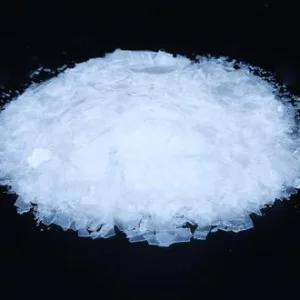
| Macrogol / PEG 4000 | White flake / fine powder | 3600 – 4400 | 110 – 170 (at 99°C) | Tablet compression binder, dry granulation lubricant |
| Macrogol / PEG 6000 / 8000 | Free-flowing granules/prills | 5400 – 9000 | 200 – 470 (at 99°C) | Film-coating plasticizer, osmotic controlled-release cores |
Deploying specialized polymer weight fractions to overcome clinical solubility, delivery, and mechanical tableting barriers.
High-molecular weight PEGs (4000 to 8000) serve as water-soluble tablet lubricants, plasticizers, and crystallization inhibitors in hot-melt extrusion (HME) and solid dispersion platforms.
PEG 3350 and 4000 function as non-absorbable osmotic laxatives. Their high water retention capacity softens stools and supports bowel cleansing without systemic electrolyte disruption.
mPEG-conjugated lipids (such as PEG-DMG and ALC-0159) stabilize the lipid bilayer in mRNA vaccines and therapeutics, preventing nanoparticle agglomeration and controlling systemic release kinetics.
Low-molecular fractions (PEG 300, 400) act as bio-inert co-solvents for poorly soluble lipophilic small molecules in intravenous, intramuscular, and topical dermatological formulations.
Key quality assurance, regulatory, and documentation benchmarks required by multinational procurement teams evaluating Chinese PEG facilities.
Global formulation pipelines require unified compliance with USP-NF, European Pharmacopoeia (Ph. Eur.), and Japanese Pharmacopoeia (JP). Analytical protocols must run validated capillary gas chromatography (GC-FID) and GPC/SEC to guarantee molecular weight distributions.
Established Chinese manufacturing partners maintain active Type IV US FDA Drug Master Files (DMF) and EDQM Certificate of Suitability (CEP) filings. This documentation simplifies cross-referencing for ANDA and NDA regulatory application submissions.
Facilities implement strict Good Automated Manufacturing Practice (GAMP 5) and EXCiPACT certification. Critical production lines operate 21 CFR Part 11-compliant data acquisition for complete synthesis traceability and stability validation.
Detailed technical, compliance, and handling answers covering medical-grade Polyethylene Glycol sourcing from China.
Engineered chemicals and functional materials produced to high industrial, analytical, and export specifications.