High-purity liquid-phase polyoxyethylene intermediate (MW ~400) optimized for hydrophilic formulations, pharmaceutical transdermal excipients, industrial lubricants, and specialized energetic surface modifications.
Precision-tested high-molecular compounds, electronic inert gases, and spherical pyrotechnic powders delivered directly under auditable international specifications.
Polyethylene Glycol 8 (INCI: PEG-8, chemically equivalent to Polyethylene Glycol 400 / Carbowax 400) is a monodisperse-controlled, neutral oligomer formed via the base-catalyzed ring-opening polymerization of ethylene oxide with ethylene glycol or diethylene glycol.
With an average of 8 repeating oxyethylene units (-CH2CH2O-)8, our continuous ethylene oxide catalytic reactor maintains an exceptionally tight Polydispersity Index (PDI ≤ 1.08), eliminating residual volatile monomers and dioxane byproducts.
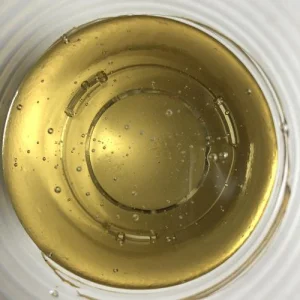
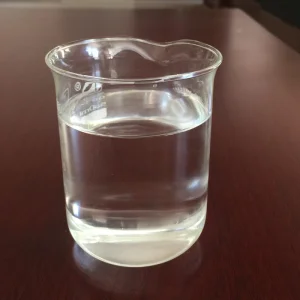
Operating as a clear, colorless, hygroscopic viscous liquid at ambient temperature (glass transition point < -65°C, freezing point 4°C to 8°C), PEG 8 provides exceptional miscibility across aromatic, ester, and polar protic aqueous solvent systems.
Chemically inert, low vapor pressure, and non-volatile, PEG 8 exhibits negligible transdermal toxicity and no bioaccumulation, acting as an optimal solvating platform across food contact and cosmetic formulation standards.
| Analytical Parameter | USP/EP Regulatory Standard | Industrial Synthesis Grade | High-Purity Electronic Grade |
|---|---|---|---|
| Mean Molecular Weight (Mn) | 380 – 420 g/mol | 370 – 430 g/mol | 390 – 410 g/mol |
| Hydroxyl Value (mg KOH/g) | 264 – 300 | 260 – 305 | 270 – 290 |
| Kinematic Viscosity (at 20°C) | 105 – 130 mm²/s | 100 – 135 mm²/s | 110 – 125 mm²/s |
| Residual Ethylene Oxide | ≤ 1 ppm | ≤ 5 ppm | ≤ 0.2 ppm (Trace-free) |
| Residual 1,4-Dioxane | ≤ 5 ppm | ≤ 10 ppm | ≤ 1 ppm |
| Water Content (Karl Fischer) | ≤ 0.20% | ≤ 0.50% | ≤ 0.05% |
Modern manufacturing ecosystems require tailored surface dynamics, unyielding batch stability, and clean toxicological profiles. Polyethylene Glycol 8 serves as a versatile backbone across five primary industrial fronts.
In skin-care creams, emulsions, and anhydrous gels, PEG 8 functions as a high-affinity humectant, non-greasy solvent, and rheology control agent. It lowers skin barrier surface tension, boosting delivery of water-insoluble actives without greasy tackiness.
Serving as a short-chain difunctional polyether polyol, PEG 8 acts as a hydrophilic soft segment modifier. It optimizes moisture-vapor transmission rates (MVTR) in breathable coatings, synthetic leathers, and waterborne polyurethane (WPU) adhesives.
Compliant with Pharmacopoeia specs, PEG 8 serves as a liquid-carrier solubilizer for poorly water-soluble APIs in softgels, ophthalmic lubricants, and topical dressings, facilitating steady active release with zero localized irritation.
Engineered into water-glycol synthetic lubricants, PEG 8 provides thermal boundary stability, clean burn-off during metallurgical heat treating, and high anti-wear performance in cutting, stamping, and drawing fluids for ferrous and non-ferrous alloys.
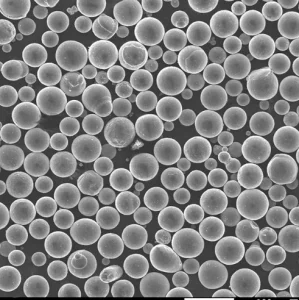
In advanced ballistics and composite propellant mixtures, PEG 8 acts as a non-volatile desensitizing plasticizer, moisture-passivating surfactant, and flow promoter for fine atomized spherical metal powders such as Al-Mg systems.
Navigating international chemical supply involves understanding evolving upstream raw materials (petrochemical vs. bio-based ethylene oxide), zero-tolerance trace impurity mandates, and rigorous global cross-border compliance.
All PEG-8 tonnage shipped to the European Union and North America is supported by standard REACH polymer exemption dossiers, pre-registered monomers (EO), and active US EPA TSCA Inventory compliance.
Our automated synthesis plants apply high-vacuum degassing and multi-stage stripping columns to depress residual ethylene oxide, 1,4-dioxane, and trace heavy metals far below stringent FDA and European safety thresholds.
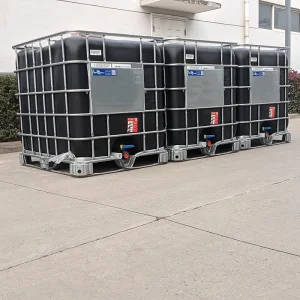
Export operations are staged through dedicated hazardous-goods bonded terminals in Qingdao and Shanghai, enabling steady containerized multi-modal shipments, flexibag staging, and ISO tank deployments with minimal freight delays.
Every export lot leaves our plant backed by complete batch-specific Certificates of Analysis (COA), GHS-standard Safety Data Sheets (SDS) in over 15 languages, and third-party validation (SGS/Intertek) upon buyer instruction.
Advancing beyond traditional fossil-based synthesis, our polyether development roadmap emphasizes lower carbon intensity, closed-loop catalyst recovery, and zero-effluent manufacturing.
Scale-up of bio-ethylene glycol derived from non-food agricultural biomass. This lowers the lifecycle Scope 3 carbon footprint by over 45% while preserving identical physical-chemical performance and strict drop-in compatibility for downstream users.
Transitioning our lines to Double Metal Cyanide (DMC) catalyst complexes. This cuts low-molecular volatile fragments, eliminates residual potassium/sodium hydroxide salt washing, and yields ultra-low ionic conductivity for next-gen lithium battery electrolytes.
Implementing modular continuous-flow synthesis infrastructure. Real-time in-line NIR spectroscopy continuously inspects molecular weight distributions, guaranteeing lot-to-lot consistency and slashing production energy waste by up to 30%.
Integrated synthetic monomers, functionalized liquid polymers, high-purity etching fluorocarbons, and noble gases for demanding high-tech applications.
Key clarifications on molecular properties, certifications, transdermal safety, handling protocols, and overseas shipping logistics.