Explore initial industrial stock lots available for immediate dispatch with complete batch Certificate of Analysis (COA) and global logistics compliance.
An authoritative analysis of high-polarity polymeric phases, resolving cross-linking vulnerabilities, and meeting modern enterprise analytical demands.
Polyethylene Glycol (PEG) stationary phases represent the pinnacle of high-polarity gas chromatography (GC) and high-performance liquid chromatography (HPLC) separations. Characterized by repeating ether oxygen atoms (-CH2-CH2-O-)n terminated by hydroxyl or customized functional end-caps, PEG delivers unique dipole-dipole interactions, hydrogen bonding, and induction capacity for polar analytes.
Historically governed by Western manufacturers, the global PEG stationary phase supply chain has undergone dramatic reconfiguration. Advanced monomer purification technologies in China now yield ultra-pure polyether precursors, reducing column manufacturing costs by up to 38% without sacrificing theoretical plate efficiency (N/m) or inertness parameters.
Traditional non-bonded PEG phases suffered from susceptibility to traces of oxygen, rapid degradation above 220°C, and severe water condensation stripping. Breakthroughs in in-situ sol-gel immobilisation and free-radical peroxide crosslinking deliver modern "Wax" phases capable of continuous operations up to 260°C–280°C.
Indicative FOB/CIF market quotations for analytical and industrial-scale bonded PEG phases, derivatized capillary columns, and bulk coated silica packings.
| Stationary Phase Grade | Polymer Architecture | Dimensions / Mesh Specs | Thermal Window | Unit MOQ | Benchmark Price (USD) |
|---|---|---|---|---|---|
| Standard Analytical PEG-20M | Linear Polyethylene Glycol (MW ~20,000) | 30m × 0.25mm × 0.25µm Capillary | 40°C to 250°C | 5 Units | $140 - $190 / col |
| High-Stability Crosslinked (WAX) | Deactivated, Siloxane-Bonded PEG Matrix | 30m × 0.32mm × 0.50µm Capillary | 20°C to 260°C (Prog. 270°C) | 3 Units | $220 - $285 / col |
| Ultra-Inert Trace WAX-MS | Bonded, Acid/Base Neutralized PEG | 60m × 0.25mm × 0.25µm Capillary | 20°C to 280°C | 2 Units | $340 - $430 / col |
| Preparative Bulk PEG Adsorbent | High-Purity PEG 6000–20000 on Diatomite/Silica | 60/80 Mesh, 80/100 Mesh (Pack) | Up to 200°C | 1 kg | $180 - $310 / kg |
| Acid-Modified Nitroterephthalic PEG | FFAP Equivalents (Free Fatty Acid Phase) | 30m × 0.32mm × 0.25µm Capillary | 40°C to 250°C | 3 Units | $240 - $315 / col |
*Prices are indicative bulk contract figures ex-works China. Actual final quotations depend on custom surface deactivation, phase ratio, batch testing protocols, and destination cargo classifications.
How specialized PEG phases solve resolution bottlenecks across critical processing and testing pipelines.
Accurate profiling of light alcohols, ketones, and esters in refinery aromatics. Bonded PEG phases overcome tailing challenges when analyzing trace polar oxygenates against massive hydrocarbon matrices.
Separation of natural terpenes, essential oils, and volatile aroma fractions. High retention factors (k') prevent co-elution of stereoisomers and oxygenated monoterpenes without column bleed interference.
Quantitation of Class 1, 2, and 3 Organic Volatile Impurities (USP <467>). Robust surface chemistry prevents phase stripping when injecting high aqueous or DMSO carrier fractions.
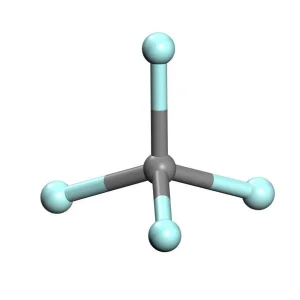
Sub-ppm detection of polar moisture markers and volatile decomposition products in etching gases like Carbon Tetrafluoride (CF4) and Sulfur Hexafluoride (SF6) carrier systems.
Structural innovations driving performance upgrades across chemical synthesis and industrial instrumentation.
Eliminating thermodynamic stripping by forming a single network of fused silica tubing, intermediate bridging groups, and organic PEG backbones. Yields thermal ceilings up to 300°C without degradation of baseline trace resolution.
Dual-interaction phases synthesized by grafting imidazolium or phosphonium ionic liquid cores into polyoxyethylene chains. Offers tailored orthogonal retention maps ideal for complex multi-dimensional GC×GC systems.
Implementation of AI-monitored high-temperature silylation that reduces acidic silanol exposure on inner capillary tubing to absolute zero, completely eliminating peak tailing for active amines and volatile carboxylic acids.
Ensuring compliance, rapid delivery, and verifiable lot-to-lot consistency for global pharmaceutical and chemical conglomerates.
Every manufacturing campaign incorporates extensive GPC, NMR, and GC-FID validation. Customers receive comprehensive Certificate of Analysis (COA) specifying average molecular weight, polydispersity (Mw/Mn), and Grob Test mixture bleed rates.
Fully certified export operations handling associated specialty gases, high-reactivity modifiers, and organic phases under strict UN Model Regulations with full IMDG (ocean) and IATA (air) customs declarations.
From micro-bore capillaries (0.10mm ID) to bulk preparative distillation packings, our manufacturing lines handle specialized film thicknesses (0.10µm up to 5.0µm) tailored directly to engineering specifications.
Expert answers addressing the selection, handling, pricing, and qualification of high-polarity PEG stationary phases.
Standard PEG-20M comprises unmodified high molecular weight polyoxyethylene terminated with diol groups, suitable for neutral and mildly basic polar analytes. FFAP (Free Fatty Acid Phase) is chemically modified with 2-nitroterephthalic acid, endowing the phase with acidic characteristics that completely eliminate dimerization tailing when testing volatile C2–C18 free fatty acids without requiring prior derivatization to methyl esters.
Polyethylene glycol is exceptionally vulnerable to thermo-oxidative autoxidation. At temperatures above 60°C, trace levels of oxygen in carrier gases break the ether linkages (-C-O-C-), producing volatile aldehydes, acids, and resulting in irreversible loss of column efficiency and severe baseline rise. Installing ultra-pure oxygen scrubbers (<1 ppm O2) and maintaining strict system leak checks ensures prolonged operational lifespan.
Yes, but exclusively with modern crosslinked and surface-bonded PEG phases (such as DB-WAX or HP-INNOWax equivalents). Non-bonded traditional phases will strip under repetitive water injections due to solvent dissolution. Modern bonded variants withstand repeated steam and water matrices, provided the thermal limit stays comfortably below the phase transition point.
All commercial consignments include full batch Certificates of Analysis (COA) containing chromatograms run under standard Grob test conditions, GHS-compliant Safety Data Sheets (SDS), technical product sheets detailing conditioning recommendations, and verified packing declarations for export compliance.
High-specification export chemicals and reagents ready for global distribution.