Direct supply from Yanxatech System Industries Limited (YANXA). High purity, certified batch analysis (COA), safety data compliance (GHS/SDS), and customized export logistics.
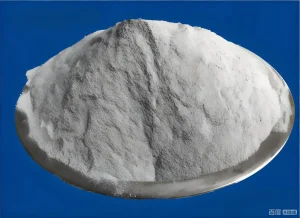
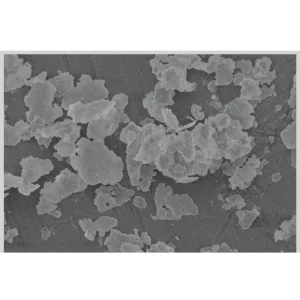
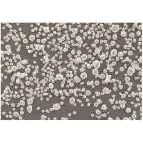

Comprehensive characterization of gas atomization mechanics, surface passivation kinetics, and particle classification standards for advanced industrial processing.
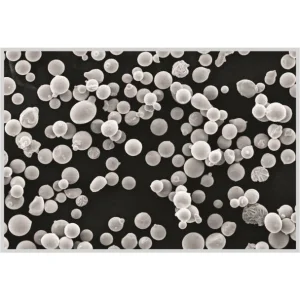
Produced via high-pressure supersonic nitrogen or argon gas-atomization rigs. High-purity molten primary aluminum (A00 grade, >99.7% Al) is broken up into micro-droplets at supersonic speeds, achieving high sphericity (sphericity coefficient >0.92) and minimal satellite particle formation, which ensures laminar packing during compaction.
Through multi-stage secondary cyclonic aerodynamic classification and turbo air classifier systems, the distribution curve is tightly managed. D10 is bounded at ≥1.8 μm to eliminate sub-micron runaway pyrotechnic dust hazards, while D90 is clipped at ≤9.2 μm, avoiding unreacted particulate residues in screen-printing pastes and sintering dies.
Ultrafine 5-micron aluminum exhibits extreme specific surface area (~1.2 to 1.8 m²/g). Our automated passivation chamber introduces micro-metered oxygen in high-purity nitrogen, forming a stable, non-porous 2.0–3.0 nm amorphous Al2O3 shell. This self-limiting passivation prevents spontaneous combustion while preserving maximal active chemical enthalpy.
| Analytical Parameter | Testing Method (Standard) | Industrial Grade (5μm-IND) | Photovoltaic / Electronic Grade (5μm-EL) | Energetic / Defense Grade (5μm-DEF) |
|---|---|---|---|---|
| Active Aluminum Content (%) | Gasometric Titration (ISO 3984) | ≥ 98.5% | ≥ 99.2% | ≥ 99.4% |
| Particle Size: D10 / D50 / D90 | Laser Diffraction (Malvern Mastersizer 3000) | 1.5 / 5.2 / 10.5 μm | 2.2 / 4.9 / 8.5 μm | 2.4 / 5.0 / 8.0 μm |
| Specific Surface Area (BET) | Multi-point N2 Adsorption (BET) | 1.35 - 1.70 m²/g | 1.15 - 1.45 m²/g | 1.25 - 1.55 m²/g |
| Tap Density / Apparent Density | ASTM B527 / Hall Flowmeter | 0.95 / 0.65 g/cm³ | 1.18 / 0.78 g/cm³ | 1.22 / 0.82 g/cm³ |
| Impurity Limits: Fe / Si / H2O | ICP-OES & Karl Fischer Titration | Fe≤0.15%, Si≤0.10%, H2O≤0.12% | Fe≤0.05%, Si≤0.04%, H2O≤0.05% | Fe≤0.08%, Si≤0.05%, H2O≤0.06% |
| Particle Morphology | Field Emission SEM Analysis | Nodular / Semi-spherical | Highly Spherical (>95%) | Regular Spherical (>96%) |
Evaluating commercial supply chains, raw material dynamics, spot-market price drivers, and large-scale industrial consumption patterns.
Wholesale 5-micron aluminum powder pricing differs substantially from generic casting ingots. Quotes are structured on a dynamic formula: London Metal Exchange (LME) or Shanghai Metal Market (SMM) primary Al cash index + Superfine Atomization & Classification Premium + Controlled Passivation Cost. Long-term framework contracts allow price hedging against alumina raw metal swings.
High-energy consumption in electric melting and specialized inert closed-loop gas recycling facilities concentrates tier-1 production hubs in industrial energy corridors. China produces over 58% of global spherical micro-aluminum powders, supported by direct primary electrolytic smelting integration, followed by specialty producers in the USA, Germany, and Japan.
Due to volatile lead times in international container shipping for Class 4.3 flammable solids, procurement managers face stockout risks. As an enterprise established in 2008, YANXA provides rolling buffer stock contracts, bonded warehouse fulfillment, and dedicated batch reservation up to 6 months in advance for accredited OEM consumers.
Rigorous automotive (IATF 16949-aligned) and aerospace protocols necessitate end-to-end lot tracing. Every export drum carries individual QR barcodes linked to raw melt ingot spectroscopic reports, inline gas-atomizer oxygen sensor logs, particle size distribution curves, and final pre-shipment COA certifications.
How 5-micron aluminum powder delivers specific mechanical, electrical, and exothermic advantages across modern industrial manufacturing processes.
In silicon wafer solar cell metallization (Al-BSF and PERC architectures), spherical 5-micron aluminum serves as the primary functional pigment in screen-printing conductive pastes. The controlled 5μm D50 particle diameter allows ultra-dense paste packing, minimizing organic vehicle loading. Upon peak firing at 750–820°C, it forms a continuous, low-resistance p+ Al-Si eutectic layer, elevating open-circuit voltage (Voc) and boosting photoelectric conversion efficiency by upwards of 0.25%.
In composite solid propellant (CSP) grains utilizing hydroxyl-terminated polybutadiene (HTPB) binders and ammonium perchlorate (AP) oxidizers, 5-micron spherical aluminum is loaded at 15–20% by mass. Because combustion occurs in the gas phase adjacent to the micro-droplet surface, the 5-micron scale optimizes burning rate kinetics, suppresses acoustic combustion instability in the rocket motor chamber, and elevates specific impulse (Isp >260 s) via severe exothermic heat of oxidation (ΔHc = -31 kJ/g).
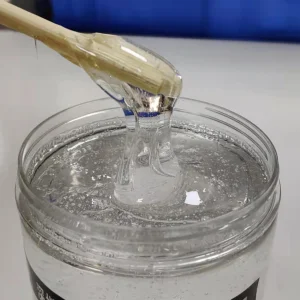
Thermal interface materials (thermal greases, gap pads, phase change materials) require maximum filler loadings without spiking dynamic viscosity. Incorporating spherical 5μm aluminum powder alongside silane or titanate coupling agents achieves thermal conductivities exceeding 6.5 W/m·K. Its high sphericity preserves flowability in dispensing needles, avoiding abrasive wear on automated high-speed SMT assembly nozzles.
High-pressure cold spray (HPCS) utilizes de Laval supersonic nozzles to accelerate solid metal powders past critical velocity (550–700 m/s). Due to their reduced aerodynamic drag and rapid plastic shear deformation upon ballistic impact, 5-micron particles consolidate into ultra-dense (>99.5% theoretical density) coatings on aerospace structures, repairing damaged turbine housings and aluminum-lithium airframes without thermal HAZ distortion.
Precision exothermic joining of railway tracks and high-current electrical busbars requires controlled self-propagating high-temperature synthesis (SHS). Blending 5μm spherical aluminum with micro-milled ferric oxide (Fe2O3) or copper oxide (CuO) yields ignition temperatures of ~850°C and transient temperatures exceeding 2500°C, producing homogeneous, slag-free cast weld interfaces with exceptional electrical continuity.
Press-and-sinter metallurgy of complex automotive gears and lightweight mechanical parts uses 5-micron aluminum to form sintered structural alloys. Its extreme surface energy promotes rapid solid-state diffusion below the aluminum melting point (660°C), while reducing sintering shrinkage distortion and closing inter-particle micro-voids to achieve higher tensile yield strength.
Comprehensive risk mitigation frameworks for international border crossing, customs clearance, and long-range ocean transport of Class 4.3 dangerous goods.
5-micron aluminum powder is classified under UN 1396, ALUMINIUM POWDER, UNCOATED, Class 4.3, Packing Group II (Substances which in contact with water emit flammable gases). Shipments strictly adhere to the International Maritime Dangerous Goods (IMDG) Code, with stowage Category A under deck segregation, away from oxidizers, acids, and living quarters.
Standard packing employs UN-certified steel drums (1A2/Y1.5/100) featuring anti-static conductive poly liners, vacuum-sealed multi-layer aluminum foil barrier pouches, and an in-drum dry nitrogen gas blanket (residual moisture <0.05%). Drum capacities are standardized at 25 kg, 50 kg, or 100 kg to prevent gravitational compacting during transpacific container voyages.
Due to potential dual-use applications in propellants and defense pyrotechnics, ultrafine aluminum powders with D50 < 20μm and purity >98% require formal export license approvals (End-User Certificate verification). YANXA maintains full compliance with Chinese MOFCOM export regulations, US EAR regulations, EU Dual-Use Controls, and provides certified GHS SDS in 14 languages.
Our chemical and metallurgical engineers assist procurement directors with batch sample evaluation, packaging customization, and Dangerous Goods declarations.
Continuous innovation in aerosol physics, RF plasma spheroidization, and molecular surface passivating coatings through 2030.
Upgrading melt atomization delivery to Mach 2.4 close-coupled de Laval gas delivery systems. This minimizes gas consumption per ton of aluminum by 32% while narrowing particle size standard deviations (Span = [D90-D10]/D50 reduced from 1.6 to 1.15).
Direct in-flight high-temperature plasma flash melting of irregularly classified micro-powders. Vaporizes micro-satellites and re-condenses ideal spherical droplets with >99% circularity, serving sub-surface semiconductor interconnect pastes.
Pioneering continuous fluid-bed ALD nano-coatings of 1.5 nm titanium oxide (TiO2) or fluoropolymer monolayers directly on 5-micron aluminum particles. Guarantees 100% moisture inertness while maintaining full reactive combustion kinetics upon thermite trigger.
Transitioning 100% of foundry melting energy to green hydrogen-plasma burners and closed-cycle argon recapture loops. Lowering embedded Scope 1 and Scope 2 carbon footprint for European CBAM compliance to under 1.8 kg CO2e/kg powder.
Authoritative answers addressing quality validation, dangerous goods transit, sample orders, and chemical assay requirements.
Explore complementary specialty materials supplied by YANXA for pyrotechnic formulation, resin crosslinking, semiconductor etching, and advanced composite manufacturing.