Verified batches, precise particle size distributions (PSD), and custom metallurgical assay certifications.

Understanding shifting procurement dynamics, regulatory pressures, and downstream metallurgical applications worldwide.
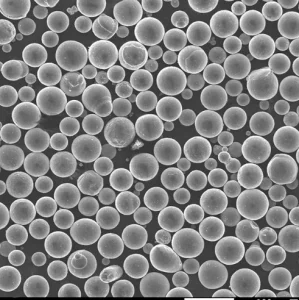
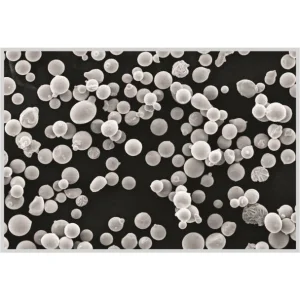
The global demand for inert gas-atomized spherical aluminum powder has surged alongside the rapid expansion of Selective Laser Melting (SLM) and Direct Metal Laser Sintering (DMLS). High-purity alloys such as AlSi10Mg and Scalmalloy require strictly controlled oxygen pickup (<1500 ppm), high apparent density, and satellite-free morphology to ensure layer uniformity and mechanical durability in aerospace structural components.
In the green energy sector, fine aluminum powders (typically D50 between 2.0 to 4.5 µm) serve as essential raw materials for manufacturing rear-side aluminum metallization pastes in PERC and TOPCon solar cells. Controlling particle roundness, surface oxidation thickness, and organic trace elements ensures lower contact resistance, optimal back surface field (BSF) formation, and maximized photoelectric conversion efficiency across high-throughput cell fabrication lines.
Flake and ultra-fine atomized aluminum powders remain pivotal across energetic formulations, solid propellants, and thermite cutting agents. Reactive performance correlates directly with specific surface area (BET) and active aluminum content (regularly maintained ≥ 98.5% to 99.7%). Strict electrostatic discharge (ESD) passivation protocols and hermetic packaging safeguard chemical stability during overseas transit.
How downstream engineering teams adapt technical grades across global operating environments.
In developing infrastructure across Southeast Asia and the Middle East, water-dispersible aluminum pastes and coated powders act as the critical foaming agent for Autoclaved Aerated Concrete (AAC). When mixed with calcium hydroxide, controlled hydrogen generation creates a uniformly porous internal matrix, increasing insulation properties while substantially reducing dry block density.
In coastal industrial facilities and offshore marine structures across North America and Western Europe, non-leafing and leafing aluminum flake powders are formulated into anti-corrosion barrier primers. Flakes align parallel to the substrate surface, generating a multi-layered shingle barrier that prevents moisture and chloride ion penetration, extending recoat cycles by over 300%.
Steel plants throughout Latin America and Asia use coarse-grained irregular and granular aluminum powders as sacrificial deoxidizers in secondary ladle refining. The high affinity between molten aluminum and dissolved oxygen forms alumina slag rapidly, while refractory grade powder improves hot-bending strength and thermal shock resistance in shaped carbon-bonded refractory bricks.
Combining primary molten metal integration, vacuum gas atomization technology, and lean bulk logistics.
Leading Chinese atomization hubs leverage close proximity to electrolytic aluminum smelters. By routing liquid primary aluminum directly into closed-loop induction holding furnaces without intermediate ingot remelting cycles, manufacturing lines achieve a 15–20% reduction in thermal energy consumption while minimizing secondary trace oxide inclusion.
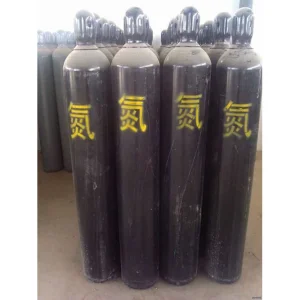
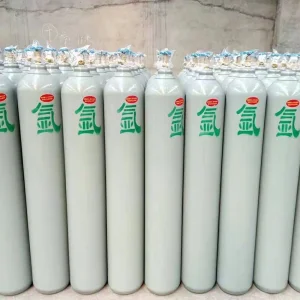
Facilities utilize high-pressure Supersonic Gas Atomization (SSGA) using high-purity nitrogen or argon gas (5N purity). In-line precision acoustic classification systems dynamically segregate particle envelopes from 0 to 15 µm, 15 to 45 µm, and 45 to 105 µm with tight standard deviation, enabling custom tailor-made distributions on tight customer lead times.
Every industrial production batch is subjected to comprehensive quality control. In-house labs deploy Malvern Mastersizer laser diffraction analyzers for PSD, Horiba oxygen/nitrogen determinators, Hall flowmeters for flowability, and ICP-OES spectrometry for chemical assay validation, delivering auditable traceability across all dispatched lots.
Next-generation powder metallurgy innovations advancing industrial light-weighting and energy density.
Additive manufacturing requires alloys with high crack resistance and low thermal expansion coefficients. Research focuses on scandium-stabilized aluminum (Al-Mg-Sc-Zr) powders and novel High-Entropy Alloys (HEAs). The controlled sub-micron precipitation of Al3(Sc,Zr) phases inhibits recrystallization and crack propagation, allowing additive manufacturing of structures with tensile strengths exceeding 500 MPa.
Addressing ignition sensitivities and atmospheric moisture degradation, new technology utilizes organic fatty acids and nanometer-scale atomic layer deposition (ALD) alumina encapsulation. This process yields aluminum powder with prolonged shelf storage stability, non-combustible handling classification under select conditions, and improved safety during transport without compromising sintering reactivity.
Aligning with international ESG mandates, forward-thinking Chinese facilities are deploying certified green-power aluminum billets (hydropower and solar smelters) along with refined clean manufacturing scrap upcycling. Closed-loop scrap recovery systems maintain analytical purity tolerances while slashing embodied carbon by up to 65% compared to fossil fuel-derived powder.
End-to-end regulatory compliance from Class 4.1 / 4.3 handling protocols to port customs clearance.
Fine powders exhibiting flammable solid (UN 1396, Class 4.3) characteristics are packaged strictly inside UN-certified steel drums (1A2) with hermetic poly-liner bags, vacuum-sealed under inert argon blankets to eliminate oxygen exposure and prevent humidity migration during long-haul sea freight routes.
Export teams handle comprehensive documentation workflows: multi-language GHS-compliant Safety Data Sheets (SDS), Batch Certificates of Analysis (COA), Container Safety Declarations, and Third-Party Verification Reports (SGS, Intertek) to prevent demurrage delays at destination ports in the Americas, Europe, and Asia-Pacific.
Beyond material fulfillment, our technical application engineers assist plant managers with safe transfer setups, pneumatic conveying parameters, inert storage grounding designs, and customized particle-size distribution tailoring to maximize processing yield on production machinery.
Addressing engineering specifications, minimum order sizes, and maritime logistics protocols.
High-grade specialty chemicals, rare gases, and atomized spherical alloy matrices.