


Alongside high-purity magnesium powders, our integrated manufacturing lines produce certified specialty elastomers, high-purity industrial gases, and inorganic formulations tested to rigid ASTM, ISO, and military defense standards.

China Epoxy Modified Liquid Rubber - Epoxidized Polybutadiene (EPB) Manufacturer, Factories
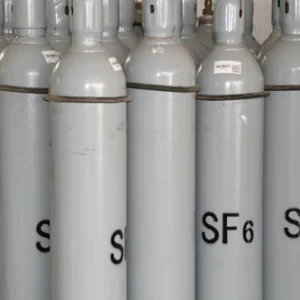
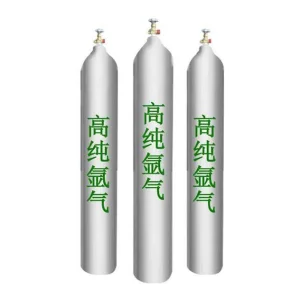

Wholesale Pure oxygen,High purity oxygen,Ultra-pure oxygen (O2) Supplier, Pricelist
China Specialty polyether - medium molecular weight PET polyether Supplier, Suppliers

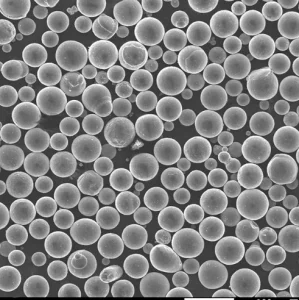
Wholesale Atomized Spherical Aluminum Magnesium Alloy Powder Manufacturer, Factory
In modern metallurgical science, magnesium ($Mg$, atomic number 12) stands out for its high chemical activity, exceptionally low density ($1.738\text{ g/cm}^3$), and rapid oxidation kinetics. When procurement directors and technical lead engineers look to wholesale buy pure magnesium powder, mechanical strength alone is rarely the deciding metric; the governing factors are controlled reactivity, specific surface area (SSA), particle size distribution (PSD), and trace-element impurity thresholds.
Our facilities specialize in two primary morphology routes: Centrifugal/Gas-Atomized Spherical Pure Magnesium Powder and Cryogenically Controlled Mechanically Milled Granular Flakes. Atomized spherical magnesium powders exhibit superior fluidization and tap density ($>1.05\text{ g/cm}^3$), making them mandatory for additive manufacturing, thermal spray coatings, and sensitive pyrotechnic formulations. Mechanically milled powders offer irregular, jagged geometries with heightened contact areas engineered specifically for chemical reaction acceleration, such as Grignard synthesis and metal deoxidization.
Every commercial batch delivered undergoes rigorous analytical screening prior to certificate issuance:
The following standardized grades represent the primary baseline for global contract manufacturing, containerized bulk deliveries, and research pilot lots:
| Grade Designation | Purity Assay (% Mg) | Predominant Particle Size | Particle Morphology | Typical Industrial Target Application |
|---|---|---|---|---|
| Ultra-Pure 4N | ≥ 99.99% | 15 – 45 μm (325–800 Mesh) | Gas-Atomized True Spherical | Semiconductor doping, biomedical implants, nano-composites |
| Aerospace AM Grade | ≥ 99.85% | 20 – 63 μm (250–600 Mesh) | Inert Argon Atomized Spherical | Laser Powder Bed Fusion (LPBF), Additive Manufacturing |
| Energetic / Defense Grade | ≥ 99.80% | 75 – 150 μm (100–200 Mesh) | Nodule / Spherical / Passivated | Pyrotechnic countermeasures, flare compositions, solid fuels |
| Grignard Reagent Grade | ≥ 99.50% | 150 – 850 μm (20–100 Mesh) | Mechanical Shavings / Granular | Pharma intermediate synthesis, organometallic reactions |
| Metallurgical De-S Grade | ≥ 98.50% – 99.0% | 0.5 – 2.0 mm (Granules/Coated) | Passivated Granular / Pellet | Blast furnace hot-metal desulfurization, Kroll Ti extraction |
China accounts for upwards of 85% of primary global magnesium ingot refining. Sourcing directly from modern domestic production hubs circumvents multiple intermediary trading markups while unlocking unmatched batch scalability and technical transparency.
Direct colocation with high-grade dolomite quarries in Shaanxi and Shanxi guarantees uninterrupted feedstocks. Utilizing computerized Pidgeon reduction retorts with natural gas pre-heating keeps raw smelting costs fundamentally optimized.
Continuous ultrasonic and supersonic argon gas atomization towers prevent oxygen entrainment during metal droplet breakup. In-line oxygen analyzers ensure process chamber environments maintain $O_2$ concentrations under 10 ppm.
Operating 14 atomization lines and 8 high-energy milling stations allows simultaneous execution of standard metric-ton commercial orders alongside customized micro-batches with fast dispatch through Ningbo, Tianjin, and Shanghai ports.
Because of its aggressive electronegative reduction potential ($-2.37\text{ V}$ vs. standard hydrogen electrode) and high enthalpy of combustion, pure magnesium powder is critical across diverse high-barrier industries.
Spherical magnesium powders are central to next-generation Laser Powder Bed Fusion (PBF-LB). By enabling structural components that are 33% lighter than aluminum and 75% lighter than steel, pure Mg powders form the basis for ultralight bracketry, satellite enclosures, and UAV avionics pods.
With an intense combustion heat release of $24.7\text{ MJ/kg}$, passivated spherical pure magnesium powders serve as prime calorific fuels in military illumination decoys, countermeasure flares, igniter cords, and specialty propellants demanding ultra-tight burn rate reproducibility.
Granular magnesium (typically 20–80 mesh) is the mandatory reagent for the classic formation of Grignard compounds ($R-Mg-X$). Ultra-low traces of heavy transition metals (such as Lead, Cadmium, and Nickel) ensure compliance with strict FDA and EMA pharmaceutical impurity thresholds.
In heavy primary metals production, magnesium powder is injected into molten pig iron to scavenge sulfur down to $<0.002\%$. Furthermore, pure magnesium granules are the fundamental reducing agent in the Kroll process to reduce Titanium Tetrachloride ($TiCl_4$) into titanium sponge.
Material requirements are advancing rapidly beyond basic bulk commodity powder specifications toward precision functional nanomaterials and green metallurgy standards.
Magnesium hydride ($MgH_2$) possesses a remarkable theoretical hydrogen storage capacity of 7.6 wt%, making it the most promising candidate for large-scale, safe solid-state hydrogen transport. Our technical development pipeline focuses on mechanically alloyed, catalyst-doped sub-micron magnesium powders capable of reversible hydrogen absorption and desorption cycles at lower operating temperatures ($<250^\circ\text{C}$).
Because magnesium operates via bivalent cations ($Mg^{2+}$) versus monovalent lithium ($Li^+$), it delivers a much higher theoretical volumetric capacity ($3833\text{ mAh/cm}^3$ vs. $2061\text{ mAh/cm}^3$). We supply specialized electrochemically cleaned pure magnesium powders for advanced anode slurry formulations without dendrite growth vulnerabilities.
Our forward-looking technology investments incorporate induction-coupled RF thermal plasma processing to transform irregular scrap chips into satellite-free, perfectly round spherical micro-particles. Concurrently, our smelters are migrating toward zero-carbon electrowinning pathways, substituting traditional carbon reductants to lower embodied $CO_2$ by over 60% per ton produced.
To satisfy stringent defense safety criteria, we deploy automated fluidized-bed surface encapsulation, coating each micro-particle with nano-thin organosilanes, stearates, or fluoropolymers. This provides stable ambient moisture protection while maintaining unrestricted thermodynamic reaction energies once ignition triggers.
Because pure magnesium powder is classified as a hazardous material under international transport codes, compliance failures can lead to port impoundments, heavy demurrage, or safety incidents. Our integrated export team guarantees flawless regulatory execution.
Pure magnesium powder is regulated under UN 1418 (Class 4.3: Substances which, in contact with water, emit flammable gases; Subsidiary Class 4.2: Substances liable to spontaneous combustion). We manage all IMDG vessel approvals, Dangerous Goods Declarations (DGD), and certified sea freight bookings.
Standard shipping utilizes UN-rated open-head steel drums (1A2/Y1.5/100) with airtight gasket seals. Interior barrier systems incorporate anti-static foil bags flushed with dry Argon or Nitrogen gas, keeping absolute interior moisture well below 100 ppm during prolonged ocean transit.
All shipments arrive with comprehensive documentation: lot-traceable Certificate of Analysis (COA), 16-section GHS Safety Data Sheets (SDS) translated into destination languages, and formal REACH compliance certificates for chemical import clearances into the European Union.
Key technical answers to streamline decision-making for chemical process engineers, materials scientists, and enterprise purchasing teams.
For standard off-the-shelf industrial grades (e.g., 50–100 mesh granular or standard 99.8% metallurgical desulfurization powder), our minimum order quantity is typically 1 metric ton (1,000 kg). For specialized inert-gas-atomized spherical powders requiring tight particle cuts (e.g., 15–45 μm or 20–63 μm) or customized surface passivation, trial evaluation batches starting at 100–250 kg can be accommodated with complete batch qualification documentation.
We apply three distinct protection levels based on customer specifications: (1) Vacuum inert packing inside heat-sealed multi-layer aluminum-polymer foil liners charged with ultra-high-purity Argon gas; (2) Chemical surface passivation using organo-functional silanes or liquid-phase stearic treatments that form a monolayer hydrophobic barrier without suppressing pyrotechnic energy release; and (3) In-drum silica/molecular-sieve desiccant integration for extended storage stability exceeding 24 months.
Atomized spherical magnesium powder is produced by breaking molten magnesium streams with high-velocity supersonic inert gas. This generates highly rounded, satellite-free particles with high tap density, uniform flowability (vital for 3D printing and powder metallurgy), and predictable packing. Mechanically milled powders are produced by shredding or hammer-milling solid ingots; they feature jagged, irregular flake morphologies with larger specific surface areas, making them ideal for chemical reactions like Grignard synthesis and metal reduction.
Every production lot is issued an auditable, lot-numbered Certificate of Analysis (COA) detailing: (1) Quantitative chemical assay via ICP-OES with element-by-element impurity caps (Fe, Si, Cu, Ni, Ca, Cl); (2) Complete granulometry profile ($D_{10}, D_{50}, D_{90}$, and sieve mesh retention percentages); (3) Apparent density and tap density ($g/cm^3$); and (4) Karl Fischer moisture assay. Third-party verification (such as SGS or Alfred H Knight) is available upon project request.
Our pricing is directly tied to the primary Shanghai Metals Market (SMM) and Chinese domestic magnesium ingot spot indexes. For volume contracts, we provide flexible quotation structures including 3-month to 12-month fixed-price hedging, floating index-linked pricing formulas with transparent atomization conversion premiums, or CIF/FOB spot contracts based on prompt market valuations.
Expand your supply chain integration. Explore our full range of certified industrial chemical components, specialty polymers, and advanced metallurgical precursors.
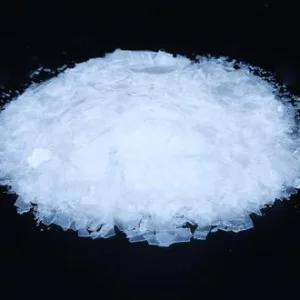
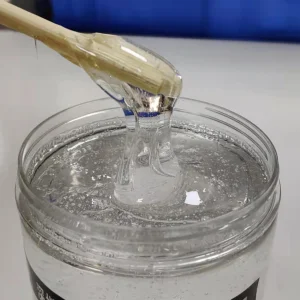
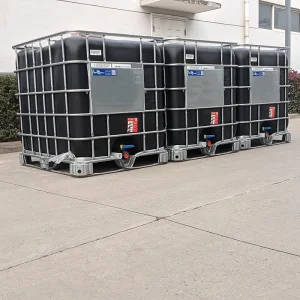
Wholesale Specialty Polyether-High Molecular Weight PET Polyether Pricelist, Quotes
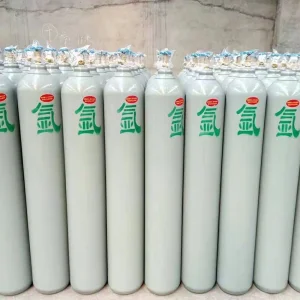
Wholesale Argon gas for electronic industry (Ar) Manufacturers, Suppliers
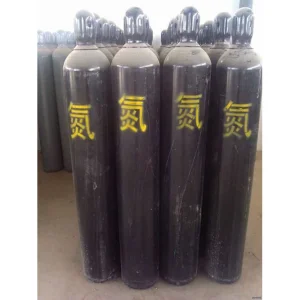
Wholesale Pure nitrogen,High pure nitrogen,Ultra-pure nitrogen (N2) Supplier, Factories

China Liquid Styrene Butadiene Rubber (LSBR) Manufacturers, Pricelist
Connect directly with our metallurgy technical directors. Whether you require standard container-load granular magnesium shipments or ultra-fine atomized spherical powders with tailored particle size distributions, our engineering team responds within 24 hours with complete analytical datasheets and transparent pricing.
