Explore our verified high-performance synthetic materials, functional liquid elastomers, specialty rare gases, and atomized energetic alloy precursors manufactured under ISO 9001:2015 traceability.
Zirconium Hydride (ZrH₂) represents one of the most critical transition metal hydrides used across defense ordnance, nuclear neutron deceleration, vacuum electronic gettering, and advanced metallurgy.
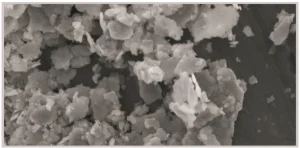
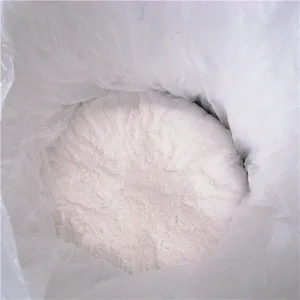
In modern industrial chemistry and materials science, CAS No. 12158-75-7 designates Zirconium Hydride (ZrH₂)—an interstitial metal hydride compound characterized by its deep grey-to-black metallic crystalline powder state. Chemically synthesized via the controlled exothermic direct hydrogenation of high-purity refined zirconium sponge or deoxidized zirconium ingots at temperatures between 400°C and 800°C under an ultra-pure hydrogen gas atmosphere, ZrH₂ exhibits unique physicochemical traits that make it indispensable in extreme thermal, explosive, and nuclear applications.
The global demand for CAS 12158-75-7 is bifurcated into two primary high-value domains: energetic initiation pyrotechnics and nuclear thermal neutron moderators. Because zirconium possesses an exceptionally high affinity for atmospheric gases at elevated temperatures and a massive enthalpy of combustion (ΔH°c ≈ -1085 kJ/mol for Zr to ZrO₂), ZrH₂ provides exceptional ignition sensitivity, high calorific output, and combustion stability when paired with strong oxidizers such as potassium perchlorate (KClO₄), barium chromate (BaCrO₄), or lead peroxide.
Essential component in squibs, electric matches, safe-and-arm initiation systems, NASA Standard Initiators (NSI), and automotive airbag micro-gas generants requiring nanosecond trigger kinetics and zero residue slag agglomeration.
Used in TRIGA-type research reactors and next-generation Small Modular Reactors (SMRs). ZrHₓ provides a high macroscopic hydrogen atom density within a refractory metallic matrix, resisting irradiation swelling up to 750°C.
Functions as an active non-evaporable getter (NEG) inside magnetrons, traveling wave tubes (TWTs), and particle accelerators, scavenging trace oxygen, water vapor, and nitrogen at modest degassing temperatures.
Industrial ZrH₂ commonly exists across the non-stoichiometric phase continuum ZrHₓ (where x typically ranges from 1.85 to 2.05). For commercial pyrotechnic and sinter-alloy applications, maintaining the correct delta (δ, FCC) or epsilon (ε, FCT) tetragonal crystal lattice phase is decisive. Deviations in bound hydrogen percentage (target 2.0% to 2.2% H wt/wt) directly shift the thermal activation energy from 180 kJ/mol down to 140 kJ/mol, dramatically affecting pyrotechnic burn rates and ignition safety thresholds.
How Chinese chemical refiners and metallurgical plants have engineered an unbeatable value chain for CAS 12158-75-7 through vertical raw-material integration and closed-loop hydriding technology.
China's domestic zircon sand processing (zirconium oxychloride, Kroll reduction, and vacuum arc remelting) secures steady feedstocks, insulating global buyers from geopolitical raw sponge price spikes and delivery bottlenecks.
State-of-the-art continuous hydrogen-absorption retorts coupled with closed-circuit inert-gas fluid energy jet mills prevent oxidation runaway, achieving tight Gaussian PSD curves (D50: 1.5–12 μm) at industrial scale.
Export batches ship backed by trace ICP-OES elemental analysis, LECO thermal conductivity gas chromatography (for precise H and O content), Malvern laser diffraction particle sizing, and full GHS-compliant SDS dossiers.
Compare physical, chemical, and particle characteristics across standard industrial, pyrotechnic, and nuclear moderator ZrH₂ grades.
| Grade Category | Zr Content (min %) | Comb. Hydrogen (%) | Particle Size (D50) | Max Fe / Si / Cl Impurity | Primary Industrial Sector |
|---|---|---|---|---|---|
| Pyrotechnic Grade A Standard | ≥ 97.5% | 2.00% – 2.25% | D50: 3.5 – 6.5 μm | Fe < 0.08%, Si < 0.03% | Aerospace initiators, squibs, military detonators |
| Pyrotechnic Grade B Fine Mesh | ≥ 96.8% | 1.95% – 2.20% | 325 Mesh (< 45 μm) | Fe < 0.12%, Si < 0.05% | Automotive gas generants, thermal delays, fireworks |
| Metallurgical / Sinter Grade Deox/Alloy | ≥ 98.0% | 1.85% – 2.10% | 200 Mesh (< 75 μm) | Fe < 0.05%, Si < 0.02% | Titanium alloy grain refiner, powder metallurgy sintering |
| Nuclear / Low-Hf Grade Reactor Spec | ≥ 99.2% (Zr+Hf) | 2.05% – 2.20% | Engineered Pellets / Granules | Hf < 100 ppm, B < 0.5 ppm | SMR neutron moderators, space nuclear power systems |
| Electronic Getter Grade High Purity | ≥ 98.8% | 2.10% – 2.25% | D50: 2.0 – 4.5 μm | Fe < 0.03%, O < 0.35% | Vacuum discharge switches, traveling wave tube gettering |
Dehydrogenation & Sintering Synergy: In powder metallurgy (PM), CAS 12158-75-7 plays a transformative role. When sintering titanium, niobium, or specialized high-entropy alloys, using elemental zirconium metal powder presents severe oxidation and handling risks. Conversely, ZrH₂ serves as a protective precursor. During the vacuum sintering ramp (450°C–700°C), ZrH₂ decomposes to release nascent atomic hydrogen ($ZrH_2 \rightarrow Zr + 2H^\bullet$). This in-situ atomic hydrogen actively reduces surface oxides on surrounding metallic particles, cleansing grain boundaries and yielding sintered alloys with dramatically enhanced fracture toughness and relative density (>99.5%).
Next-generation growth drivers propelling global consumption of CAS No. 12158-75-7 from conventional ignition powders into deep-tech energy architectures.
As aerospace agencies and private space ventures pioneer Nuclear Thermal Propulsion (NTP) and planetary surface micro-reactors, ZrH₂-moderated U-ZrH fuel elements deliver exceptional thermal stability and neutron economy, lowering reactor payload mass by up to 35%.
R&D into Metastable Intermolecular Composites (MIC) combines sub-micron ZrH₂ with nano-fluoropolymers (PTFE/Viton) or nano-copper oxide. This breakthrough unlocks lead-free, non-toxic green ignition formulations matching traditional lead styphnate velocity without environmental contamination.
In Selective Laser Melting (SLM) and Direct Energy Deposition (DED), ZrH₂ nano-additives function as active in-situ grain boundary nucleants, eliminating columnar crystal cracking in high-strength aluminum alloys (e.g., 7075 series) and superalloys.
Navigating technical documentation, hazard classification (UN 1437), packaging integrity, and end-user verification required for lawful, secure cross-border transactions.
Categorized under international maritime and air codes as Flammable Solid, Inorganic. Requires UN certified steel drums (PG II) with tight hermetic seals to prevent thermal static discharge.
Every batch is documented with ICP-MS elemental breakdown, PSD laser curves, combustible hydrogen % via vacuum thermal extraction, and moisture content (<0.1%).
Filled under dry positive-pressure argon or high-purity nitrogen. Shipped with anti-static conducting liners to mitigate electrostatic ignition risks during unloading.
Given dual-use characteristics, reputable factories mandate verified End-User Declarations (EUD) and import permits to maintain 100% compliance with international export regulations.
Authoritative technical and logistical answers compiled by senior chemical engineers and export compliance directors.
CAS No. 12158-75-7 identifies Zirconium Hydride (ZrH₂), an inorganic interstitial hydride formed by zirconium and hydrogen. It exists as a stable, odorless, dark-grey to charcoal-black metallic powder with a molecular weight of 93.24 g/mol and a nominal crystalline density of 5.60 g/cm³. It remains stable in dry ambient air but undergoes active thermal desorption into elemental zirconium and hydrogen gas when heated in vacuum or inert atmosphere above 600°C–700°C.
Elemental zirconium powder is extremely pyrophoric and prone to spontaneous ignition upon mild friction or exposure to oxygen. ZrH₂ is far more chemically stable during dry handling, milling, and pneumatic dosing. Its crystalline lattice protects the metal matrix from uncontrolled ambient oxidation. In pyrotechnic compositions, ZrH₂ releases hydrogen gas upon ignition, expanding hot combustion products and creating rapid pressure wavefronts that standard metallic zirconium cannot match.
Under IMDG (sea freight) and ICAO/IATA (air freight) regulations, CAS 12158-75-7 is classified as UN 1437, ZIRCONIUM HYDRIDE, Class 4.1 (Flammable Solid), Packing Group II. Compliant export requires a dangerous goods declaration (DGD), UN-certified packaging certificates, GHS-compliant multilingual SDS, certificate of origin, and certified batch COA verifying no spontaneous pyrophoric tendencies under test standard UN Manual of Tests and Criteria Part III, sub-section 33.2.1.
Yes. Equipped with nitrogen/argon closed-loop jet mills, mechanical classifier systems, and ultrasonic sieving, leading Chinese manufacturing hubs supply tailorable particle envelopes. Standard offerings range from coarse 100–200 mesh granules down to specialized D50 values of 3.0–5.0 μm or 1.5–2.5 μm with tight Gaussian curves. Particle size is validated using laser diffraction (ISO 13320) and reported on each lot's COA.
To eliminate moisture ingress and oxidative degradation, our factories employ multi-tier packaging: inner vacuum-sealed multi-layer aluminum-plastic barrier pouches (purged with high-purity dry argon), enclosed in static-dissipative antistatic bags, seated within heavy-duty UN-approved steel drums (10 kg, 25 kg, or 50 kg net capacity) secured with lever-lock clamp rings and tamper-evident seals.
Qualified corporate buyers can request representative 100g to 500g evaluation samples accompanied by full lot-specific COA, SDS, and technical datasheets. For full commercial contracts, third-party pre-shipment inspections (e.g., SGS, BV, or CIQ) are routinely supported to verify chemical assay, particle distribution, and packaging integrity prior to port containerization.
Supplement your energetic powder and metallurgy procurement with our complete suite of modified prepolymers, high-purity industrial gases, and active metal salts.