Precision-engineered inorganic salts, ultra-pure gases, and advanced polymeric elastomers vetted under ISO 9001 and international DG compliance standards.
Evaluating structural transitions across green catalysts, semiconductor micro-etching, and advanced energetic materials driven by precise chemical synthesis.
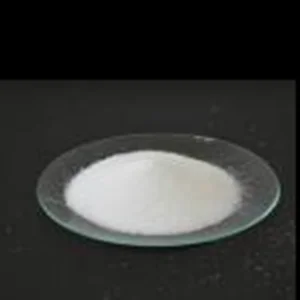
Copper Nitrate Basic, structurally identified as Dicopper Trihydroxide Nitrate, Cu2(OH)3NO3, has migrated from an auxiliary specialty reagent to a cornerstone precursor across cutting-edge industrial operations. In contrast to hydrated neutral copper nitrates [Cu(NO3)2·xH2O], which exhibit profound deliquescence and volatility, basic copper nitrate offers distinct crystallographic stability, high copper assay (approx. 52.8% to 54.0% Cu by weight), and a non-hygroscopic lattice morphology.
In the global commercial landscape, manufacturing demand is undergoing an unprecedented shift toward trace-purity control. The microelectronics transition to sub-3nm nodes demands ultra-low chloride, iron, and heavy-metal contamination profiles, establishing a direct link between upstream chemical synthesis and downstream silicon yield. Wholesale industrial consumers no longer acquire bulk basic copper salts simply by assay weight; specifications are rigorously audited for crystallite size distribution, anion-cation stoichiometry, and thermodynamic decomposition kinetics.
Simultaneously, the global drive for green chemical processes positions Cu2(OH)3NO3 as the ideal precursor for precipitated Cu/ZnO/Al2O3 methanol synthesis catalysts, environmental NOx selective catalytic reduction (SCR), and sustainable agricultural bio-fungicide formulations that significantly reduce copper runoff into alluvial water systems.
| Analytical Parameter | Standard Industrial Grade | Ultra-High Purity Catalyst Grade |
|---|---|---|
| Copper Assay (Cu) | ≥ 52.5% | ≥ 53.8% – 54.2% |
| Chemical Formula | Cu2(OH)3NO3 | Cu2(OH)3NO3 (Stoichiometric) |
| Chloride (Cl⁻) | ≤ 100 ppm | ≤ 15 ppm |
| Sulfate (SO4²⁻) | ≤ 200 ppm | ≤ 30 ppm |
| Iron (Fe) | ≤ 80 ppm | ≤ 10 ppm |
| Lead (Pb) & As | ≤ 20 ppm | ≤ 2 ppm (ICP-MS Audited) |
| Particle Size (D50) | 10 – 35 μm | 2 – 8 μm (Custom Jet-Milled) |
Explore how our manufacturing engineering translates microscopic crystal control into high-yield macroscopic manufacturing success.
Acts as the premier high-purity copper precursor in co-precipitation synthesis for syngas-to-methanol conversion, low-temperature water-gas shift (WGS) reactions, and hydrogenation of organic esters. The specific surface area of copper oxide derived through Cu2(OH)3NO3 intermediate calcination is vastly superior to conventional copper carbonates.
Employed in selective chemical-mechanical planarization (CMP) slurries and precision etching formulations for advanced wafer metallization. Its predictable, non-corrosive dissolution kinetics in organic and mild inorganic acids mitigate over-etching phenomena during interconnect fabrication.
Serves as a thermal-stabilizing oxidizer in non-azide gas generator systems for automotive safety restraints. The steady release of non-toxic N2, H2O, and stable CuO residue ensures rapid, cool gas inflation compliant with strict North American and European crash-safety parameters.
Provides continuous, micro-dosed cuprous/cupric ionic release in marine-grade antifouling ship hull coatings and industrial wood preservatives, delivering long-term resistance against invasive biological colonization without the environmental toxicity of banned organotin matrices.
Bridging Chinese manufacturing scale with rigorous European, American, and Asia-Pacific hazardous material governance protocols.
Operating strictly under auditable quality frameworks. Every production lot is cataloged from precursor dissolution to final packaging. Standard shipping portfolios include GHS-compliant SDS, lot-specific COA, and X-ray Diffraction (XRD) characterization to verify pure monoclinic phase identity without amorphous hydroxide impurities.
Classified under UN regulations (typically UN 1477 / UN 3085 oxidizer/corrosive matrices per individual formulation assay). Shipments utilize UN-approved heavy-duty drums with anti-static liners, moisture-impervious foil barriers, and automated pallet wrapping engineered to withstand humid trans-oceanic container voyages.
Fully prepared for EU REACH dossier synchronization, EPA TSCA compliance in the United States, and regional chemical registration inventories across ASEAN, Japan, and South Korea. Our technical team works alongside internal regulatory desks to supply supply-chain sustainability statements and low-carbon footprint audits.
Driving downstream value creation through particle morphology optimization, ultra-low carbon footprint routes, and smart process automation.
Transitioning standard bulk batch precipitation to continuous micro-reactor synthesis. This breakthrough eliminates localized pH variances, producing ultra-uniform gerhardtite platelets with span values (D90-D10)/D50 under 0.8, drastically improving downstream catalyst washcoat adhesion.
Deploying advanced wet jet-milling and surface passivating agents to fabricate stable aqueous dispersions of basic copper nitrate with median particle sizes beneath 800 nanometers, opening next-level efficiencies in thin-film conductive seed coatings.
Integrating state-of-the-art membrane electrodialysis to recycle nitric acid and ammonium/sodium salts back into the synthesis cycle, slashing scope 1 and scope 2 emissions per ton produced while adhering to China's strict ecological redline mandates.
Detailed answers addressing crystallographic chemistry, import handling, custom assay tolerances, and factory order workflows.
Copper Nitrate Trihydrate [Cu(NO3)2·3H2O] is a highly water-soluble, hygroscopic salt that liquefies rapidly when exposed to atmospheric humidity and melts at approximately 114°C. Conversely, Basic Copper Nitrate [Cu2(OH)3NO3] features a layered, crystalline polymer structure where hydroxide bridges copper atoms, rendering the compound practically insoluble in pure water and exceptionally stable during ambient industrial storage.
We deploy multiple recrystallization and counter-current dynamic deionized wash cycles on filter-press cakes. By monitoring wash liquor conductivity and utilizing high-precision ICP-OES and ICP-MS testing in our internal analytical labs, we consistently maintain chloride below 15 ppm and iron under 10 ppm for specialized electronic and catalyst applications.
Our baseline standard consists of 25 kg multi-wall UN-approved kraft paper bags with inner heat-sealed polyethylene moisture liners, palletized and heat-shrink wrapped. For high-volume manufacturing facilities, we deliver 500 kg or 1,000 kg antistatic FIBC super sacks engineered for automated pneumatic discharging systems.
Yes. Through proprietary control of precipitation reactor nucleation rates, shear velocities, and post-drying fluid-bed milling, our factories can modulate median particle size (D50) across a breadth of 2 μm up to 50 μm, tailored exactly to your dispersion slurry and reaction rate prerequisites.
Explore our complementary wholesale portfolio spanning gas-atomized metal alloys, rare noble gases, and high-performance elastomers.