Direct factory supply of certified industrial materials, electronic-grade reagents, and alloy formulations with batch COA and verified chemical assay guarantees.
A comprehensive metallurgical and procurement analysis covering manufacturing thermodynamics, morphological classification, particle size distribution engineering, and international supply chain economics.
The global copper powder marketplace is experiencing an unprecedented structural evolution, propelled by the relentless demand for higher energy density, miniature electronic circuitry, advanced thermal dissipation modules, and additive manufacturing (AM). Pure copper, renowned for its exceptional electrical conductivity (58 MS/m or 100% IACS) and thermal conductivity (~400 W/m·K), represents one of humanity's most foundational engineering materials. However, transitioning from solid copper cathodes into micrometer-scale powders requires profound metallurgical precision to regulate oxidation kinetics, particle morphology, packing density, and fluid dynamics.
In advanced industrial manufacturing, standard "off-the-shelf" copper powder is no longer sufficient. Modern applications demand tailor-made powders where particle shape (spherical, dendritic, irregular, or flake), particle size distribution (PSD), specific surface area (BET), and interstitial oxygen content are meticulously engineered to match designated consolidation techniques—such as Selective Laser Melting (SLM / LPBF), Binder Jetting (BAM), Cold Spraying, Metal Injection Molding (MIM), or conventional Press-and-Sinter powder metallurgy (PM).
Produced via Vacuum Inert Gas Atomization (VIGA) utilizing high-pressure nitrogen or argon gas. Boasts near-perfect sphericity, minimal satellite particles, high apparent and tap densities, and superb Hall flow rates (<18 s/50g). Essential for SLM/LPBF 3D printing and thermal spray coatings.
Refined via aqueous copper sulfate electrodeposition under precise current densities. Yields high-purity branched dendritic particles characterized by high green strength upon die compaction, interlocking particle behavior, and controlled porosity for self-lubricating bronze bearings and carbon brushes.
Fabricated through ultra-high-pressure water impingement against molten copper streams. Generates irregular, nodular morphologies that present an economical balance of green compaction integrity, moderate flowability, and rapid sintering activity for friction materials, clutch plates, and chemical catalysts.
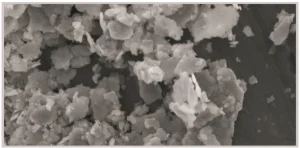
Engineered through high-energy wet ball milling with proprietary fatty acid surfactants (stearic acid). Offers high aspect ratios, high leafing or non-leafing orientation, and outstanding surface shielding for EMI/RFI conductive coatings, thick-film pastes, and conductive adhesives.
Synthesized via chemical reduction or plasma evaporation with mean diameters from 100 nm to 5 μm. Lowers the effective sintering temperature below 200°C due to high surface energy, unlocking submicron conductive inks for flexible printed electronics and PV solar cell metallization.
Homogeneous composite powders pre-alloyed with tin (6–12%), zinc, phosphorus, or nickel to eliminate segregation during blending. Guarantees uniform liquid-phase sintering behavior, repeatable dimensional tolerance, and consistent thermal/mechanical properties in structural PM components.
Oxygen is copper powder's most detrimental contaminant. Dissolved oxygen or surface oxides (Cu2O and CuO) act as dielectric insulating layers, drastically degrading electrical conductivity and creating volatile steam bubbles during hydrogen-atmosphere sintering (hydrogen embrittlement). Chinese Tier-1 atomization facilities employ closed-loop inert gas classification and continuous vacuum reduction annealing to stabilize oxygen values consistently between 100 ppm and 800 ppm depending on the requested particle cut.
| Manufacturing Technology | Typical Morphology | Apparent Density (g/cm³) | Oxygen Range (ppm) | Primary Industrial Applications |
|---|---|---|---|---|
| Gas Atomization (VIGA) | Spherical | 4.80 – 5.40 | 150 – 500 | Additive Manufacturing (SLM/EBM), Cold Spray, Heat Pipes |
| Electrolytic Deposition | Dendritic / Fern | 1.80 – 2.80 | 800 – 2,500 | Carbon Brushes, Friction Discs, Self-Lubricating Bearings |
| Water Atomization | Irregular / Nodular | 2.60 – 3.50 | 1,200 – 3,500 | Sintered Structural Parts, Diamond Tools, Chemical Synthesis |
| Milling / Attrition | Flake / Lamellar | 0.80 – 1.80 | 2,000 – 5,000 | EMI Shielding, Conductive Inks, Antifouling Marine Paints |
| Chemical Reduction | Submicron / Polyhedral | 2.20 – 3.20 | 1,500 – 4,000 | MLCC Terminations, Photovoltaic Ag-Cu Pastes, Micro-Joining |
Exploring the structural cost benefits, deep domestic refining ecosystem, high-capacity atomization infrastructure, and stringent quality control protocols driving China's metal powder leadership.
China processes and consumes over 50% of the world's refined copper cathode, creating an unmatched domestic bedrock for metal powder atomizers. While Western powder producers often contend with fragmented upstream raw material supply chains, volatile toll-processing fees, and extended shipping backlogs for Grade A copper cathode (Cu-ETP / Cu-OF), Chinese manufacturers operate directly adjacent to world-scale electrolytic smelting complexes. This geographic and operational proximity minimizes cathode transport tariffs, reduces hedging exposure on the Shanghai Futures Exchange (SHFE) and London Metal Exchange (LME), and delivers an inherent 12% to 25% cost efficiency to international buyers.
Beyond baseline raw material economics, Chinese powder production lines have experienced massive technological modernization over the past decade. Modern atomization towers are equipped with digital SCADA control loops, supersonic ceramic gas nozzles (De Laval geometry), and enclosed vacuum ultrasonic air-classification suites capable of tight PSD separation in a continuous 24/7 operating model.
Immediate access to 99.99% high-purity LME registered copper cathode stocks eliminates multi-tier intermediate broker markups and guarantees pure, unadulterated melt chemistry.
Every single batch is systematically tracked with rigorous laser diffraction PSD (ASTM B822), Hall flow testing (ASTM B213), and LECO oxygen/nitrogen elemental analysis.
Proprietary multi-deck mechanical sieving and vacuum cyclonic classifiers deliver tailored micro-cuts: 0-15 μm, 15-45 μm, 20-63 μm, -100 mesh, -200 mesh, and -325 mesh.
Seamless logistics execution utilizing nitrogen-purged hermetic drums, anti-oxidation vacuum foil bags, sea-worthy palletization, and full GHS/SDS compliant customs paperwork.
Examining how tailor-made copper powder specifications translate to end-use efficiency across electronics, thermal management, e-mobility, and manufacturing.
Target PSD: 15–53 μm (SLM/LPBF) or 45–105 μm (DED/EBM)
Core Challenge: Overcoming copper's high optical reflectivity at standard infrared laser wavelengths (1064 nm).
Engineered Solution: High-sphericity VIGA copper powder with controlled micro-alloying or utilization with modern green (515 nm) and blue (450 nm) industrial lasers to produce fully dense (>99.5%) pure copper induction coils, rocket engine combustion chambers, and complex conformal cooling dies.
Target PSD: -100 to +325 mesh (spherical/nodular blends)
Core Challenge: Achieving high capillary pressure alongside maximum fluid permeability without wick collapse.
Engineered Solution: Sintered copper powder wicks for 5G smartphone thermal spreaders, high-performance laptop cooling loops, and electric vehicle inverter cold plates, enabling rapid two-phase heat transfer with thermal conductivity surpassing 10,000 W/m·K.
Target PSD: Electrolytic dendritic Cu blended with 10% Tin (CuSn10)
Core Challenge: Balancing 18–25% interconnected open porosity with mechanical crush resistance.
Engineered Solution: High green-strength dendritic copper interlocks securely under uniaxial compaction, forming capillary oil-retaining channels that self-lubricate starter motors, wiper gears, and HVAC actuators over millions of cycles without maintenance.
Target PSD: -325 mesh Water Atomized or Reduced Cu Powder
Core Challenge: Retaining synthetic diamond grits without thermal degradation during hot-press sintering.
Engineered Solution: Ultra-fine copper acts as a ductile metallurgical bonding matrix with low liquidus transition temperatures, ensuring firm mechanical clamping and uniform matrix wear for stone saw blades, core drills, and semiconductor wafer grinding wheels.
Target PSD: Submicron to 3 μm Spherical / Flake Powders
Core Challenge: Preventing high-temperature oxidation during multi-layer ceramic capacitor co-firing.
Engineered Solution: Surface-passivated copper powders treated with organic anti-tarnish inhibitors serve as cost-effective replacements for precious silver and palladium electrodes in electronic terminations and automotive thick-film circuits.
Target PSD: Coarse Irregular Water Atomized Cu (-60 to +150 mesh)
Core Challenge: Dissipating massive kinetic energy at dynamic friction interfaces exceeding 600°C.
Engineered Solution: Cu serves as the continuous thermal matrix, conducting frictional heat rapidly away from the braking rotor while providing structural stability and anti-seizure properties alongside graphite, ceramic particulates, and tin additives.
Strategic market shifts shaping the next decade of wholesale copper powder consumption, environmental compliance, and advanced engineering requirements.
As corporate procurement divisions navigate the clean energy transition, their selection criteria for copper powder suppliers have shifted beyond basic cost-per-kilogram calculations. Major automotive tier-1s, consumer electronics multinationals, and aerospace contractors evaluate supply stability through three core vectors: sustainability/carbon footprint, extreme purity thresholds (<100 ppm total interstitials), and smart packaging protection.
With silver paste costs rising dramatically, TOPCon and HJT solar cell manufacturers are actively shifting toward silver-coated copper (Ag-Cu) or pure ultrafine copper metallization pastes. This transition requires submicron spherical copper powder characterized by extreme oxidation resistance and low contact resistance.
The commercialization of high-power continuous wave (CW) green (515 nm) lasers has removed the historic barrier to pure copper 3D printing. The industry is demanding gas atomized powders with strict sphericity, zero satellites, and precise 15–53 μm classification to manufacture monolithic electric vehicle motor windings.
Global carbon border mechanisms (such as the EU CBAM) are compelling powder producers to introduce verifiable low-carbon product lines. By utilizing 100% certified recycled copper scrap refined through clean hydrometallurgical or electric arc routes, manufacturers can reduce embodied Scope 3 emissions by up to 65%.
Key parameters that technical buyers, materials scientists, and procurement specialists must define when auditing prospective manufacturers.
Specify full volumetric laser diffraction curves: D10, D50, D90, and D99 per ASTM B822. Never rely on nominal mesh sizing alone for additive or MIM processes.
Measure Apparent Density (Hall flow meter per ASTM B212 or Scott volumeter ASTM B329) and Tap Density (ASTM B527) to evaluate die-fill uniformity and green density potential.
Require certified LECO inert gas fusion oxygen test values and Hydrogen Loss tests (ASTM E159) to ensure sintering without hydrogen disease or catastrophic porosity.
Ensure double-sealed polyethylene or aluminum-foil vacuum packs with desiccant inserts and nitrogen backfill inside sturdy 25 kg / 50 kg steel drums to prevent en-route oxidation.
Complementary industrial catalog of rare electronic gases, high-performance inorganic salts, and advanced flake metal additives with global shipping certification.
Clear, authoritative technical answers addressing common metallurgical, shipping, and specification queries from international buyers.