

Engineered precursor compounds, high-purity inorganic formulations, and gas-atomized structural alloy powders compliant with ISO 9001 and international DG handling mandates.
Evaluating molecular behavior, energy density profiles, and worldwide supply constraints across aerospace, chemical synthesis, and pharmaceutical sectors.
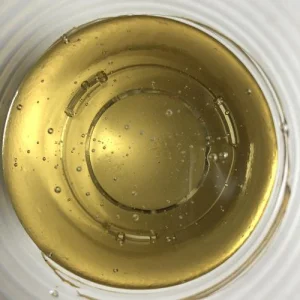
Anhydrous hydrazine (chemical formula N₂H₄, CAS 302-01-2) is a fuming, colorless, oily liquid exhibiting extreme alkaline reactivity and strong hygroscopic behavior. Unlike hydrated forms (such as Hydrazine Hydrate, N₂H₄·H₂O, typically distributed at 24% to 80% concentrations), hydrazine anhydrous represents the water-free, neat chemical form with purity thresholds exceeding 98.5% to 99.5%. Because of the azeotropic barrier occurring at approximately 68.5 mol% (or ~58.5 wt% N₂H₄ under ambient atmospheric conditions), synthesizing anhydrous hydrazine requires complex, capital-intensive non-aqueous extractive or azeotropic distillation mechanisms.
In the global chemical ecosystem, anhydrous hydrazine represents a foundational building block characterized by immense chemical enthalpy (standard enthalpy of formation ΔH_f° ≈ +50.63 kJ/mol). This endothermic energy profile allows the material to decompose hypergolically or catalytically (via Iridium on alumina matrices like S-405) into nitrogen, hydrogen, and ammonia gas streams without external oxygen inputs. Consequently, anhydrous hydrazine remains irreplaceable in satellite reaction control subsystems (RCS), orbital thrusters, specialized pharmaceutical nucleophilic substitutions, high-end polymer blowing agents, and defense-related tactical energetics.
Operates as a high-reliability liquid monopropellant for satellite orbital transfers, space exploration craft descent engines, and attitude control thrusters due to stable low-temperature catalytic decomposition.
Delivers specific impulse (Isp) values in excess of 220–240 seconds when passed across heated catalytic beds, leaving negligible nozzle residue.
Serves as a high-potency difunctional nucleophile for the construction of 1,2,4-triazoles, phthalazines, pyrazoles, and other complex heterocycles found in antitubercular, antidepressant, and antifungal APIs.
Eliminates competitive moisture reactions during critical cyclic condensation steps, maximizing stoichiometric yield.
Employed in closed-loop, supercritical boiler feedwaters and subsea nuclear power facilities where zero-water introduction and absolute zero dissolved oxygen are mandatory parameters.
Acts as an active precursor for advanced organic foaming agents, specialized polyurethane crosslinkers, and energetic polymeric binders.
How fully integrated chemical manufacturing parks, continuous-flow catalytic cracking, and strict environmental controls drive global procurement advantages.
In standard international markets, anhydrous hydrazine manufacturing is hindered by stringent chemical environmental barriers, extreme energy consumption during azeotrope dehydration, and high freight risk premiums. China’s premier chemical enterprises, including integrated producers linked with specialized operations such as Yanxatech System Industries Limited (YANXA), provide unprecedented efficiency advantages born out of complete upstream and downstream cluster synthesis.
Through the integration of upstream urea-ammonia cracking installations and chlor-alkali networks (utilizing optimized Raschig or Ketazine synthesis routes), Chinese manufacturing clusters bypass the supply bottlenecks that frequently disrupt Western facilities. Modernized facilities employ continuous azeotropic dehydration using aniline or extractive distillation via solid sodium hydroxide/calcium oxide beds, achieving extreme energy savings, minimal degradation losses, and consistent 99.0%+ assay stability.
By leveraging the Bayer-Ketazine route (reacting ammonia, chlorine or hypochlorite, and acetone to form dimethylketazine), modern Chinese installations eliminate heavy salt byproduct precipitation, allowing the efficient condensation and dehydration of pure hydrazine without exposing high temperatures to free N₂H₄ vapor phases, thus maximizing operational safety and batch repeatability.
Continuous closed-loop distillation towers maintain precise thermal gradients under nitrogen blanketing, minimizing atmospheric exposure and eliminating oxidation losses.
Manufactured through passivated 316L stainless steel, titanium, and fluoropolymer-lined reaction trains to limit iron, copper, and molybdenum ions below 0.1 ppm.
Scale derived from co-located domestic ammonia and nitric acid syntheses ensures that bulk buyers secure resilient, year-round volume commitments without supply shocks.
Each synthesis batch is continuously analyzed via inline NIR and GC-MS instrumentation to confirm low volatile carbon and verify water thresholds below 0.5% in real time.
Conforming to strict military, aerospace, and synthesis requirements (MIL-PRF-26536 Grade A/B equivalent benchmarks).
| Analytical Parameter | Propellant Standard (High Purity) | Industrial Synthesis Grade | Testing Method |
|---|---|---|---|
| Hydrazine Assay (N₂H₄) | ≥ 98.5% by weight | ≥ 98.0% by weight | Direct Acid Titration / GC |
| Water Content (H₂O) | ≤ 1.0% (Custom lots ≤ 0.5%) | ≤ 1.5% | Karl Fischer Coulometric Titration |
| Aniline Residue | ≤ 0.5% by weight | ≤ 0.8% by weight | Gas Chromatography (FID) |
| Carbon Dioxide (CO₂) / Carbonates | ≤ 0.05% (500 ppm) | ≤ 0.10% (1000 ppm) | Non-Aqueous Acidimetric Titration |
| Iron (Fe) Content | ≤ 0.002% (20 ppm max) | ≤ 0.005% | Inductively Coupled Plasma (ICP-OES) |
| Chloride (Cl⁻) Content | ≤ 0.003% (30 ppm) | ≤ 0.005% | Ion Chromatography (IC) |
| Appearance & Physical Phase | Clear, colorless, fuming liquid | Clear, colorless liquid | Visual Inspection |
| Density at 20°C | 1.004 – 1.008 g/cm³ | 1.002 – 1.010 g/cm³ | ASTM D4052 Oscillating U-tube |
| Freezing Point | +1.5°C to +2.0°C | +1.0°C to +2.0°C | Automatic Crystallization Monitor |
Navigating the intricate logistical, packaging, and regulatory architectures of UN 2029 (Hydrazine, Anhydrous).
Primary Hazard: Class 8 (Corrosive substance)
Subsidiary Hazards: Class 3 (Flammable Liquid), Class 6.1 (Toxic inhalation & contact hazard)
UN Number: UN 2029 | Packing Group: PG I. Mandatory IMDG (Ocean) and strictly limited/prohibited IATA (Air) dangerous-goods booking requirements.
Shipped strictly in passivated 304L or 316L stainless steel drums (typically 55-gallon / 200 kg net) or heavy-duty specialized portable ISO tanks under positive pressure nitrogen blanket.
Bung openings utilize redundant polytetrafluoroethylene (PTFE) gaskets to prevent ambient moisture ingress and stop volatile atmospheric toxic fuming.
Due to its high energy density and role as a rocket monopropellant, anhydrous hydrazine is internationally governed under Dual-Use Export Control regimes.
YANXA assists authorized international defense, aerospace, and licensed pharmaceutical institutions with complete End-User Certificate (EUC) documentation, SDS (GHS Rev.9), and batch COAs.
Strategic market forces shaping the next decade of anhydrous hydrazine manufacturing, satellite refueling infrastructure, and toxicological handling protocols.
The rapid proliferation of low Earth orbit (LEO) small-satellite constellations has created an unprecedented global surge in demand for hyper-pure, low-carbon propellant-grade hydrazine to support collision-avoidance maneuvers and de-orbiting systems.
While energetic ionic liquids (such as HAN-based and ADN-based propellants like AF-M315E and LMP-103S) continue research evaluations, anhydrous hydrazine retains over 80% market dominance due to decades of flight heritage, predictable catalytic kinetics, and established supply chains.
Modern satellite integration facilities and pharmaceutical synthesis pilot plants are rapidly adopting hermetically sealed dry-break couplings and vapor recovery scrubbing hoods, ensuring worker exposure remains strictly beneath 0.01 ppm TLV ceilings.
Critical technical, regulatory, and chemical guidance for research scientists, procurement officers, and engineering directors.
Complete catalog of semiconductor etch gases, functionalized synthetic elastomers, and engineered polymers for global distribution.