Verified batch compliance, uniform particle morphology, and comprehensive COA documentation delivered across mission-critical manufacturing workflows.
A rigorous examination of powder metallurgy dynamics, synthesis mechanisms, and high-volume wholesale requirements under strict quality frameworks.
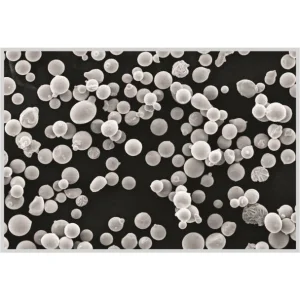
Industrial iron dust powder is classified by production pathways: Sponge Reduced Iron Powder, Water/Gas Atomized Iron Powder, and Carbonyl Iron Powder. Reduced grades maximize green strength in structural compacts via high-porosity dendritic geometries, while atomized fractions deliver superior bulk apparent density (2.4–3.2 g/cm³) and spherical consistency for pressing and thermal spray operations.
Procuring raw metallic powders in bulk necessitates insight into base iron ore indices, gas atomization overheads, and energy-intensive thermal reduction processes. Factory-direct partnerships mitigate secondary middleman markups while enforcing tight tolerances on trace impurities like Carbon (<0.05%), Sulfur (<0.02%), and Phosphorous (<0.02%).
Every industrial lot must satisfy strict Hall Flowmeter flowability benchmarks (ASTM B213) and sieve analysis validation (ASTM B214). Technical teams require auditable, batch-specific Certificates of Analysis (COA) confirming zero moisture oxidation and consistent compressibility profiles prior to export release.
Comparative benchmarks for high-purity industrial grades customized for powder metallurgy (PM), friction pads, soil remediation, and chemical synthesis.
| Grade Category | Primary Production Method | Fe Content (%) | Apparent Density (g/cm³) | Standard Particle Distribution | Typical Industrial End-Use |
|---|---|---|---|---|---|
| PM Reduced-100 | Direct Carbon/Gas Reduction | ≥ 98.8% | 2.45 – 2.65 | -100 mesh (<150 μm) | Sintered automotive components, self-lubricating bushings |
| Atomized Super-Dense | High-Pressure Water Atomization | ≥ 99.2% | 2.85 – 3.20 | -60 to -200 mesh | High-strength structural parts, heavy duty brake friction materials |
| Ultrafine Magnetic Micron | Thermal Decomposition (Carbonyl) | ≥ 99.7% | 3.50 – 4.20 | 1 – 10 μm (D50 ~ 4.5 μm) | Inductor cores, radar absorption, microwave shielding materials |
| Zero-Valent ZVI Tech | Controlled Thermal Cracking | ≥ 90.0% - 95.0% | 1.80 – 2.20 | -40 to -100 mesh | Environmental groundwater treatment, hexavalent Cr reduction |
| Exothermic Reactive Grade | Selective Milling & Annealing | ≥ 97.0% | 2.20 – 2.50 | -80 to -200 mesh | Disposable hand warmers, food grade oxygen absorber sachets |
Delivering domain-specific physical properties matched to regional manufacturing clusters and rigorous performance standards.
Applied extensively in transmission gears, variable valve timing (VVT) components, and connecting rods. High green strength and low dimensional change during 1120°C endothermic sintering ensure structural reliability in mass production lines.
Critical matrix component in semi-metallic and low-metallic commercial brake pads, railway brake shoes, and industrial clutch facings. Iron dust controls heat dissipation, friction coefficient stability (μ = 0.38–0.45), and rotor wear life under thermal shock.
Zero-Valent Iron (ZVI) permeable reactive barriers (PRBs) harness reductive dehalogenation to eliminate chlorinated solvents (PCE, TCE) and precipitate toxic heavy metals (Cr-VI, Arsenic) in contaminated industrial aquifers with long active lifespans.
Insulated iron powder cores (SMC) fabricated via proprietary surface phosphate passivation provide isotropic 3D magnetic flux paths, minimizing eddy current losses in high-frequency EV inverters, onboard chargers, and solar transformer topologies.
Leveraging upstream resource clusters, automated gas atomization facilities, and rapid multi-modal logistics nodes to assure unbroken raw material continuity.
Our collaborative industrial manufacturing bases in Hebei and Shandong benefit from proximity to primary reduction facilities. By directly linking molten iron refining to continuous horizontal water atomizers and hydrogen reduction tunnel kilns, we eliminate intermediate cooling-remelt cycles, reducing embodied energy and unit costs by 18–25%.
Automated inline laser diffraction analyzers (Malvern Mastersizer 3000) continuously inspect particle size distribution curves (D10, D50, D90). Gas chromatography testing quantifies trace oxygen and carbon in real time, preventing out-of-spec batches and guaranteeing strict adherence to ISO 9001 and IATF 16949 tolerances.
Iron powder oxidizes rapidly when exposed to maritime humidity. We employ heavy-duty 25kg multi-ply polyethylene inner-lined bags heat-sealed inside steel drums or vacuumized 1000kg FIBC bulk supersacks with desiccants and nitrogen flush packaging, ensuring cargo reaches Rotterdam, Busan, or Houston in factory-fresh condition.
Pioneering cleaner processing routes and ultra-refined geometries for the next decade of advanced manufacturing and net-zero engineering.
Replacing traditional coal-fired coke tunnel kilns with green hydrogen (H₂) reduction towers. This shift slashes carbon emissions during iron powder synthesis by over 85% while drastically curbing residual carbon and sulfur inclusions to produce ultra-pure feedstock.
Developing spherical iron alloy powders optimized for Additive Manufacturing (AM). Through dual-fluid supersonic gas atomization, particle roundness exceeds 0.92 with near-zero satellites, enabling free-flowing performance across 15–45 μm binder jet layers.
Formulating nano-engineered, high-surface-area iron matrices for iron-air long-duration energy storage batteries and reactive chemical scrubbers, driving low-cost, multi-day grid resilience and closed-loop circular material economies.
Comprehensive regulatory clearing protocols safeguarding your procurement pipeline against shipment delays and cross-border customs disputes.
Every shipment is accompanied by batch-specific X-ray Fluorescence (XRF) and Inductively Coupled Plasma (ICP) spectroscopy verifying chemical composition, sieve distribution, and apparent bulk density.
Full 16-section SDS documentation prepared strictly in accordance with OSHA GHS Rev 8 and EU CLP standards, covering safe material handling, combustible dust safeguards, and emergency response actions.
Clean chemical profiles ensuring non-detection of EU REACH Substances of Very High Concern (SVHC) and adherence to RoHS Directive limit constraints for seamless supply into European Union territories.
Authorized laboratory testing (Shanghai Academy of Environmental Sciences / DGM) certifying non-spontaneous combustion classifications for standard reduced grades, lowering ocean freight tariffs and terminal handling surcharges.
Authoritative technical and logistical clarity addressing standard enterprise procurement workflows.
Reduced iron powder exhibits an irregular, sponge-like dendritic structure that maximizes green strength in powder compaction applications, making it ideal for standard sintered mechanical parts. In contrast, atomized iron powder produces smoother, semi-spherical particles with higher apparent density and superior flow rates, which is preferable for high-density automotive structural components and heavy-duty friction formulations.
We apply a multi-barrier packaging strategy. Standard bulk packaging utilizes 25kg multi-ply woven bags with impermeable polyethylene inner liners, heat-sealed and palletized with vacuum shrink wrapping. For high-humidity maritime routes, we offer hermetically sealed 200L steel drums containing industrial silica desiccant pouches or continuous nitrogen gas flushing upon request.
Yes. Beyond our standard -60, -100, -200, and -325 mesh fractions, our grading facilities utilize advanced supersonic vibrating sieves and air classification systems to match tailored client particle size curves (such as precise D10, D50, and D90 parameters), meeting specific compressibility and magnetic performance criteria.
For custom industrial production lots, our standard MOQ is 1 metric ton (1,000 kg). However, representative qualification samples (typically 500g to 2kg) complete with preliminary batch COA can be expedited globally via express courier for pre-production trial validations by qualified procurement buyers.
Complete your supply footprint with our integrated industrial chemicals, high-purity inorganic salts, and specialty liquid elastomer grades.
Connect directly with our metallurgical engineers to receive a formal wholesale quote, request customized sample lots, or obtain batch-specific Certificate of Analysis dossiers.
Request Technical Quotation