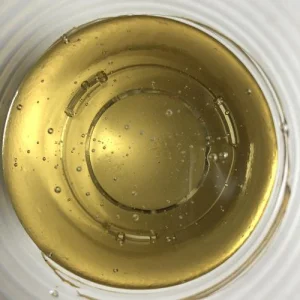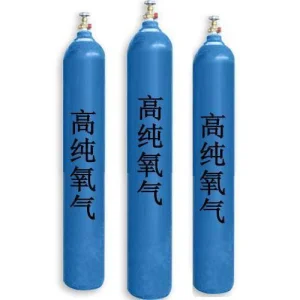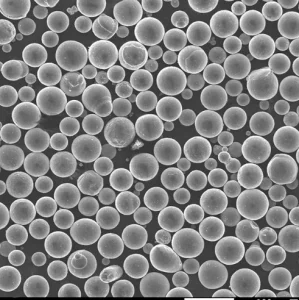


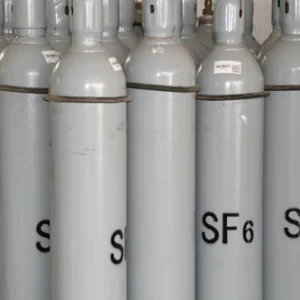
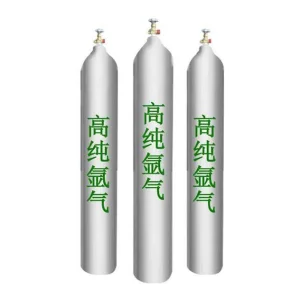
Verified technical grades engineered for extreme mechanical flexure, microstructural resilience, fracture toughening, and semiconductor-grade inert gas processing.


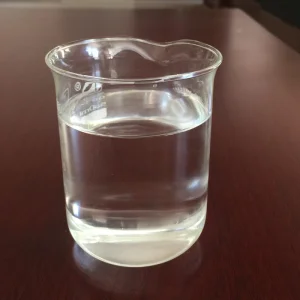

Understanding the macromolecular architecture of functionalized telechelic liquid polymers, liquid flex agents, and reactive rubber intermediates engineered to counteract stress fracture in rigid thermosets.
In modern chemical synthesis and advanced structural materials manufacturing, the designation Liquid Flex represents reactive, low-to-medium molecular weight functionalized liquid elastomers and telechelic synthetic polymers. Formulated primarily with telechelic chain architectures—such as carboxyl-terminated nitrile butadiene (CTBN), amine-terminated nitrile butadiene (ATBN), liquid carboxylated nitrile rubber (L-XNBR), and maleic anhydride-grafted polybutadiene (MLPB)—these specialty liquid flex modifiers act as reactive toughening agents, impact modifiers, and internal flexibilizers.
Unmodified cross-linked thermosetting resins (e.g., bisphenol-A epoxies, novolacs, and polyurethanes) exhibit exceptional thermal endurance, chemical stability, and tensile strength, but remain inherently vulnerable to brittle cleavage, low-temperature micro-cracking, and mechanical shock. Integrating precision-synthesized Liquid Flex matrices creates a chemically bonded, sub-micron rubbery phase dispersion throughout the rigid continuous matrix. This micro-phase separation process absorbs mechanical energy through shear yielding and localized plastic cavitation, elevating fracture toughness ($K_{1c}$) and critical strain energy release rates ($G_{1c}$) by up to 350% without compromising heat distortion temperatures (HDT) or glass transition states ($T_g$).
Synthesized with uniform functional end-groups ensuring complete coreaction into polymer backbones, resulting in homogenous 0.5–2.0 μm dispersed elastomer domains that stop crack propagation instantly under mechanical impact.
Preserves elastic rebound, low peel stress, and high dynamic fatigue resistance in harsh thermal regimes down to -55°C, eliminating brittle substrate detachment in aerospace and automotive structural adhesives.
Continuous polymerization controls weight-average molecular mass ($M_w$) between 2,500 and 6,000 g/mol, maintaining manageable fluid rheology for high-speed solventless dispensing, potting, and automated metering systems.
How global OEMs, chemical formulators, and advanced composite fabricators leverage our direct wholesale liquid flex manufacturing capacity to solve real-world engineering bottlenecks.
Challenge: Multi-material vehicle lightweighting requires bonding carbon fiber, aluminum, and high-strength steel under continuous cyclic shear and severe road vibration.
Solution: ATBN and CTBN liquid flex additives deliver exceptional lap-shear strength (>35 MPa) and T-peel resistance, eliminating fastener fatigue and galvanic corrosion.
Challenge: Power semiconductor modules generate severe thermal cycles that crack unyielding epoxy potting resins, exposing sensitive microelectronics to humidity and ion ingress.
Solution: Hydroxyl-terminated butadiene-styrene (HTBS) and specialty polyethers maintain low dielectric constants while dissipating internal stress induced by thermal coefficient mismatches.
Challenge: High-performance composite airframe structures require high compression-after-impact (CAI) strength without degradation of matrix hot-wet modulus.
Solution: Grafted MLPB liquid elastomers integrate directly into resin matrices, elevating inter-laminar shear strength (ILSS) and preventing catastrophic delamination under high G-forces.
Challenge: Offshore structures, ballast tanks, and pipelines experience steel substrate deflection, salt spray erosion, and cathodic delamination.
Solution: Liquid carboxylated nitrile rubber (L-XNBR) imparts superior flexibility, cross-link density, and impermeable barrier defense against chloride ion permeation.
Comprehensive physical and chemical metrics for our core liquid elastomer portfolio. Every production batch is certified against rigorous ISO and ASTM standards.
| Polymer Family | Core Reactive Moiety | Acrylonitrile Content (%) | Brookfield Visc. (mPa·s @ 27°C) | Glass Transition (Tg, °C) | Target Resin Systems | Key Performance Yield |
|---|---|---|---|---|---|---|
| CTBN 1300x8 Series | Carboxyl (-COOH) | 17.0 – 18.5 | 120,000 – 165,000 | -52 | Epoxy, Vinyl Ester, Phenolic | Maximum fracture toughness & peel strength |
| CTBN 1300x13 Series | Carboxyl (-COOH) | 25.5 – 27.5 | 140,000 – 190,000 | -39 | High-solids Epoxy formulations | Enhanced oil, fuel & hydrocarbon resistance |
| ATBN Series | Primary/Secondary Amine (-NH2) | 16.0 – 18.0 | 180,000 – 240,000 | -50 | 2K Ambient Epoxy, Polyurethanes | Direct ambient cure coreaction; zero plasticizer leaching |
| L-XNBR Copolymer | Random Carboxyl (-COOH) | 26.0 – 32.0 | 80,000 – 130,000 | -35 | PVC Plastisols, Industrial Rubbers | Extreme elongation, flex life & barrier impermeability |
| MLPB Grafted Elastomer | Maleic Anhydride | N/A (Polybutadiene) | 35,000 – 75,000 | -70 | Polyolefins, Polyamides, Epoxies | Interfacial compatibilizer & cryogenic impact booster |
| HTBS Random Copolymer | Hydroxyl (-OH) | Styrene: 20 – 25% | 4,000 – 9,000 | -62 | Polyurethanes, Polyureas, Adhesives | Low dielectric constant, hydrolysis resistance & potting flex |
Strategic R&D pathways addressing next-generation gigafactory battery packs, sub-zero hydrogen storage vessels, and bio-circular sustainable elastomers.
Synthesizing telechelic polybutadiene backbones derived from bio-based butadiene and renewable acrylonitrile monomers. Target: Reducing embodied cradle-to-gate carbon emissions by 42% while matching petrochemical molecular weight distribution ($M_w/M_n \le 1.8$).
Developing phosphorus- and siloxane-functionalized Liquid Flex resins providing native UL94 V-0 flame retardancy for electric vehicle cell-to-pack (CTP) structural gap fillers. Imparts superior thermal conductivity and impact absorption in case of thermal runaway.
Engineering multi-arm functional architectures that deliver identical flexibility and energy absorption at half the formulation dosage, significantly reducing resin blend viscosity for robotic high-pressure resin transfer molding (HP-RTM).
From feedstock analytical screening to multi-modal dangerous goods export, our manufacturing workflow ensures absolute zero-defect consistency.
High-pressure liquid chromatography (HPLC) and gas chromatography verify 99.9% monomer assay purity before reactor batch charging.
Automated reactor dosing controls conversion rates, molecular mass buildup, and precise end-capping reaction stoichiometry.
Thin-film vacuum distillation eliminates residual monomers and strips moisture content to ≤0.05%, preventing foam defects in finished resins.
Gel permeation chromatography (GPC), FTIR functional group titration, and Brookfield rotational viscometry validate every production lot.
Dispatched in nitrogen-blanketed UN-certified steel drums, IBC composite containers, or ISO bulk tanks with full GHS/IMDG/IATA clearance.
Navigating multinational chemical substance notifications, environmental mandates, and reliable transcontinental supply routes.
All liquid flex polymers and additive formulations comply fully with EU REACH registration dossiers (including SVHC screening), UK REACH, US TSCA active substance lists, and Korean K-REACH regulations. Full GHS SDS documentation provided in 16 languages.
Certified protocols for hazardous and non-hazardous transoceanic freight. Our dedicated logistics team manages UN packaging certifications, IMO Class 2/4.3/9 ocean declarations, and dangerous goods transport corridors across European, North American, and Asian ports.
Experienced polymer engineers collaborate directly with your procurement and R&D chemists. We assist in calculating stoichiometric cross-linking ratios, viscosity adjustment with specialty polyethers, and selecting optimum reactive modifiers to resolve processing failures.
Essential insights regarding stoichiometric calculations, packaging stability, shelf life, and wholesale container logistics.
Liquid Flex polymers such as CTBN (carboxyl-terminated) and ATBN (amine-terminated) disperse initially in liquid epoxy monomers. As the thermoset cures, the polymer segments undergo reaction-induced phase separation (RIPS), forming isolated spherical elastomeric domains (0.5–2.0 μm) chemically bonded to the epoxy matrix. When the cured material undergoes shock or stress, these rubbery micro-domains induce shear yielding and micro-cavitation, absorbing fracture energy and dramatically increasing fracture toughness ($K_{1c}$) without reducing thermal performance.
CTBN requires an elevated temperature cure (typically >80°C) or the presence of a catalyst (such as tertiary amines or triphenylphosphine) to react with the oxirane rings of epoxy resins. It is standard in prepregs, one-component heat-cured pastes, film adhesives, and vinyl ester modifications.
ATBN contains reactive primary and secondary amine chain ends that react rapidly at room temperature with epoxy groups. It acts both as a co-curing agent and toughener in 2K ambient structural adhesives, construction mortars, civil engineering crack injection resins, and flexible fast-setting coatings.
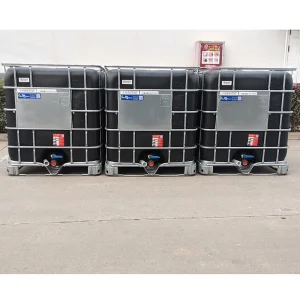
Standard packaging options include 25 kg metal pails, 180 kg / 200 kg tight-head or open-head nitrogen-flushed steel drums, 950 kg composite IBC totes, and full 20,000–24,000 kg ISO tank containers. Standard wholesale MOQs start at 1 metric ton (5 drums) for standard grades; custom tailored modifications typically require an initial 3 metric ton trial production batch.
Under unopened factory packaging kept under nitrogen blanket in dry, temperature-controlled conditions (15°C to 28°C), our liquid flex polymers carry a certified shelf life of 24 months from the date of manufacture. Avoid direct sunlight, extreme freeze-thaw cycles, and prolonged atmospheric moisture exposure to prevent acid value drift or premature viscosity escalation.
Every production lot undergoes comprehensive analytical release testing documented in a batch Certificate of Analysis (COA) specifying Brookfield viscosity, acid or amine value, moisture content, color index, and FTIR spectrum matching. All shipments include 16-section GHS-compliant SDS, technical data sheets (TDS), certificates of origin, and international dangerous goods paperwork when applicable. Retained samples are archived in our climate-controlled library for 36 months to ensure complete traceability.
Explore additional specialty functional elastomers, high-purity inorganic salts, low-molecular polyethers, and ultra-pure industrial gases.