Direct factory wholesale catalog featuring precision hydroxyl-terminated polymers, random carboxylic nitrile rubbers, vinyl polybutadienes, and specialized industrial synthesis agents.
Analyzing the paradigm shift in elastomer technology: transitioning from mechanical compounding to reactive polymer backbone architecture across global Tier-1 applications.
Historic compounding practices relied heavily on inert plasticizing oils that migrate over thermal cycles, precipitating premature phase separation and surface embrittlement. Modern high-reliability polymer systems dictate the integration of reactive liquid rubbers—predominantly hydroxyl (HTPB/HTBN), carboxyl (CTBN/L-XNBR), or amine (ATBN) terminated telechelics. By co-curing directly into the host matrix, these oligomers eliminate VOC leaching while tailoring viscoelastic damping across operating temperatures from -55°C to +180°C.
Precision free-radical and living anionic polymerizations allow chemical chemical engineers to dictate the 1,2-vinyl versus 1,4-trans/cis microstructural ratio. In applications such as medium-vinyl HTPB, modulating the 1,2-vinyl content between 20% and 55% tunes the crosslink density, glass transition temperature ($T_g$), and UV degradation resistance. Narrow polydispersity indices (PDI ≤ 1.8) prevent processing variations, ensuring consistent viscosity profiles during high-shear casting and structural adhesive metering.
The exponential expansion of electric vehicle (EV) battery systems and aerospace composites has accelerated demand for impact modification without compromising tensile shear modulus. The in-situ phase separation of nitrile-butadiene domains within brittle thermosets (epoxy, vinyl ester, bismaleimide) forms sub-micron elastomeric energy-dissipation nodes. This micro-phase separation arrests crack propagation, increasing fracture toughness ($K_{1c}$) by up to 350% in structural crash adhesives.
Procurement teams and chemical formulation specialists must validate liquid rubber lots against uncompromising molecular metrics. Sub-standard batches risk line shutdowns and interfacial adhesion failure.
| Elastomer Family | Primary Functional Group | Viscosity Range (mPa·s @ 25°C/50°C) | Functionality (f) | Target Mechanical Contribution | Strategic Industrial Use Cases |
|---|---|---|---|---|---|
| HTPB (Medium Vinyl) | Terminal Hydroxyl (-OH) | 4,000 – 9,000 (@ 25°C) | 2.2 – 2.4 | Cryogenic flexibility, hydrolytic stability, low dielectric loss | Solid rocket motor propellant binder, electrical potting, waterproofing polyurethanes |
| HTBN | Terminal Hydroxyl (-OH) | 15,000 – 40,000 (@ 50°C) | 1.85 – 2.0 | Fuel & solvent resistance, high-temperature elastomeric cohesion | Polyurethane modification, oilfield chemical seals, dynamic gaskets |
| ATBN | Terminal Amine (-NH2 / -NHR) | 80,000 – 250,000 (@ 25°C) | 1.8 – 2.0 | Direct primary amine co-curing with epoxide rings, peel strength | Automotive hem flange structural bonding, carbon composite resin toughening |
| L-XNBR | Random Carboxylic (-COOH) | 20,000 – 70,000 (@ 25°C) | Multi-functional | Ionic crosslinking, surface metal chelation, friction regulation | Friction lining formulations, tire tread compound enhancement, metal-rubber bonding |
| LSBR | Non-functional / Hydrocarbon | 1,000 – 15,000 (@ 25°C) | Inert / Co-cured via S | Zero-VOC vulcanizable plasticizer, rolling resistance optimization | Ultra-high-performance (UHP) tire silica compounding, technical conveyor belts |
Critical Engineering Quality Notice: When quoting wholesale liquid rubber, verify not only Brookfield dynamic viscosity but also the equivalent weight (titration) and volatile organic content (gravimetric desorption @ 105°C). Yanxatech System Industries Limited guarantees batch variance within ±3.5% of nominal hydroxyl/amine/carboxyl values, ensuring stoichiometric balance during polyurethane or epoxy reaction cascades.
From defense-tier energetics to high-throughput electronic manufacturing, explore how tailor-engineered liquid rubbers bridge critical performance gaps across global manufacturing industries.
Hydroxyl-terminated polybutadiene (HTPB) serves as the industry-standard polymer binder matrix for composite solid rocket propellants (CSRP). Acting as both fuel and mechanical binder, it accommodates up to 88% solids loading (ammonium perchlorate and atomized aluminum powders) while preserving mechanical elongation across upper-atmosphere temperature differentials (-60°C).
Modern automotive lightweighting incorporates dissimilar metals (galvanized steel to 6000-series aluminum) and carbon composites. Unmodified structural epoxy fails under dynamic impact. By pre-reacting epoxy resins with amine-terminated (ATBN) or carboxyl-terminated (L-XNBR) oligomers, engineers produce nano-scale rubber-rich inclusions that prevent catastrophic joint shear failures during crash events.
Electronic assemblies, switchgears, and battery management systems demand potting compounds with low moisture absorption (<0.02%), extreme dielectric breakdown strength (>20 kV/mm), and stress-free curing. Liquid polybutadiene polyols yield polyurethane networks with hydrophobic hydrocarbon backbones, outperforming conventional polyether and polyester polyols in harsh, humid environments.
Operating as an export partner since 2008, Yanxatech System Industries Limited bridges stringent Western regulatory mandates with efficient Asian specialty chemical synthesis.
Every single commercial release is accompanied by a batch-specific Certificate of Analysis (COA) containing precise hydroxyl/amine value titration, Brookfield viscosity curve, and Karl Fischer trace moisture determination. SDS documentation complies with current GHS Revision 9 standards, translated into target-market jurisdictions (EU REACH, US TSCA, UK REACH, and Korean K-REACH registered workflows).
Liquid elastomers, reactive intermediates, and ancillary high-purity chemicals (including compressed CF4, SF6, and metal powders) undergo stringent UN-certified containment procedures. We supply custom nitrogen-blanketed 200L epoxy-lined steel drums, 1000L composite IBCs, and temperature-monitored ISO tanks engineered to eliminate atmospheric moisture ingress and premature oligomer skinning.
With specialized dangerous-goods handling declarations under IMDG (Ocean Freight) and ICAO/IATA (Air Freight), our operations team mitigates port holding bottlenecks. From initial sampling validation through complete full-container load (FCL) execution, cargo tracking, customs tariff HS classification (Chapter 39/40), and forwarder coordination remain managed by dedicated material specialists.
Continuous R&D investments are driving telechelic elastomer chemistry toward carbon-neutral feedstocks, ultra-narrow polydispersity, and dual-curing photopolymer matrixes.
Industrial-scale synthesis of telechelic polybutadiene featuring precise functionality ($f = 2.0 \pm 0.1$) with low moisture content (<0.03%), optimizing crosslinking yield in structural urethane binders.
Implementing continuous flow living anionic synthesis to compress Polydispersity Index (PDI) below 1.25. This yields hyper-uniform polymer lengths, drastically reducing batch-to-batch rheological shifts.
Gradual substitution of petrochemical 1,3-butadiene monomers with fermented ethanol-to-butadiene pathways, achieving up to 60% bio-based carbon content without altering elastomer mechanical properties.
Development of hybrid liquid rubbers incorporating both terminal acrylic/methacrylic unsaturation and secondary hydroxyl/epoxy crosslinking, engineered for rapid 3D printing and precision UV structural bonding.
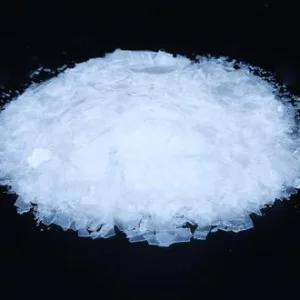
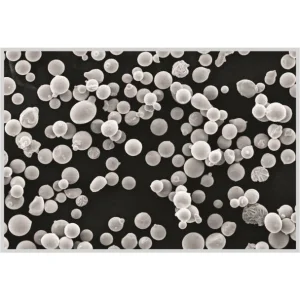
Complementing our liquid polymer series with high-performance flake powders, spherical atomized alloys, and 5N semiconductor-grade specialty gases.
Detailed technical, operational, and commercial insights for engineering teams, procurement directors, and laboratory validation managers.
Connect directly with Yanxatech’s chemical applications engineering desk. Supply your technical data parameters (target hydroxyl value, molecular weight, viscosity, annual volume, destination port) for immediate evaluation and contract pricing.