In high-throughput manufacturing, rapid prototyping, and composite part replication, the rheological behavior, cross-linking kinetics, and mechanical tear propagation of liquid silicone mold materials dictate product tolerances and production cycle times.
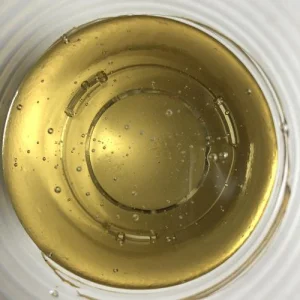
Utilizing a hydrosilylation mechanism without chemical byproducts, addition-cure liquid silicone achieves linear shrinkage under 0.1%. Formulated for ultra-precise resin casting, food-contact molds, and rapid medical prototyping requiring absolute dimensional stability.
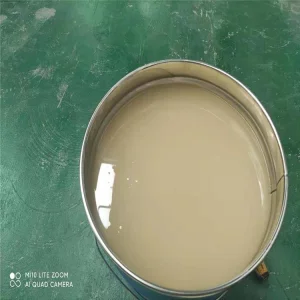
Condensation polymerization systems driven by organotin catalysts deliver superior tensile flex and exceptional tear strength across undercut masters. The economical standard for architectural precast plaster, polyurethane casting, and large-scale gypsum moldings.
Direct chemical synthesis allows precise customization from ultra-soft Shore 00-30 for fragile prosthetic replication to rigid Shore 60A for industrial spin-casting and low-melting alloy tooling, with customizable cure profiles from 2 to 24 hours.
| Polymer Series | Cure Chemistry | Shore Hardness | Viscosity (mPa.s) | Tensile Strength (MPa) | Tear Resistance (kN/m) | Linear Shrinkage (%) |
|---|---|---|---|---|---|---|
| SIL-PRO 1000 | Addition (Pt Catalyst) | Shore 10A ± 2 | 12,000 ± 2,000 | ≥ 3.8 | ≥ 22 | ≤ 0.08% |
| SIL-PRO 2500 | Addition (Pt Catalyst) | Shore 25A ± 2 | 18,000 ± 2,500 | ≥ 5.2 | ≥ 28 | ≤ 0.10% |
| SIL-PRO 4000 | Addition (Pt Catalyst) | Shore 40A ± 2 | 28,000 ± 3,000 | ≥ 6.5 | ≥ 32 | ≤ 0.10% |
| SIL-COND 20 | Condensation (Tin) | Shore 20A ± 2 | 22,000 ± 3,000 | ≥ 3.2 | ≥ 24 | ≤ 0.25% |
| SIL-COND 35 | Condensation (Tin) | Shore 35A ± 2 | 26,000 ± 3,500 | ≥ 4.0 | ≥ 26 | ≤ 0.30% |
Vertical backward integration from raw silicon metal to polysiloxane intermediates delivers superior price-performance value and zero batch-to-batch fluctuation for wholesale mold-making supply.
Integrated supply chains convert elemental silicon to dimethylcyclosiloxane (DMC) and vinyl polymers on dedicated synthesis lines, insulating global buyers from intermediate price volatility and ensuring unadulterated base polymer stocks.
State-of-the-art dual-shaft planetary mixers and continuous thin-film devolatilization remove low-boiling volatile silicones and unreacted oligomers, eliminating unwanted post-curing mold shrinkage and oil bleed.
From 20 kg pilot-scale drum units to 200 kg steel drums and 1,000 kg ISO IBC tote deliveries, automated filling systems under inert nitrogen blankets protect shelf integrity and guarantee 12+ months shelf stability.
B2B industrial procurement teams evaluate silicone rubber suppliers beyond nominal cost per kilogram. Production efficiency relies on reproducible curing kinetics, chemical resilience, and consistent de-molding lifespans.
Industrial tooling demands sustained mold longevity. Our advanced reinforcing silica networks resist attack from aggressive polyurethane casting resins, epoxy exotherms, and alkaline concrete mixtures, doubling mold cycle lifecycles.
Automated casting machines rely on exact pot-life window guarantees (15 min to 90 min) and fixed demold benchmarks. Every lot undergoes rotational rheometer testing to avoid line stalling or premature gelation.
Each delivery includes lot-specific Certificates of Analysis (COA) specifying Brookfield viscosity, cured durometer, tensile modulus, and elongation break, backed by full 16-section SDS in GHS format for smooth customs clearance.
Ensuring frictionless factory-to-port logistics and stringent chemical safety certification across North America, Europe, East Asia, and the Middle East.
Our polymers undergo comprehensive testing to ensure nonylphenol, D4, D5, and D6 cyclosiloxane impurities remain below strict EU REACH SVHC authorization thresholds, ensuring seamless entry across European ports.
For culinary molding, baking components, chocolate tooling, and medical skin-contact prosthetics, specific platinum additions conform fully to US FDA food-contact directives and RoHS heavy metal limits.
Comprehensive Dangerous Goods classification support. While most cured elastomers are non-hazardous, our certified export specialists manage full transport declarations and moisture-barrier vacuum packing for humid routes.
Engineered formulations tuned for varied casting media, thermodynamic environments, and automated production cycles across global industrial hubs.
Tough condensation-cure formulations designed for high-abrasion repeated demolding of structural precast panels, glass-fiber reinforced concrete (GFRC), and cultural stone replication with exact mineral grain fidelity.
Zero-shrinkage platinum silicone molds compatible with SLA/SLS master models. Engineered to resist high aromatic amine plasticizers and aggressive polyurethanes in rapid industrial pilot-batch casting runs.
Ultra-pliable, translucent, skin-safe additions with high deadener tolerance. Used extensively across film prosthetics, orthotics, medical palpation simulators, and tactile soft robotics requiring organic responsiveness.
Optically clear and thermally stable silicones handling peak temperatures up to 250°C. Perfect for spin-casting low melting point alloys (pewter, lead-free bismuth), electronic potting barriers, and precision optical light guides.
Strategic technological evolutions influencing the global silicone mold-making market over the coming decade.
Accelerating environmental regulations are moving industry demand toward tin-free condensation curing systems. Our labs lead synthesis in bismuth- and titanium-chelate catalyzed systems offering tin performance without heavy metal footprint.
Additive manufacturing integration demands silicones with self-degassing, shear-thinning viscosities below 10,000 mPa.s capable of penetrating sub-micron layer grooves in complex 3D-printed masters without vacuum pumps.
Integration with automated robotic liquid-injection molding lines (LIM) demands high-reactivity addition-cure formulations that achieve full polymer vitrification in 30 to 90 seconds at elevated temperatures of 120°C to 150°C.
Essential guidance on chemical compatibility, curing behavior, custom blending, and international wholesale export logistics.