Explore our certified catalog of specialized gases, atomized powders, and chemical synthesis additives engineered for multinational manufacturing systems.


A comprehensive examination of polymer chain distribution, polydispersity indices (PDI), and physical behavior for enterprise engineering teams.
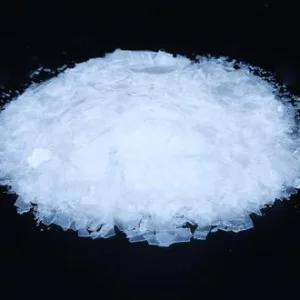
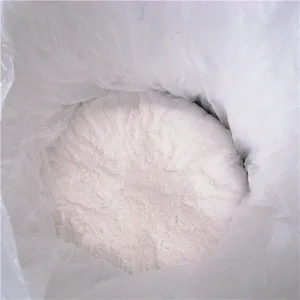
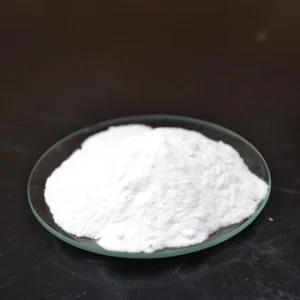
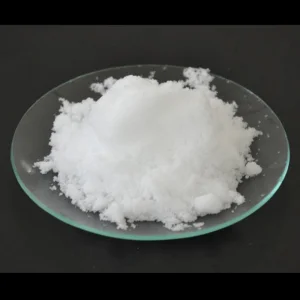
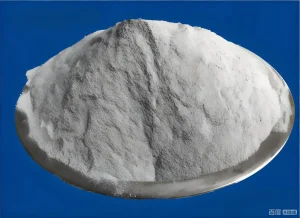
Polyethylene Glycol 1450 (CAS Number: 25322-68-3) is a linear condensation polymer synthesized via catalytic ring-opening polymerization of ethylene oxide with ethylene glycol or diethylene glycol as the initiating species. With a nominal average molecular mass ranging between 1305 and 1595 g/mol, PEG 1450 sits at an engineered technological junction within the polyether family. Unlike liquid lower-molecular-weight homologs (such as PEG 200–600) or high-tensile solid waxy polymers (PEG 4000–8000), PEG 1450 exhibits an ambient physical morphology transitioning from a smooth, creamy semi-solid paste to a low-melting crystalline waxy solid with a characteristic solidification point spanning 43°C to 48°C.
This phase behavior is pivotal for pharmaceutical compression processes, hot-melt extrusion matrix formation, and non-ionic surfactant formulation. The stoichiometric linearity and uniform terminal hydroxyl groups provide exceptional hydrophilic surface energy, complete aqueous solubility across varying pH levels, and zero ionic charge interference in ionic formulations. When procured for enterprise use, understanding lot-to-lot polydispersity (Mw/Mn) remains the single most impactful factor in ensuring predictable viscosity indices and dissolution rates.
| Analytical Parameter | USP/NF Compendial Standard | EP / BP Monograph Range | YANXA Factory Lot Guarantee |
|---|---|---|---|
| Average Molecular Weight (g/mol) | 1305 – 1595 | 1305 – 1595 | 1420 – 1480 (Strict Narrow Cut) |
| Viscosity at 98.9°C (cSt / mm²/s) | 25.0 – 32.0 | 25.0 – 32.0 | 27.5 – 29.8 |
| Freezing / Congealing Point (°C) | 42.0 – 48.0 | 43.0 – 48.0 | 44.5 – 46.2 |
| Hydroxyl Value (mg KOH/g) | 70.0 – 86.0 | 70.0 – 86.0 | 76.0 – 80.0 |
| Residual Ethylene Oxide | ≤ 1 ppm | ≤ 1 ppm | < 0.2 ppm (Gas Chromatography) |
| Residual 1,4-Dioxane | ≤ 10 ppm | ≤ 10 ppm | < 2 ppm (Headspace GC-MS) |
| Heavy Metals / Lead (Pb) | ≤ 5 ppm | ≤ 5 ppm | < 1 ppm (ICP-MS) |
Bridging strict pharmaceutical excipient compliance with high-volume industrial processing advantages.
In pharmaceutical tablet formulations, PEG 1450 serves as a multifunctional plasticizer and hot-melt extrusion (HME) carrier. Its congealing point allows rapid crystallization upon cooling, preventing tablet capping, while enhancing the bioavailability of poorly water-soluble BCS Class II and IV Active Pharmaceutical Ingredients (APIs) via amorphous solid dispersion.
PEG 1450 forms stable hydrogen bonds with water molecules, establishing an iso-osmotic gradient in the gastrointestinal tract without mucosal systemic absorption. International drug manufacturers rely on our low-aldehyde, low-dioxane PEG 1450 powder for sachet filling, ensuring extended shelf life and zero hydrolytic degradation.
In precision ceramic sintering and semiconductor thermal paste deposition, PEG 1450 acts as a clean-burning temporary organic binder. It exhibits clean thermal volatilization without leaving abrasive carbonaceous residues or heavy metal ash, safeguarding ultra-pure alumina, silicon carbide, and titanate matrices.
Widely integrated into ointment bases, hair pomades, and dermal delivery creams, PEG 1450 provides controlled spreadability, non-greasy skin-feel, and excellent humectant characteristics. Compatible with broad-spectrum preservatives, it acts as an emulsification stabilizer across wide temperature variations.
Museum laboratories and industrial conservationists rely on bulk PEG 1450 solutions for waterlogged archaeological wood impregnation. The polymer gradually displaces cellular water in decaying timber, solidifying within cellular lumen to inhibit cell-wall shrinkage, warpage, and structural collapse upon ambient drying.
Serves as a telechelic macrodiol in polyurethane elastomer engineering, lubricating grease additives, and acrylic ester macromonomer synthesis. The verified hydroxyl equivalence guarantees predictable stoichiometric ratios when reacting with diisocyanates, minimizing residual unreacted prepolymers.
Market intelligence, upstream ethylene oxide feedstock correlations, and freight optimization protocols for wholesale contracting.
Wholesale PEG 1450 pricing tightly tracks purified ethylene oxide (EO) spot pricing and catalyst precious-metal valuations. Our contract pricing mechanisms mitigate upstream volatility through multi-month price-lock facilities and integrated petrochemical manufacturing corridors in mainland China.
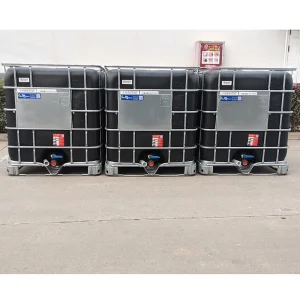
Due to its 44°C softening point, cross-equatorial bulk sea shipments risk thermal caking. We supply PEG 1450 in 25kg multi-layer kraft paper bags with inner heat-sealed polyethylene moisture barriers, or in nitrogen-purged 200L steel drums with optional thermal container blankets.
Fully compliant with EU REACH dossiers, US FDA Drug Master File (DMF) technical references, and ISO 9001:2015 quality standards. Every container departs with complete batch COA, ICP-MS heavy metal profiles, GHS-compliant multilingual SDS, and non-animal origin statements.
Strategic advancements shaping the decarbonization and quality thresholds of polyoxyethylene derivatives.
The chemical manufacturing footprint of PEG is migrating toward carbon neutrality. By utilizing ethylene oxide derived from agricultural bio-ethanol rather than fossil naphtha cracking, the next-generation PEG 1450 maintains identical chemical identity, polymer linearity, and molecular weight distribution while reducing cradle-to-gate carbon emissions by more than 45%. This permits sustainable drug delivery systems and eco-certified cosmetics without requiring regulatory reformulation.
Conventional batch autoclave alkoxylation creates wider thermal gradients that trigger side reactions, yielding free ethylene glycol, diethylene glycol, and 1,4-dioxane. Our partnered facilities are transitioning to continuous microchannel tubular reactors equipped with real-time NIR (Near-Infrared) spectroscopic controls. This yields unimodal molecular distributions with PDI below 1.03 and trace residual cyclic ethers consistently lower than international detection limits.
Essential guidance covering packaging, physical morphology, MOQs, testing methods, and pricing structure.
Direct supply contracts, verified assay tolerances, and worldwide dangerous goods & general cargo logistics.