Direct supply line from our primary crystallizers to major commercial industrial corridors across North America.
Evaluating domestic demand shifts, on-shoring trends, and high-purity inorganic synthesis challenges across North American supply chains.
The manufacturing infrastructure of the United States is navigating an aggressive industrial revitalization. Fueled by legislative initiatives such as the CHIPS and Science Act and the Inflation Reduction Act (IRA), advanced chemical synthesis within U.S. borders has accelerated rapidly. Nitrates—once perceived primarily through the lens of agricultural macronutrients and bulk fertilizers—have evolved into vital strategic raw materials across high-value, research-intensive American industries.
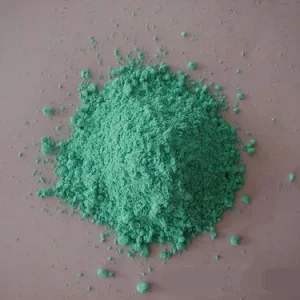
From the semiconductor manufacturing corridors in Arizona and Texas to the electric vehicle (EV) battery cluster expanding throughout the American Midwest and Southeast, high-purity nitrates act as fundamental chemical building blocks. The transition toward next-generation battery chemistries has dramatically increased the demand for ultra-pure Lithium Nitrate (LiNO₃) as a stabilizing electrolyte additive for lithium-metal configurations and next-generation cathode synthesis. Similarly, the aerospace and defense sectors, clustered in California, Washington, and Alabama, require tightly specified Basic Cupric Nitrate [Cu₂(OH)₃NO₃] for high-burn-rate solid gas generants and airbag propellant squibs where stoichiometric consistency is non-negotiable.
Simultaneously, North American chemical formulators and catalyst synthesizers operating in the Gulf Coast region increasingly seek diversified, stable overseas supply pipelines to hedge against high domestic production costs and sporadic feedstock allocations. With domestic plants often shifting priorities toward bulk agricultural ammonia and nitric acid downstream lines, fine specialty inorganic nitrate production in the U.S. suffers from extended lead times, erratic spot pricing, and limited flexibility in custom crystal sizes or anti-caking treatments.
Supplying North American gigafactories with low-sodium, ultra-dry Lithium Nitrate, optimizing cycling durability and dendrite resistance in solid-state and lithium-sulfur battery cells.
Aluminum Nitrate Nonahydrate and custom inorganic precursors refined for atomic layer deposition (ALD), wafer chemical-mechanical planarization (CMP), and specialty sol-gel optical coatings.
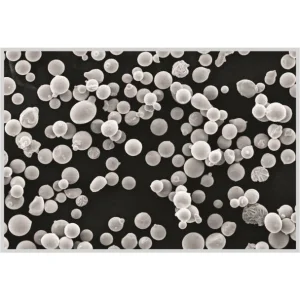
Dense basic cupric salts and custom atomized fuel oxidizers designed under tight physical particle-size distributions (PSD) to satisfy MIL-SPEC combustion profiles and automotive survivability systems.
De-risking transatlantic chemical procurement through rigorous compliance documentation and hazmat logistics transparency.
Importing dangerous goods (DG) into United States jurisdictions requires meticulous administrative precision. U.S. customs brokers, environmental protection bodies, and freight operators operate under stringent regulatory mandates. As a dedicated export manufacturer, Yanxatech System Industries Limited (YANXA) builds compliance directly into each batch synthesis run, ensuring frictionless border clearance through major ports like Long Beach, Oakland, Houston, and Savannah.
1. EPA TSCA (Toxic Substances Control Act) Verification: All chemical substances supplied for commercial use in the United States must be confirmed as active on the TSCA Chemical Substance Inventory. We provide positive TSCA Section 13 Import Certification Statements with every commercial shipping packet, eliminating custom clearance holds by CBP (U.S. Customs and Border Protection).
2. OSHA HazCom 2012 / GHS Alignment: Our Technical Data Sheets (TDS) and Safety Data Sheets (SDS) are strictly mapped to OSHA Hazard Communication Standard (29 CFR 1910.1200), featuring all 16 standardized sections, compliant pictograms (Flame Over Circle for oxidizers, Health Hazard, Aquatic Toxicity), appropriate signal words, and CAS-indexed compositional transparency.
3. USDOT 49 CFR Dangerous Goods Packaging: Nitrates that qualify as Class 5.1 Oxidizers (e.g., Lithium Nitrate UN 2722, Aluminum Nitrate UN 1438) are packed exclusively in UN-certified packaging (1G fiber drums, 1H2 plastic drums, or 5M2 multi-wall bags with sealed polyethylene liners) tested to drop, hydrostatic, and stacking performance standards specified by USDOT and the International Maritime Dangerous Goods (IMDG) Code.
4. DHS CFATS & Security Screening: We maintain strict customer verification protocols for precursor chemicals of interest (COI) that fall under Department of Homeland Security (DHS) chemical security thresholds, protecting our enterprise partners from illicit diversion risks.
| Chemical Product | CAS Number | US DOT Classification | Standard Assay | Key Impurity Threshold | Target US Application |
|---|---|---|---|---|---|
| Basic Cupric Nitrate | 12158-75-7 | Class 5.1, UN 1477, PG II/III | ≥ 99.0% | Fe ≤ 30 ppm, Cl ≤ 20 ppm | Automotive Gas Generants, Catalysts |
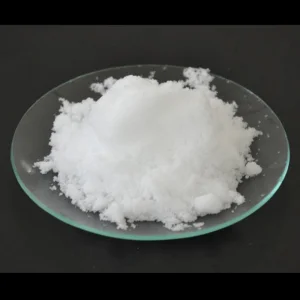
| Aluminum Nitrate Nonahydrate | 7784-27-2 | Class 5.1, UN 1438, PG III | ≥ 98.5% – 99.5% | Heavy Metals (as Pb) ≤ 10 ppm | Semiconductor CMP Slurries, Sol-Gel |
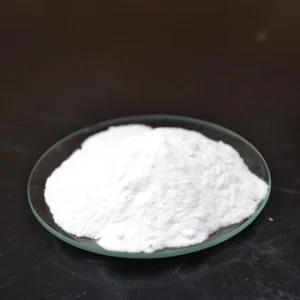
| Lithium Nitrate (Battery Grade) | 7790-69-1 | Class 5.1, UN 2722, PG III | ≥ 99.5% | Na ≤ 20 ppm, Moisture ≤ 0.2% | EV Electrolyte Additives, Molten Salts |
| Lithium Nitrate (Technical Grade) | 7790-69-1 | Class 5.1, UN 2722, PG III | ≥ 99.0% | Insolubles ≤ 0.05% | Concrete ASR Admixtures |
How direct integration with basic synthetic feedstocks delivers decisive quality control and pricing resilience for American industrial buyers.
The global chemical market is increasingly bifurcated between high-cost, localized specialty repackagers and fully integrated primary synthesis manufacturers. Operating from China’s mature industrial chemical chemical infrastructure, YANXA provides an end-to-end manufacturing footprint that directly solves the systemic vulnerabilities faced by U.S. procurement directors.
Raw Material Integration: Our crystallization units draw raw copper cathodes, refined aluminum hydroxide, and battery-grade lithium carbonate directly from verified primary smelters and hydrometallurgical processors. By reacting high-purity feedstocks with captive nitric acid loops, we circumvent secondary contamination loops common in recycled material blending operations.
Crystallization Morphology Control: High-humidity environments across industrial manufacturing sites (such as the Gulf Coast or the Midwest during summer months) present critical handling challenges for deliquescent salts like aluminum and lithium nitrates. Our advanced controlled-cooling crystallizers generate dense, uniform crystals rather than hygroscopic micro-fines, dramatically slowing ambient moisture uptake during factory floor processing in North America.
ICP-OES & Mass Spectrometry Traceability: Our internal quality control laboratories operate high-sensitivity Inductively Coupled Plasma Optical Emission Spectrometry (ICP-OES) to quantify trace element distributions down to parts-per-billion (ppb) regimes. Every single delivery lot dispatched to the U.S. includes a verifiable Certificate of Analysis (COA) mapped to identical retain samples stored in climate-controlled archives for 24 months.
Reinforced moisture-barrier lining, heavy gauge heat-shrink wrapping, and desiccated container stowing prevent caking and clumping over humid maritime transits.
Direct supply contracts insulate procurement managers from local domestic distributor markups, volatile margin spreads, and unexpected spot-market spikes.
Every commercial invoice, packing list, bill of lading, and GHS-compliant SDS is pre-cleared with your designated customs broker prior to vessel departure.
How specialized nitrate salts empower high-precision production across American manufacturing corridors.
Across state departments of transportation (DOTs) throughout the U.S. highway network, premature concrete pavement degradation caused by Alkali-Silica Reaction (ASR) is a multi-billion-dollar liability. Lithium Nitrate is recognized by the Federal Highway Administration (FHWA) as the premier chemical admixture to prevent deleterious expansion in concrete structures incorporating reactive siliceous aggregates. Unlike lithium hydroxide, lithium nitrate does not raise the pH of concrete pore solution, ensuring high safety during mixing and preventing acceleration of early slump loss.
In the safety-critical automotive supplier hub centered in Michigan, Ohio, and Indiana, airbag inflator propellant chemistry demands chemical stability under thermal cycling between -40°C and +90°C. Basic Cupric Nitrate [Cu₂(OH)₃NO₃] serves as a dense, non-azide oxidizer paired with nitrogen-rich organic fuels such as guanidine nitrate. Its high gas yield, non-corrosive combustion byproducts, and exceptional chemical stability ensure automotive pyrotechnic actuators perform reliably over 15-year vehicle operational lifespans.
In high-density semiconductor fabrication cleanrooms, Aluminum Nitrate acts as an inorganic dopant, precursor for alumina (Al₂O₃) high-k dielectric gate thin films, and a selective polishing catalyst component in chemical-mechanical planarization (CMP). Stringent control of transition metal impurities (Fe, Cr, Ni < 5 ppm) guarantees zero ionic contamination in finished silicon and silicon carbide (SiC) power devices.
Large-scale solar thermal storage installations in the American Southwest (Nevada, California, and Arizona) require thousands of metric tons of low-melting-point binary and ternary nitrate eutectic mixtures. The inclusion of technical-grade lithium nitrate into sodium-potassium nitrate systems lowers the operational crystallization temperature down toward 130°C, expanding the working temperature range of molten-salt heat transfer fluids and boosting thermodynamic efficiency.
Technological forecasting for procurement directors planning multi-year specialty chemical supply contracts.
The global inorganic nitrate sector is entering a phase of rapid chemical customization. Bulk, non-differentiated commodity supply is being replaced by high-performance specialty grades tailored to precise customer recipes:
Ultra-Low Moisture / Non-Hydrate Lithium Precursors: Next-generation solid-state lithium battery assembly takes place inside anhydrous dry rooms operating at dew points below -50°C. Conventional hydrate salts release structural water that poisons sulfide electrolytes. YANXA is actively expanding vacuum drying and crystallization technologies to deliver low-hygroscopicity lithium nitrate grades specifically targeting this technological leap.
Green Synthesis and Low-Carbon Footprint Verification: In response to Corporate Sustainability Reporting and Scope 3 greenhouse gas auditing among Fortune 500 American corporations, our synthesis facilities are implementing closed-loop nitrogen oxide (NOx) scrubbing and heat recovery systems, substantially minimizing environmental emissions during continuous acid neutralization processes.
Direct Particle Morphology Engineering: Industrial catalyst formulators increasingly demand customized particle sphericity and tailored narrow pore sizes in basic metal nitrates to control slurry viscosity and wash-coat deposition thicknesses on honeycomb ceramic catalyst substrates.
Beyond our primary nitrate lines, our integrated industrial infrastructure provides American manufacturers with precision materials for aerospace, electronics, and specialty rubber formulations.
Critical answers addressing tariffs, maritime dangerous goods transit, analytical verification, and customs clearance protocols.
Accelerate your material qualification cycle. Request a comprehensive factory quote, lot-specific COA, or discuss tailored synthesis specifications with our senior technical staff.
Send Inquiry Now