


Directly integrated supply across advanced inorganic powders, specialized polymers, and electronic gases from China's primary manufacturing cluster.

Engineered metallic barrier pigment and reactive thermal blend with controlled aspect ratio.

Corrosion-resistant micro-flakes optimized for dacromet coatings and protective primers.

Carrier gas and inert reaction medium critical for controlled direct nitridation furnaces.

High-purity combustion oxidant for metallurgical thermal processing and synthetic reactions.

Amino-terminated elastomeric modifier for epoxy resin thermal interface composites.
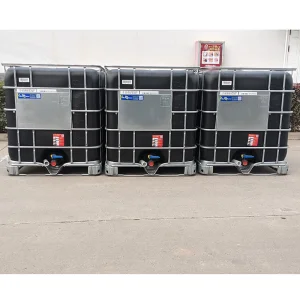
Precise polymer building block with high chemical stability and viscosity uniformity.

High purity oxidizing salt widely implemented in phase-change thermal storage & catalysts.
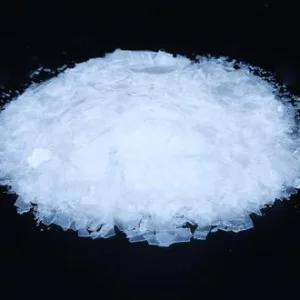
Ceramic slurry plasticizer and carrier solvent ensuring defect-free green tape casting.
Why AlN represents the core substrate and filler material for wide bandgap semiconductors, high-density power electronics, and high-frequency communication infrastructure.
Thermal dissipation in non-metallic dielectric crystals occurs predominantly through lattice vibrations (phonons). In stoichiometric Aluminum Nitride (AlN), the theoretical room-temperature thermal conductivity reaches up to 320 W/(m·K). However, oxygen impurity atoms replace nitrogen within the hexagonal wurtzite crystal structure, generating aluminum vacancies. These vacancies scatter phonons exponentially, collapsing bulk thermal performance. Contemporary factories focus extensively on lowering lattice oxygen beneath 0.8 wt%.
Two production routes dominate modern industrial factories: Direct Nitridation (Al + N2 → AlN) and Carbothermal Reduction (Al2O3 + 3C + N2 → 2AlN + 3CO). Direct nitridation provides high throughput, cost-efficiency, and easily crushed irregular/granular morphologies optimal for filler packing. Carbothermal reduction yields exceptional spherical or quasi-spherical sub-micron powders characterized by ultra-low internal oxygen, tighter particle size distribution (PSD), and premium sinterability for substrates.
A primary engineering challenge with standard AlN is its vulnerability to hydrolysis: AlN + 3H2O → Al(OH)3 + NH3↑, which compromises polymeric matrix curing and releases toxic ammonia. Leading Chinese production facilities now integrate advanced organosilane or liquid polymer chemical surface functionalization, forming nanometer-thick hydrophobic protective coatings that prevent atmospheric degradation and drastically improve dispersibility in epoxy and silicone resins.
Technical Benchmark: AlN's coefficient of thermal expansion (CTE) of 4.5×10⁻⁶/K between 20°C and 400°C matches Silicon (3.5–4.0×10⁻⁶/K) and Silicon Carbide (SiC, 4.0×10⁻⁶/K) far superior to Alumina (Al2O3, ~7.5×10⁻⁶/K). This mechanical compatibility eliminates shear stress failure in extreme thermal cycling of IGBT power modules.
Analyzing the systemic manufacturing efficiencies, scale consolidation, and supply chain vertical integration that provide global procurement teams with unmatched ROI.
Chinese AlN factories benefit from immediate domestic access to high-purity refined alumina (Al2O3 >99.99%), atomized fine aluminum powders, and high-purity nitrogen. Vertical supply chain clustering eliminates international transport delays for raw chemicals and shields production schedules from geopolitical freight bottlenecks.
Transitioning from discontinuous batch sintering to multi-atmosphere pusher and rotary kilns operating at 1600°C–1900°C allows Chinese facilities to achieve continuous output. Automated thermodynamic monitoring lowers energy consumption per metric ton by up to 28% while maintaining batch lot consistency.
To compete on the world stage, top facilities operate on-site testing laboratories equipped with LECO ONH elemental analyzers (oxygen/nitrogen detection), Malvern Mastersizer laser diffraction PSD instruments, and Inductively Coupled Plasma Mass Spectrometry (ICP-MS) to monitor trace metal impurities (Fe, Ca, Si) down to parts-per-million (<15 ppm).
| Evaluation Parameter | Direct Nitridation Grade | Carbothermal Grade (High-Purity) | Surface Treated / Hydrophobic Grade |
|---|---|---|---|
| Typical Morphology | Granular / Crushed Irregular | Equiaxed / Spherical & Quasi-Spherical | Encapsulated Micro-spherical / Granular |
| Oxygen Content (wt%) | 0.80% – 1.20% | < 0.60% (Ultra-pure: <0.40%) | Variable based on silane/organic agent |
| Mean Particle Size (D50) | 5.0 μm – 30.0 μm (Customizable) | 0.8 μm – 2.5 μm | 1.0 μm – 15.0 μm |
| Target Industrial Sector | Thermal Greases, TIM Pads, Cast Resins | HTCC/LTCC Substrates, DBC/AMB Ceramics | Liquid Epoxy Encapsulants, PCB Fillers |
| Thermal Conductivity Range | 140 – 170 W/(m·K) (Sintered body) | 170 – 230+ W/(m·K) (With sintering aids) | Composite dependent (>3–8 W/m·K loaded) |
From electric vehicle inverters to 5G RF front-ends, examine how Aluminum Nitride powder eliminates heat bottlenecks across the modern microelectronics value chain.
Silicon Carbide (SiC) and Gallium Nitride (GaN) power modules in 800V EV architectures operate at junction temperatures exceeding 175°C. Traditional Al2O3 substrate boards fail under high power densities. Active Metal Brazing (AMB) Aluminum Nitride substrates deliver 7-8 times the thermal conductivity of alumina, safeguarding automotive chips from thermal runaway while surviving severe thermal shock regimes.
High-frequency telecom base stations demand substrates with low dielectric loss (tan δ < 5×10⁻⁴ at 1 MHz) alongside rapid passive heat transfer. AlN powders sintered with trace Yttrium Oxide (Y2O3) achieve dense, pore-free microstructures that maintain stable dielectric constants (εr ~ 8.5) across millimeter-wave frequencies.
High-performance computing (HPC) processors and AI accelerators produce extreme localized heat fluxes. Spheroidized AlN powders act as high-loading fillers (>80 wt%) in silicone greases, epoxy underfills, and phase-change thermal interface materials (TIMs), minimizing line viscosity while establishing multi-directional conductive phonon pathways.
A five-tier validation framework implemented by tier-1 automotive and semiconductor procurement divisions to guarantee chemical compliance, repeatability, and supply safety.
Enterprise buyers evaluate span calculations ((D90 - D10) / D50) to evaluate grain size spread. In tape casting, narrow spans prevent differential shrinkage during de-binding and sintering, avoiding ceramic substrate warping or internal micro-cracks.
A BET area between 2.5 and 4.5 m²/g offers the optimal trade-off: high enough to drive solid-state sintering kinetics below 1800°C without requiring excessive organic binders, yet low enough to minimize surface moisture pickup during ambient cleanroom handling.
Because AlN reacts gradually with airborne humidity, leading factories utilize nitrogen-purged, multi-layer aluminum vacuum-sealed bags with desiccants and moisture indicators, shipped inside reinforced UN-standard fiber drums to ensure total chemical stability upon overseas delivery.
Direct answers to the most common queries raised by materials scientists, procurement managers, and production engineers.
Expanding global material supply chains through certified manufacturing infrastructure, dangerous goods compliance, and technical export support.

Ultra-pure dielectric insulating gas essential for GIS high-voltage transmission switchgear.

High-purity intermediate resin tailored for specialized polyurethane elastomers & sealants.

Carboxyl-terminated reactive polymer toughening structural aerospace and electronics epoxies.

Gas-atomized multi-component metallic formulations for additive manufacturing & metallurgy.

Random carboxy functionalized polymer offering outstanding oil, fuel, and impact resistance.

Noble semiconductor etching gas and ion propulsion medium with guaranteed 99.9999% purity.
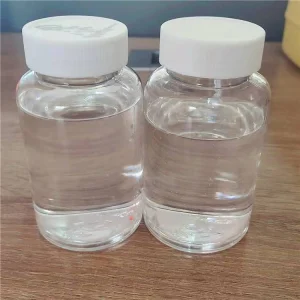
Maleic anhydride grafted polybutadiene promoting exceptional adhesion to metal substrates.

Soluble chemical synthesis precursor for alumina ceramics, catalysts, and tanning agents.
