Direct supply line from certified Chinese facilities. Every lot is supported with technical datasheets, full lot traceability, and batch COA.






In the contemporary construction materials paradigm, aluminum powder for concrete—predominantly employed as a high-precision chemical aeration agent (gas-forming admixture) in Autoclaved Aerated Concrete (AAC) and specialized non-shrink grouting compounds—represents one of the most chemically sensitive additives within the industrial precast supply chain. Global building material conglomerates across Europe, Southeast Asia, the Middle East, and the Americas demand an uncompromising equilibrium between active elemental aluminum content, surface passivation kinetics, particle size distribution (PSD), and total landed cost.
China's manufacturing ecosystem, anchored by specialized metallurgical enterprises including Yanxatech System Industries Limited (YANXA, founded in 2008), has evolved from low-end comminution milling to sophisticated wet ball milling, gas atomization, and organic surface treatment. As building codes worldwide tighten standards for structural thermal insulation, fire rating (Class A1 non-combustible), and acoustic insulation, precast AAC producers can no longer rely on commoditized aluminum flakes. A variance of even 1.5% in the active aluminum assay or a shift of 3 μm in D50 particle diameter can cause catastrophic core slumping, uncontrolled blowholes, or micro-cracking during early cementitious slurry hydration.
Procurement leaders must evaluate not merely the baseline FOB metric per metric ton, but the comprehensive performance matrix: gas generation volume ($V_g$), reaction commencement delay ($T_0$), gas evolution peak time ($T_{max}$), and compatibility with local clinker mineralogy, blast furnace slag (GGBS), and high-volume fly ash (HVFA) matrices.
The functional efficacy of aluminum powder in AAC formulation rests upon a liquid-solid interface redox reaction taking place in an intensely alkaline pore solution ($pH \approx 12.2 - 13.0$) provided by the hydration of ordinary Portland cement (OPC) and quicklime ($CaO$). The fundamental stoichiometric transformation is expressed as:
In this reaction mechanism, metallic aluminum reacts with calcium hydroxide ($Ca(OH)_2$) liberated from calcium silicate hydration, generating insoluble tricalcium aluminate hexahydrate (katoite) while liberating sub-millimeter hydrogen microbubbles ($H_2$). The primary engineering dilemma is kinetic synchronicity: gas evolution must strictly align with the viscoelastic thickening curve of the slurry.
If the aluminum powder is overly reactive (e.g., uncoated ultra-fine flakes), gas release peaks prior to initial setting, causing hydrogen bubble coalescence, surface boil-outs, and anisotropic channel pores that undermine mechanical compressive strength. Conversely, if passivated excessively with fatty acids or mineral oils, foaming initiates post-viscosity lock, inducing internal tensile stress, latent micro-fissuring, and autoclave blow-out.
Standard dry-milled aluminum flake treated with 1.5–3.0% stearic acid. Exhibits controlled hydrophobicity, requiring specialized surface wetting agents or surfactant dispersion before slurry dosing.
Wet-milled using diethylene glycol (DEG) or non-flammable hydrophilic liquid carriers. Directly disperses in batch water within 15 seconds without dusting hazards or preliminary solvent agitation.
Formulated for northern latitudes and cold-weather precasting. Incorporates trace alkaline-soluble organic triggers that initiate steady hydrogen generation at slurry temperatures as low as 32°C.
Pricing for export-grade aluminum powder and paste is fundamentally tethered to the Shanghai Futures Exchange (SHFE) primary aluminum ingots index (A00 grade), adjusted for secondary milling energy overheads, classification yield, surface-treatment chemistry, dangerous goods packaging (UN-approved galvanized drums), and export excise structures. Below is an indicative industry benchmark for enterprise procurement.
| Grade / Commercial ID | Active Al (%) | Median Size (D50) | Physical Form | Water Dispersibility | Benchmark Quote (FOB China) |
|---|---|---|---|---|---|
| YANXA-AAC-STD75 | ≥ 88.0% | 45 ± 5 μm | Dry Flake Powder | Hydrophobic (Requires Pre-mix) | $3,150 – $3,450 / MT |
| YANXA-AAC-HYP90 | ≥ 90.0% | 32 ± 3 μm | Water-Based Paste (70% Solids) | Immediate (< 15 sec) | $3,580 – $3,920 / MT |
| YANXA-AAC-DEG65 | ≥ 92.0% | 25 ± 3 μm | DEG Solvent Paste (80% Solids) | Self-Emulsifying | $3,750 – $4,100 / MT |
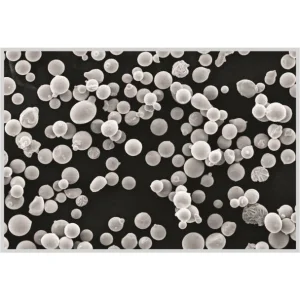
| YANXA-GRT-ULTRA15 | ≥ 95.0% | 18 ± 2 μm | Spherical Atomized Powder | Neutral Surfactant Coated | $4,200 – $4,650 / MT |
| YANXA-CUSTOM-FR40 | Custom Blend | Tailored (15–65 μm) | Anti-Explosion Pellet / Paste | High-Temp Retarded | Direct Engineering Quote |
*Note on Pricing Mechanics: Minimum Order Quantity (MOQ) for international containerized shipping is typically 5 MT (FCL optimization is 16–18 MT per 20'GP dry box due to DG packing density limitations). Spot prices fluctuate based on primary metal ingot premiums and seasonal petrochemical solvent costs.
Industrial concrete producers frequently face batch rejections caused by varying ambient plant conditions, changes in binder reactivity, and raw material impurities. Yanxatech System Industries Limited addresses these macro risks through targeted supply-chain interventions:
Targeted bulk dry densities ranging from B03 ($300\ kg/m^3$) for thermal exterior panels to B06 ($600\ kg/m^3$) for high-load partition blocks, regulated by custom-milled aluminum flake aspect ratios.
Transition from dry powder handling to dust-free pastes (UN-compliant water/glycol carriers), mitigating ATEX / NFPA combustible dust explosion hazards within plant batching silos.
Eliminating microstructural voids through uniform sub-millimeter pore radii ($0.5–1.2\ mm$), restricting moisture and aggressive groundwater chloride ingress into embedded reinforcing rebar.
Customizing the chemical delay time ($T_0$) to accommodate fast-slaking local lime sources (slaking time $< 5\ min$) or sluggish fly ash hydration regimens common in coal-fired power regions.
The concrete sector stands at the precipice of deep decarbonization. With traditional Ordinary Portland Cement responsible for roughly 8% of global anthropogenic $CO_2$ emissions, the construction sector is aggressively shifting toward low-carbon binders: geopolymer concrete, alkali-activated slag systems, and calcium sulfoaluminate (CSA) cements. This paradigm evolution presents profound chemical challenges for aluminum-based aerating agents.
Alkali-Activated & Geopolymer Foaming: Geopolymer slurries, powered by sodium hydroxide ($NaOH$) and sodium silicate solutions, operate at higher caustic alkalinities ($pH > 13.5$) than traditional Portland cement. Standard aluminum flakes react with extreme violently in these matrices, consuming metallic aluminum in minutes before the aluminosilicate gel cross-links. YANXA's chemical engineering laboratory is pioneering silane-functionalized and hybrid-polymer nanocoatings that delay dissolution until structural gelation reaches its kinetic threshold.
Near-Zero Carbon Green Hydrogen Micro-Foaming: Because the byproduct of the aeration process is pure hydrogen gas ($H_2$), emerging pilot precast facilities in Northern Europe are exploring catalytic capture of off-gassed hydrogen during the initial setting tunnel phase. Capturing this clean gas stream transforms AAC production from a net emitter into a regional energy-efficient hub, reinforcing circular economy targets.
Aluminum powder and paste shipments are classified under international dangerous goods protocols. Handling, storing, and maritime shipping mandates rigorous regulatory execution to prevent in-transit hazards:
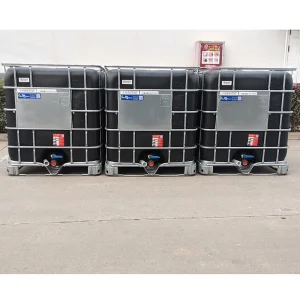
Certified as UN 1396, Class 4.3 (Substances which in contact with water emit flammable gases), Packing Group II/III. Shipped in hermetically sealed, nitrogen-purged 200L steel drums with anti-static inner poly liners.
Every industrial batch produced at YANXA undergoes quantitative laser diffraction particle size analysis (Malvern Mastersizer), active gas evolution volume testing ($V_g$), and ICP-OES trace heavy metal quantification.
Full Dangerous Goods Declarations (DGD), compliant GHS-standard Safety Data Sheets in 14 languages, Certificate of Analysis (COA) per container, and authorized IMDG/IATA export clearance protocols.
Expert answers addressing the core mechanical, chemical, and commercial questions raised by international precast project engineers and chemical procurement specialists.
Connect directly with YANXA's metallurgical specialists. Receive tailored particle-size recommendations, sample testing lots, and verified FOB/CIF price quotes aligned with current SHFE ingot indices.
Inquire With Chemical EngineersComprehensive portfolio supporting advanced metallurgical, energetic, synthetic resin, and civil engineering infrastructure projects.