Direct factory supply with certified batch analytical testing, strict morphology validation, and UN/GHS dangerous goods logistical compliance.




An exhaustive chemical characterization of diammonium oxalate monohydrate [(NH4)2C2O4·H2O], examining crystallographic purity, fluid-energy micronization mechanisms, and reactivity dynamics.
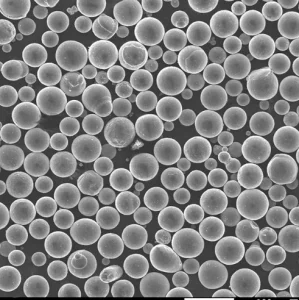
Diammonium oxalate monohydrate crystallizes in an orthorhombic system with space group P2_1 2_1 2. In industrial processing, conventional crystalline needles exhibit poor flowability, rapid agglomeration, and erratic dissolution rates. YANXA’s superfine crystallization and proprietary fluidized jet milling transform brittle prism structures into spherical-polyhedral micro-particles, dramatically expanding specific surface area (BET > 4.5 m²/g) and guaranteeing near-instantaneous stoichiometric chelation with alkaline earth and rare earth cations.
Standard mechanical grinding introduces significant heat friction, which inadvertently triggers the premature dehydration of the ammonium oxalate hydrate crystal lattice at temperatures above 65°C, yielding partial thermal decomposition into ammonium hydrogen oxalate. Our production lines deploy chilled, ultra-dry nitrogen supersonic jet mills operating at -10°C to 15°C. Particle-on-particle kinetic impact shatters crystalline boundaries without metal contamination, maintaining exact stoichiometric water of hydration at 12.67% w/w.
Superfine inorganic salts are prone to dynamic moisture absorption, capillary meniscus formation, and severe cake compaction during cross-ocean maritime shipping. YANXA integrates a sub-micron surface dispersion matrix during the final gas-classification stage. This controlled mechanical passivation preserves particle kinetic independence, ensuring that bulk superfine powders remain freely flowable even after prolonged containerized transit through varying tropical humidity belts.
How structural shifts in high-tech manufacturing, green hydrometallurgy, and strategic supply reshoring govern international procurement strategies.
China accounts for over 78% of the global synthetic capacity for refined oxalic acid derivatives. By co-locating superfine ammonium oxalate manufacturing adjacent to upstream coal-chemical synthetic oxalic acid and ammonia feed lines, Yanxatech System Industries Limited eliminates intermediary freight, secondary contamination, and raw-material tariff fluctuations. This vertical integration guarantees year-round price predictability and eliminates production bottlenecks common in European and North American toll-processing facilities.
With the acceleration of international critical minerals mandates (US Inflation Reduction Act, EU Critical Raw Materials Act), global mining operators are constructing hydrometallurgical refining plants across Southeast Asia, North America, and Australia. Ammonium Oxalate Superfine is the primary selective precipitant for separating light and heavy lanthanides (such as Neodymium, Praseodymium, Dysprosium, and Terbium). The transition from generic coarse crystals to our superfine grade increases precipitation recovery yields by 3.8% to 6.2% while drastically diminishing total wash-water consumption.
Cross-border chemical procurement faces unprecedented volatility in shipping lanes, container allocations, and export controls. YANXA addresses international supply fragility through structured multi-point supply contracts, forward buffer warehousing at major transshipment hubs (including Ningbo, Qingdao, and Shanghai), and dual-track export documentation under both chemical customs classifications (HS Code 2917.1110) and hazardous cargo manifests.
Compare technical parameters of YANXA Superfine Micronized Grade against standard industrial technical and reagent grades.
| Analytical Parameter | Standard Technical Grade | Analytical Reagent (AR) Grade | YANXA Superfine Micronized Grade | Standard Testing Methodology |
|---|---|---|---|---|
| Assay [(NH4)2C2O4·H2O] | ≥ 98.5% | ≥ 99.5% | ≥ 99.85% | Acid-base titration / Redox Titration |
| Particle Size Distribution (PSD) D50 | 120 – 350 μm (Granular) | 80 – 200 μm (Needles) | 3.0 – 6.5 μm (Superfine) | Malvern Mastersizer 3000 Laser Diffraction |
| Top Cut Particle Size (D97) | > 500 μm | > 250 μm | ≤ 18.0 μm | Dry Powder Laser Dispersion System |
| Insoluble Matter in Water | ≤ 0.05% | ≤ 0.005% | ≤ 0.0015% | Gravimetric filtration (0.45 μm membrane) |
| Chloride (Cl−) | ≤ 0.005% | ≤ 0.0005% | ≤ 0.0002% (2 ppm) | Ion Chromatography (IC) |
| Sulfate (SO4²−) | ≤ 0.02% | ≤ 0.002% | ≤ 0.0008% (8 ppm) | Barium Turbidimetry / Spectrophotometry |
| Heavy Metals (as Pb) | ≤ 20 ppm | ≤ 5 ppm | ≤ 1.0 ppm | Inductively Coupled Plasma Mass Spec (ICP-MS) |
| Iron (Fe) Impurity | ≤ 15 ppm | ≤ 2 ppm | ≤ 0.5 ppm | Atomic Absorption Spectroscopy (AAS) |
| Residue on Ignition (as SO4) | ≤ 0.08% | ≤ 0.02% | ≤ 0.008% | High-temperature muffle furnace (800°C) |
| Bulk Density / Tap Density | 0.85 / 1.05 g/cm³ | 0.72 / 0.90 g/cm³ | 0.42 / 0.68 g/cm³ | Automated Tap Density Analyzer (USP I/II) |
* Custom PSD profiles (D50 from 1.5 μm up to 25.0 μm) and moisture-passivated grades are available upon custom engineering agreements.
From critical metals hydrometallurgy to electro-ceramic dielectric synthesis and defense pyrotechnics, superfine ammonium oxalate delivers uncompromised kinetic precision.
In heavy rare earth processing facilities across North America, Australia, and Southern China, solvent extraction raffinates require rapid, selective precipitation of trivalent lanthanides (Nd3+, Pr3+, Dy3+, Tb3+). Coarse ammonium oxalate crystals form large, porous agglomerates that trap significant non-rare-earth impurities (Fe, Al, Ca) within the crystal matrix. YANXA Superfine Ammonium Oxalate facilitates homogeneous micro-nucleation, yielding dense, uniform rare earth oxalate precipitates that filter 40% faster, cut subsequent calcination energy by 18%, and yield rare-earth oxides (REO) exceeding 99.999% purity.
Multi-layer ceramic capacitors (MLCC) powering 5G communications and electric vehicle inverters demand nano-scale barium titanate (BaTiO3) powders. The chemical coprecipitation route via barium titanyl oxalate [BaTiO(C2O4)2·4H2O] depends critically on the particle size and dissolution homogeneity of the oxalate precursor. Our D50 < 4.5 μm superfine oxalate dissolves without localized concentration gradients, preventing premature localized titanium hydroxide hydrolysis and yielding ultra-fine titanate grains with uniform dielectric permittivity.
Within aerospace propellant systems, civilian pyrotechnics, and defense smokeless formulations, ammonium oxalate acts as a specialized cooling additive, gas-generating propellant, and burn-rate suppressant. Coarse particles cause catastrophic combustion instabilities and chamber pressure spikes. YANXA’s superfine grade blends seamlessly with polymer binders and metallic oxidizers, ensuring uniform micro-scale heat absorption and controlled endothermic decomposition into carbon monoxide, carbon dioxide, water vapor, and ammonia gas.
Niobium and tantalum metallurgical plants require high-purity complexing reagents to suppress fluoride volatilities and selectively crystallize pure potassium fluoroniobate or pure hydrated oxides. Superfine ammonium oxalate forms stable oxalatoniobic acid complexes [NbO(C2O4)3]3-, allowing quantitative separation from tantalum species with minimum reagent loss and minimal organic solvent crossover in liquid-liquid extraction units.
Superfine ammonium oxalate serves as a foundational reference standard in automated clinical pathology analyzers, pharmaceutical gravimetric assays, and industrial water test kits for quantifying calcium and magnesium serum/water hardness. The ultra-low iron and lead contamination levels (< 0.5 ppm Fe, < 1.0 ppm Pb) eliminate baseline interference in modern atomic absorption and mass spectroscopy calibrators.
Advanced aerospace aluminum finishing lines deploy ammonium oxalate baths for electrolytic micro-arc oxidation and precision brightening. The fine particle morphology ensures rapid dissolution without sludging in high-throughput continuous bath systems, creating tightly controlled barrier-type anodic oxide layers with exceptional corrosion resistance under ASTM B117 salt spray exposures.
Audit-ready documentation, strict dangerous goods (DG) compliance, and global delivery integrity certified under international standards.
YANXA guarantees comprehensive chemical compliance across Europe, North America, and the Asia-Pacific. Every consignment includes fully documented GHS 16-section Safety Data Sheets (SDS), technical dossiers for EU REACH (Registration, Evaluation, Authorisation and Restriction of Chemicals), UK REACH, US EPA Toxic Substances Control Act (TSCA) inventories, and Korea REACH. Our products are fully tested for RoHS 3 and SVHC compliance, providing multi-national procurement teams with absolute regulatory confidence.
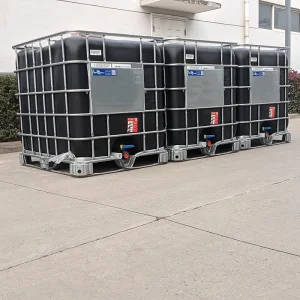
Ammonium oxalate is classified under international transport conventions as a toxic solid substance (Harmful if swallowed or in contact with skin). We package our superfine powder in UN-approved 25 kg fiber drums or woven polyethylene outer bags with hermetically heat-sealed aluminum-foil barrier inner liners (vapor transmission rate < 0.05 g/m²·day). Cargo is dispatched with certified IMDG Class 6.1 (sea) and ICAO/IATA (air) declarations, ensuring clearance at major ports worldwide without customs detention.
Operating under an ISO 9001:2015 quality management framework, our internal laboratory conducts batch ICP-MS trace metals detection, Laser PSD verification, Karl Fischer moisture titration, and HPLC assay determination. Independent third-party inspection (SGS, Intertek, or Bureau Veritas) can be integrated prior to shipment seal, with batch-specific retained samples archived in vacuum seal for a mandatory 24-month audit window.
From high-efficiency green synthesis to sub-micron particle engineering, discover our next-generation manufacturing technology roadmap.
Stoichiometric neutralization of ultra-pure oxalic acid solution with purified liquid ammonia gas under continuous pH (6.4 - 7.0) control.
Multi-stage 0.22 μm PTFE membrane filtration of hot aqueous saturated solution to eliminate insoluble heavy particulate matters.
Controlled thermal gradient cooling crystallization yielding uniform orthorhombic seed crystals with minimal mother-liquor inclusion.
Cryogenic fluidized nitrogen opposed jet-milling producing D50 < 5.0 μm spherical microparticles with zero thermal degradation.
Robotic packaging in cleanroom (Class 10,000) inside moisture-barrier multi-layer laminated foil bags under nitrogen blanket.
YANXA’s R&D team in partnership with national chemical engineering institutions is piloting a continuous micro-reactor impinging jet precipitation process. By mixing micro-droplets under ultra-high shear forces, nucleation rates outpace crystal growth by a factor of 1000, delivering stable sub-micron ammonium oxalate for next-generation MLCC thin-dielectric layers and advanced optical coatings.
Addressing environmental concerns regarding ammonia and oxalate wastewater discharges in hydrometallurgy, YANXA has introduced closed-loop ammonium recovery flowsheets. Our technical team assists international refining clients in deploying membrane distillation and bipolar electrodialysis to recover ammonium oxalate mother liquors directly from rare-earth precipitation cakes, slashing operational chemical expenditures by up to 34%.
In-depth answers addressing procurement parameters, safety handling, analytical methods, and global supply logistics.
Standard commercial ammonium oxalate consists of coarse, irregular crystalline needles with particle sizes ranging from 150 μm to over 500 μm, featuring high bulk volume and slow dissolution kinetics. Superfine Ammonium Oxalate undergoes fluidized opposed-jet micronization under controlled thermal regimes, reducing particle diameters down to D50 < 5.0 μm (D97 ≤ 18.0 μm). This dramatically elevates specific surface area, accelerating liquid-solid reaction and stoichiometric chelation rates by up to 10-fold, eliminating unreacted cores in critical precipitation reactions.
Micronized salts naturally experience hygroscopic caking due to capillary moisture condensation. YANXA prevents this using a three-tier protection architecture: First, moisture content is strictly controlled below 0.15% free moisture without stripping the structural crystal hydrate. Second, an optional inert organic or silica-free conditioning matrix is dispersed at the sub-micron level. Third, cargo is hermetically sealed within heavy aluminum-foil vacuum barrier liners enclosed in UN-rated drums with desiccants, ensuring 100% free-flowing material upon destination delivery.
Ammonium oxalate is classified under UN Model Regulations as a toxic substance: UN 2811, TOXIC SOLID, ORGANIC, N.O.S. (Ammonium Oxalate Monohydrate), Class 6.1, Packing Group III (or non-restricted depending on national chemical criteria and concentration packaging limits). It carries GHS hazard statements H302 (Harmful if swallowed) and H312 (Harmful in contact with skin). YANXA delivers compliant dangerous goods packaging, container placarding, IMDG Code declarations, and SDS in all major international languages.
Yes. Through variable-speed dynamic air classifiers integrated within our supersonic jet milling circuits, YANXA tailors tight distribution curves according to technical buyer TDS specifications. Common profiles include D50: 2.0–4.0 μm, D50: 5.0–8.0 μm, or customized de-dusted cuts for energetic formulations. Complete Malvern Mastersizer 3000 volume distribution curves are provided with pre-shipment sample inspection reports.
Standard production dispatch for standard superfine grades in 20-foot or 40-foot full container loads (18 to 22 metric tons palletized) is 10 to 18 business days from purchase order confirmation. Custom tailored micronization curves or specialized third-party pre-shipment inspections (e.g., SGS/Bureau Veritas) typically require 15 to 21 business days. Priority maritime shipping bookings are secured directly from Qingdao, Shanghai, or Ningbo ports.
Diammonium oxalate monohydrate undergoes clean, step-wise endothermic decomposition without leaving heavy ash residues. Dehydration occurs between 70°C and 125°C, yielding anhydrous (NH4)2C2O4. Complete thermal dissociation into carbon monoxide, carbon dioxide, ammonia, and water occurs between 220°C and 280°C. Residue on ignition is strictly under 0.008%, ensuring clean burn characteristics with zero ceramic matrix contamination.
Complete material families produced and supplied under Yanxatech System Industries Limited technical supervision.