Verified batch purity, ISO traceable quality assurance, and global hazardous cargo dispatch ready for North American, European, and Asia-Pacific industrial procurement.
A rigorous examination of synthetic stoichiometry, precipitation control, high-temperature oxidizer performance, and industrial anhydrous crystallization.
In modern inorganic industrial synthesis, Barium Nitrate [Ba(NO₃)₂] and Sodium Sulfate [Na₂SO₄] represent two pillars of industrial manufacturing, linking pyrotechnic energetic chemistry, high-refractive optical glass manufacturing, advanced detergents, and metallurgical refining. As an ISO 9001 certified Chinese chemical manufacturing conglomerate operating since 2008, Yanxatech System Industries Limited (YANXA) has engineered deep vertical integration across the barite (barium sulfate, BaSO₄) mineral processing loop and the downstream double-decomposition synthetic networks.
The production of technical and military-grade barium nitrate involves the reaction of barium carbonate (BaCO₃) or barium sulfide (BaS, derived from the carbothermal reduction of natural barite) with concentrated nitric acid (HNO₃):
BaCO₃ + 2HNO₃ → Ba(NO₃)₂ + CO₂↑ + H₂O
Simultaneously, the industrial lifecycle of high-purity anhydrous sodium sulfate is intrinsically coupled with barium chemistry through environmental sulfate precipitation, kraft chemical pulp recovery, and Mannheim process hydrochloric acid co-generation. When barium salts encounter residual sulfate ions, the thermodynamic driving force precipitates ultra-insoluble barium sulfate (Ksp = 1.08 × 10⁻¹⁰ at 25°C), enabling chemical engineers to precisely control ionic purity and strip heavy-metal contaminants from finished nitrate solutions.
| Critical Parameter | Pyrotechnic Grade Barium Nitrate | Optical Glass Grade Ba(NO₃)₂ | Anhydrous Sodium Sulfate (Na₂SO₄) | Testing & Audit Methodology |
|---|---|---|---|---|
| Assay Purity (Dry Basis) | ≥ 99.50% | ≥ 99.80% | ≥ 99.00% – 99.50% | Potentiometric Titration / ICP-OES |
| Moisture Content (H₂O) | ≤ 0.10% | ≤ 0.05% | ≤ 0.15% | Karl Fischer / Loss on Drying (105°C) |
| Water-Insoluble Matter | ≤ 0.05% | ≤ 0.02% | ≤ 0.05% | Gravimetric Membrane Filtration (0.45µm) |
| Chloride Content (Cl⁻) | ≤ 0.02% | ≤ 0.005% (50 ppm) | ≤ 0.35% (Industrial) / ≤ 0.05% (Refined) | Argentometric Silver Nitrate Titration |
| Iron Contamination (Fe) | ≤ 0.002% (20 ppm) | ≤ 0.0005% (5 ppm) | ≤ 0.002% | Spectrophotometric Ortho-Phenanthroline |
| Heavy Metals (as Pb) | ≤ 0.001% (10 ppm) | ≤ 0.0005% (5 ppm) | ≤ 0.001% | Atomic Absorption Spectrometry (AAS) |
| Particle Size Distribution | 60–100 Mesh / 200 Mesh Micronized | Granular / Crystalline (20–60 Mesh) | Dense Powder (40–120 Mesh) | Laser Diffraction (Malvern Mastersizer) |
Strategic geographic access to mineral reserves, integrated energy loops, zero-liquid discharge environmental engineering, and global maritime dangerous goods safety.
China commands over 35% of the world’s extractable barite mineral reserves, predominantly concentrated in Guizhou, Guangxi, and Hunan. YANXA's supply architecture capitalizes on localized high-grade barite ore (>90% BaSO₄ density) and inland mirabilite salt lakes (Glauber's salt, Na₂SO₄·10H₂O).
Barium Nitrate is globally classified as a UN 1446 Class 5.1 (Oxidizing Substance) with a subsidiary Class 6.1 (Toxic Material) hazard profile (Packing Group II). Sodium Sulfate operates under non-hazardous transport codes. YANXA handles multi-modal freight protocols seamlessly.
Procurement teams across the European Union, the United States, and Japan require unyielding regulatory transparency. Every production lot ships with multi-lingual GHS-compliant Safety Data Sheets (SDS), technical data sheets (TDS), and ISO/IEC 17025 accredited laboratory Certificates of Analysis (COA).
Strategic deployment parameters for pyrotechnic oxidizers, green signaling flares, optical barium crown lenses, industrial detergents, and phase change energy storage.
Barium nitrate is the preeminent oxidizer utilized to generate vivid emerald-green coloration in civilian display fireworks and military signaling devices. During combustion, thermally excited barium monochloride molecules (BaCl, generated in the presence of a chlorine donor like PVC or Saran resin) emit sharp, intense atomic emission bands between 505 nm and 535 nm.
YANXA provides tailored particle sizing (from free-flowing 60-mesh prills to 200-mesh micronized powders) treated with trace anti-caking agents to ensure rapid burning rates, high oxygen output balance, and long-term shelf storage without moisture agglomeration.
In advanced optical engineering, the incorporation of high-purity barium nitrate into silicate melts replaces toxic lead oxides, synthesizing dense barium crown (SK) and barium flint (BaF) optical glasses. These glasses exhibit high refractive indices (Nd > 1.60) paired with low chromatic dispersion (high Abbe numbers).
Our ultra-low iron grade (Fe ≤ 5 ppm) prevents deleterious yellowing and transmission loss in precision camera lenses, binocular prisms, medical endoscopy optics, and high-energy laser guidance windows.
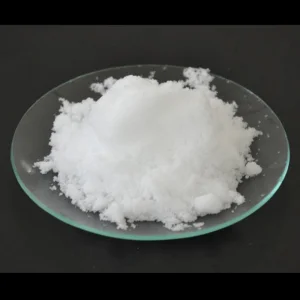
Anhydrous Sodium Sulfate (Na₂SO₄) operates as a vital leveling agent in reactive dye textile processing and as an essential inert filler/flow aid in dry powder laundry detergents, accounting for up to 30% of standard powdered formulations to regulate slurry viscosity.
In the Kraft chemical pulping cycle, sodium sulfate functions as the critical make-up chemical for the black liquor recovery boiler, reducing to sodium sulfide (Na₂S) to sustain efficient lignin extraction without fiber degradation.
Hydrated sodium sulfate, known as Glauber’s Salt (Na₂SO₄·10H₂O), possesses a remarkable latent heat of fusion (251 kJ/kg) with a phase transition temperature near 32.4°C (90.3°F). This thermophysical attribute positions it at the leading edge of green building thermal regulation.
When paired with specialized nucleating agents to eliminate supercooling, YANXA’s high-purity industrial sodium sulfate serves as a primary raw component for sustainable HVAC phase-change storage modules and solar heat capacitors.
Market dynamics, price elasticity, raw material indexing, and proactive risk management for enterprise supply chain directors.
International chemical procurement has transitioned from transactional spot-purchasing to resilient, multi-year supply chain frameworks. Strategic buyers navigating barium nitrate and sodium sulfate sourcing must actively monitor three tectonic market forces:
1. Energy and Environmental De-Carbonization Loops: The production of barium salts depends directly on the high-temperature coal reduction of barite to barium sulfide. With China's ongoing implementation of the "Dual Carbon" policies, sub-scale, non-compliant rotary kiln facilities have been decommissioned. Modern manufacturers like YANXA utilize closed-loop, synthetic gas reduction with comprehensive desulfurization units, capturing sulfur dioxide to yield commercial-grade sodium sulfate or sulfuric acid byproducts. Sourcing directly from advanced facilities shields buyers from sudden environmental shutdown risks.
2. Strategic Raw Material Indexing: Barium nitrate quotes correlate closely with international nitric acid pricing and domestic Chinese barite ore processing tariffs. Anhydrous sodium sulfate fluctuations correspond to synthetic textile demand and chlor-alkali byproduct volumes. YANXA provides transparent formula-based pricing mechanisms tied to published benchmark indexes, offering long-term supply price stability with quarterly price collars.
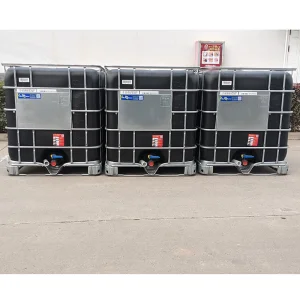
3. Modern Packaging and Moisture Barriers: Both chemicals are prone to hygroscopic caking during trans-oceanic voyages traversing multiple climatic zones. To prevent rock-hard agglomeration upon delivery at destination ports (such as Rotterdam, Long Beach, or Jebel Ali), enterprise purchase orders must mandate multi-ply polyethylene inner liners (minimum 80µm thickness) heat-sealed inside heavy-duty polypropylene woven outer bags, complete with stretch-hooded, fumigated wooden or plastic pallets.
Direct technical review of client engineering drawings, mesh sizing, assay minimums, and strict trace impurity ceilings (e.g. limiting Na, K, Sr, Cl, and Fe).
Representative batch samples dispatched under international courier protocols along with full analytical Certificate of Analysis and GHS-compliant Safety Data Sheets.
Full UN-approved dangerous goods container stuffing, palletization, desiccated sea-worthy packaging, and real-time vessel tracking to destination ports.
Authoritative answers addressing quality control, chemical handling, dangerous goods transport regulations, and custom quotation terms.
Complementary high-spec chemical materials produced under rigorous quality management, ready for unified multi-material consolidated container procurement.