


Direct supply contracts, verified Certificate of Analysis (COA), and global dangerous goods compliance.

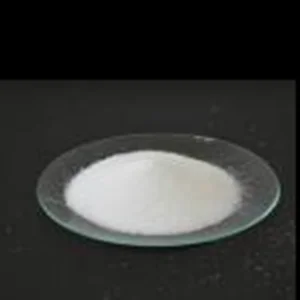






Decoding raw material integration, atomization physics, and global procurement arbitrage in modern powder metallurgy.
Direct supply-chain linkages to high-purity A00 primary electrolytic aluminum ingots (99.70% min purity per GB/T 1196-2017) mitigate regional ingot premiums and buffer international buyers from extreme spot-market shocks on the London Metal Exchange (LME) and Shanghai Futures Exchange (SHFE).
Closed-loop, ultra-dry nitrogen and argon atomization cycles keep dissolved interstitial oxygen and hydrogen within critical trace thresholds (<0.12% active oxidation). This guarantees superior wetting velocity and low agglomeration during sintering, alloying, and additive thermal manufacturing.
Turnkey compliance with international maritime and aviation mandates for UN Class 4.1 (Flammable Solids) and UN Class 4.3 (Substances which in contact with water emit flammable gases), featuring hermetically sealed, argon-purged UN1A2 steel drums and certified anti-static liners.
From supersonic gas-atomized spheres to high-aspect-ratio wet-milled flakes: choosing the optimal particle geometry for target thermo-chemical behaviors.
Engineered using inert gas (Ar or N2) jets impinged on high-velocity liquid metal streams. Demonstrates near-perfect sphericity (ψ > 0.94), exceptional tap density (1.45–1.65 g/cm³), and high Hall flowability (<25 s/50g). Primarily required for Additive Manufacturing (LPBF/SLM), Hot Isostatic Pressing (HIP), conductive photovoltaic pastes, and high-energy solid formulations.
Manufactured via compressed atmospheric air dispersion, yielding teardrop, nodular, or semi-irregular geometries. Characterized by a stabilized microscopic oxide passivated envelope (Al2O3 layer ~3–5 nm). Preferred for chemical reduction, refractory casting bricks, exothermic welding kits (thermite), and ferroalloy metallothermic smelting where cost-per-active-unit is paramount.
Milled in ball mills with controlled aliphatic solvent lubricants (mineral spirits or white spirit) and stearic or oleic acid surface-active agents. Delivers two-dimensional laminar aspect ratios of 50:1 to 200:1. "Leafing" grades float to the surface for radiant thermal barrier coatings; "non-leafing" variants distribute uniformly for corrosion protection and anti-rust automotive finishes.
| Grade Designation | D50 Particle Range (μm) | Active Aluminum (%) | Tap Density (g/cm³) | Dominant Global Applications |
|---|---|---|---|---|
| Al-AM-35 (Spherical Ultra) | 15 – 53 μm | ≥ 99.80% | 1.52 – 1.62 | Selective Laser Melting (SLM), Electron Beam Powder Bed, Aerospace |
| Al-PV-08 (Micronized) | 1.5 – 6.5 μm | ≥ 99.70% | 1.30 – 1.45 | Photovoltaic P-Type/N-Type Crystalline Wafer Rear Contacts |
| Al-NOD-100 (Air Nodular) | 45 – 150 μm | ≥ 99.00% | 1.10 – 1.35 | Exothermic Fluxes, Refractory Additives, Chemical Synthesis |
| Al-AAC-01 (Water Dispersion) | 20 – 65 μm | ≥ 92.00% | 0.70 – 0.95 | Autoclaved Aerated Concrete Gas Generation (Hydrogen Evolution) |
| Al-FLK-ZnAl (Alloyed Flake) | 10 – 35 μm | Al:Zn Custom Ratios | 0.85 – 1.15 | Dacromet Anti-Corrosive Automotive Fasteners, Geomet Coatings |
Analyzing the compound systemic advantages: energy topology, automated high-throughput atomization towers, and multi-parameter quality assurance.
Aluminum powder conversion is fundamentally energy-intensive. Chinese manufacturing clusters in Yunnan, Sichuan, and Inner Mongolia leverage high-density renewable hydroelectricity and captive power generation grids. This low unit-kilowatt-hour baseline dampens production expense overheads compared to Western competitors facing volatility in European and North American energy tariffs, resulting in stable, predictable baseline pricing for enterprise multi-year procurement programs.
Automated manufacturing facilities deploy inline laser diffraction monitoring (Malvern Mastersizer 3000 integration) directly at the cyclone separation stages. This real-time closed-loop tuning of gas-to-melt pressure ratios (GMR) ensures that span width [(D90 - D10) / D50] is precisely regulated. As a result, purchasers experience near-zero intra-batch variability, eliminating the need to re-calibrate printing machines or chemical reactors on delivery.
Each production run undergoes comprehensive chemical and physical testing: Inductively Coupled Plasma Optical Emission Spectrometry (ICP-OES) for Fe, Si, Cu, Zn impurity profiles (<0.05% trace limits), LECO combustion analyzers for interstitial oxygen/nitrogen, and automated helium pycnometry for skeletal density confirmation. Every drum is traceable from the raw bauxite batch to maritime dispatch.
Handling hazardous powdered metals demands verified dangerous goods infrastructure. Chinese factories utilize specialized inland-to-port road corridors with bonded explosive/flammable storage compounds at Qingdao, Shanghai, and Tianjin terminals. Shipments clear IMDG classifications seamlessly, avoiding port retention fines, regulatory demurrage, or delayed customs holds.
Precision-tailored active aluminum interfaces for thermal, mechanical, and reactive chemical environments.
Critical raw material for rear-surface electric field (BSF) pastes and passivated emitter rear contacts (PERC/TOPCon). Ultrafine spherical distributions (D50 ~ 2–4 μm) with controlled low oxidation ensure low glass frit transition temperatures, high contact conductance, and reduced cell bowing during wafer firing.
Functioning as an alkaline gas-generating agent in structural precast manufacturing. Treated with non-ionic surfactants to ensure hydrophilic dispersibility in aqueous calcium hydroxide slurries, yielding consistent hydrogen bubble release ($2Al + 3Ca(OH)_2 + 6H_2O \rightarrow 3CaO \cdot Al_2O_3 \cdot 6H_2O + 3H_2\uparrow$) for high-strength, lightweight block insulation.
Custom gas-atomized AlSi10Mg, Scalmalloy, and Al-Mg-Sc-Zr master alloy systems for Laser Powder Bed Fusion (LPBF). Low porosity, zero internal satellite beads, and narrow PSD allow high recoater spreading speeds, high layer-melt density (>99.85%), and tensile yield strengths that match forged components.
Anti-oxidation additive for carbon-bonded magnesia (MgO-C) and Al2O3-C ladle slide gates. In-situ thermochemical reactions at 800–1200°C generate dense aluminum carbide ($Al_4C_3$) and spinel whiskers, preventing structural decarbonization and dramatically extending ladle service life.
Controlled burn-rate compositions for advanced commercial blasting emulsions, thermite joining mixes, and propulsion fuel formulations. High enthalpy release (ΔH = -1675 kJ/mol) combined with stringent spark-safety packaging and low moisture guarantees repeatable combustion velocity.
Micro-flake compositions blended with zinc powder in thin-film dip-spin formulations. Sacrificial anodic protection provides salt-spray endurance exceeding 1,500 hours without red rust on high-tensile structural bolts, wind turbine fasteners, and chassis brackets.
A transparent look at factory pricing: tying raw material indices, processing costs, and volume tiers together.
Contract Unit Price (USD/MT) = [SHFE / LME Aluminum Primary Ingot Settlement Average + Atomization Conversion Premium + Packaging/Inerting Cost + Port Dangerous Goods Logistics] ± Currency Adjustment Factor.
| Material Category | Specification / Mesh Range | Indicative Price (USD / Metric Ton, FOB) | MOQ Requirement | Standard Packaging |
|---|---|---|---|---|
| Industrial Spherical Al Powder | D50: 10–45 μm | 99.7% Min | $2,850 – $3,400 / MT | 5 MT | 25kg / 50kg Hermetic Steel Drums |
| Additive Grade (AlSi10Mg) | 15–53 μm | Sphericity > 0.95 | $14,500 – $22,000 / MT | 100 kg | Inert Argon Purged Poly-Aluminum Pails |
| AAC Aerated Concrete Powder | 325 – 400 Mesh Paste / Powder | $2,600 – $2,950 / MT | 10 MT | Steel Drums with Water-Soluble Bagging |
| Air-Atomized Industrial Powder | 60 – 200 Mesh | 99.0% Active | $2,700 – $3,100 / MT | 5 MT | 1000kg Antistatic FIBC Big Bags |
| High-Purity Micronized Powder | D50: 1–5 μm (Photovoltaic) | $4,800 – $7,200 / MT | 1 MT | Double-sealed vacuum pails with desiccant |
| Flake Zinc-Aluminum Alloy | D50: 15–30 μm (Passivated) | $5,200 – $6,800 / MT | 2 MT | Solvent-resistant closed metal drums |
To eliminate commodity price shocks on long-term aerospace or solar cell tenders, we support 3-month to 12-month forward pricing agreements secured via financial metal index hedging.
We work with international tier-1 buyers through Documentary Letters of Credit (Irrevocable L/C at sight), Usance L/C 60–90 days, or blended T/T milestone schedules to support continuous inventory flow.
Standardized mesh configurations ship from stock within 7 business days. Custom gas-atomized PSDs or specialized surface coating treatments generally dispatch within 14–21 business days.
Eliminating risk in international shipping: strict handling procedures for combustible metallic powders.
Depending on particle size and surface treatment, materials are assigned to UN 1396 (Aluminum Powder, Uncoated, Class 4.3, PG II/III) or UN 1309 (Aluminum Powder, Coated, Class 4.1, PG II). We provide accurate declarations and GHS Safety Data Sheets in over 16 languages.
Powders are sealed in heavy-duty UN-approved 1A2 open-head steel drums with bolted ring closures. Drums are double-lined with conductive anti-static poly bags, vacuum purged with argon gas, and packed with military-spec molecular sieve desiccants to prevent hydrogen degassing.
Every maritime export includes a certified dangerous goods declaration (DGD), mill test certificate (MTC), non-radioactive declaration, and an authentic Certificate of Inspection from accredited laboratories (SGS, CCIC, or BV) confirming proper cargo readiness.
Expanded catalog offerings ready for multi-container mixed shipments with comprehensive documentation.







Direct technical guidance covering purity testing, safety classifications, shipping, and custom alloy formulations.
Connect with our technical engineering desk to request tailored particle size distributions, pilot evaluation samples, or formal CIF shipping quotes.
Share your target chemical assay, mesh/D50 distribution, and application requirements directly with our metallurgical engineering team.
Pilot verification samples (250g to 5kg) are prepared with comprehensive batch COA analysis for lab testing and production line trials.
Orders are scheduled through our automated atomization lines, packed under inert conditions, and routed cleanly through port customs.
