Explore certified industrial materials manufactured and shipped globally under strict ISO 9001 quality assurance standards.







Understanding coordinate-covalent stability, PEPT1 intestinal dipeptide transport, and the analytical distinction between genuine bis-chelates and dry-blended magnesium adulterants.
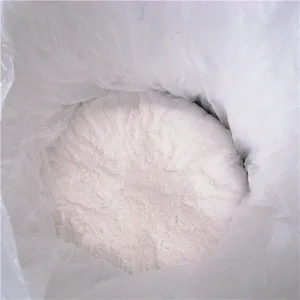
Magnesium Bisglycinate (CAS: 14783-68-7, C4H8MgN2O4) is an organometallic coordination complex where a central divalent magnesium cation (Mg2+) is bonded to two glycine molecules. Unlike standard ionic salts, the carboxylate oxygen and the alpha-amino nitrogen form two distinct 5-membered heterocyclic rings.
This closed-ring structure neutralizes the ionic charge of the magnesium ion, preventing it from binding with dietary inhibitors such as phytates, oxalates, and phosphates in the stomach and upper duodenum.
Conventional inorganic magnesium compounds (such as Magnesium Oxide or Magnesium Carbonate) rely entirely on ionization via gastric hydrochloric acid. Once ionized, unabsorbed free Mg2+ ions trigger an osmotic influx into the intestinal lumen, leading to laxative side effects and low bioavailability.
In contrast, fully reacted magnesium bisglycinate remains intact through the gastric acid environment. It is assimilated via active peptide transporter pathways (PEPT1) directly in the jejunum, ensuring superior intestinal tolerability and cellular uptake.
Stoichiometrically, 100% pure chelated magnesium bisglycinate possesses a maximum theoretical elemental magnesium content of 14.1% by weight. When B2B suppliers offer bulk powders testing at 18%, 20%, or 22% elemental magnesium, the product is systematically "buffered" with inorganic Magnesium Oxide (MgO).
Our China manufacturing facility provides complete batch clarity: we manufacture both 100% Pure Non-Buffered Magnesium Bisglycinate (11.0%–13.5% elemental Mg) and Standardized Buffered Grades (18.0%–20.0% elemental Mg) for cost-sensitive formulations.
Technical Distinction for Formulators: Genuine magnesium bisglycinate does not create an alkaline shift or thermal effervescence in aqueous solution. When dissolving pure material at room temperature, it yields a neutral pH (6.5 to 7.5), confirming zero unreacted free magnesium oxide residue.
How raw material integration, closed-loop aqueous synthesis, spray granulation, and strict cGMP validation drive global market leadership.
China holds over 70% of the world's upstream refined glycine production and dominates the global supply of premium mineral magnesium precursors (magnesium hydroxide, basic magnesium carbonate, and marine magnesium extracts). This domestic integration grants Chinese production facilities unmatched supply security.
Traditional chelation often results in highly hygroscopic, fluffy powders with erratic bulk densities that cause severe bridging in high-speed rotary tablet presses. Our manufacturing facilities utilize automated multi-stage co-current spray drying towers combined with fluidized bed agglomeration.
The functional wellness sector is undergoing a rapid transition toward premium, gut-friendly mineral amino acid chelates.
Consumer demand has evolved from basic mineral replenishment toward targeted neurological relaxation. Glycine acts as an inhibitory neurotransmitter in the brain, binding to NMDA receptors to lower core body temperature and promote slow-wave REM sleep. Magnesium bisglycinate offers synergistic sleep cycle support without grogginess.
Professional athletic nutrition brands are systematically replacing Magnesium Oxide and Magnesium Citrate. High-dose supplementation of mineral oxides frequently leads to osmotic diarrhea. Magnesium bisglycinate delivers maximum elemental absorption into muscle tissue without gastrointestinal irritation during intense performance.
Modern consumers scrutinize excipient lists. Formulators require chelates certified Non-GMO, Halal, Kosher, and free of allergens, gluten, and synthetic anti-caking agents. Our factory provides complete origin documentation verifying 100% synthetic-mineral synthesis with zero animal-derived processing aids.
Mitigate brand liability with rigorous analytical validation protocols designed to expose adulterated or partially-reacted blends.
Genuine coordinate chelation alters the molecular vibration fingerprint of the glycine carboxylate group. In pure unreacted glycine, the asymmetric carboxylate stretching band appears at approximately 1590 cm⁻¹.
Upon coordinate bonding to the Mg2+ core, this characteristic peak shifts significantly to 1640–1650 cm⁻¹, definitively validating true chelate ring closure.
Physical dry blends of magnesium oxide and glycine produce crystalline Bragg reflections identical to the sum of the isolated raw materials.
A true chelated magnesium bisglycinate molecule produces an entirely unique, uniform crystalline diffraction pattern, demonstrating the absence of uncoordinated raw glycine or residual magnesium oxide crystals.
Substandard manufacturing often leaves unreacted free glycine in the finished batch. Our quality release protocols mandate that unbonded free glycine must remain below 1.5% by HPLC.
This guarantees that every kilogram of raw material delivers the precise molecular weight expected by your formulation and regulatory dossiers.
| Analytical Parameter | 100% Pure Chelated Grade | Standardized Buffered Grade | Validation Test Method |
|---|---|---|---|
| Elemental Magnesium Assay | 11.0% – 13.5% (Max 14.1%) | 18.0% – 20.0% | ICP-OES / Complexometric Titration |
| Appearance & State | Fine White Free-Flowing Powder | White Uniform Granular Powder | Visual Inspection |
| Molecular Formula | C4H8MgN2O4 | Mg(C2H4NO2)2 + MgO Blend | Structural Confirmation |
| Aqueous pH (1% Solution) | 6.5 – 7.5 (Neutral) | 9.0 – 10.5 (Alkaline shift) | Potentiometric Electrode |
| Heavy Metals (Pb, As, Cd, Hg) | < 0.1 ppm Pb, < 0.1 ppm As | < 0.5 ppm Pb, < 0.2 ppm As | ICP-MS (USP <233>) |
| Bulk Density (Tapped) | 0.45 – 0.65 g/mL | 0.60 – 0.78 g/mL | USP <616> Method II |
| Primary Target Application | Gut-Sensitive & Clinical | High-Potency Tablets & RTD | Formula Optimization |
How our custom particle sizing, direct compression grades, and micro-encapsulated powders solve common manufacturing bottlenecks.
Magnesium bisglycinate is naturally bulky. For tablets targeting 100mg to 200mg elemental magnesium, pill volume can become excessive for swallowability. We engineer high-density, directly compressible (DC) granules with excellent flowability, minimizing capping and die-wall friction on high-speed presses.
Unrefined mineral chelates often leave a gritty mouthfeel and an astringent mineral aftertaste in functional beverage powders. Our water-dispersible fine-mesh grades (200 mesh) dissolve rapidly into clear solutions with clean, neutral taste profiles, ideal for electrolyte and nighttime drink mixes.
Adding divalent minerals to pectin-based gummy formulations often disrupts gelling temperatures and causes pre-gelation curdling. We offer surface-modified, low-reactivity chelate powders that maintain gelling integrity and prevent syneresis throughout commercial shelf-life.
Medical food manufacturers demand stringent microbial and heavy metal limits. Our specialized cleanroom synthesis line guarantees ultra-low heavy metals meeting California Proposition 65 thresholds (Lead < 0.1 ppm, Arsenic < 0.1 ppm, Cadmium < 0.1 ppm) with zero irradiation.
Clear commercial terms, transparent volume-tiered pricing structures, and full compliance dossiers for seamless customs clearance worldwide.
Every commercial production batch is accompanied by an extensive quality documentation package:
Magnesium bisglycinate is sensitive to ambient humidity. To guarantee maximum chemical integrity during intercontinental ocean transit:
We work with enterprise supply chains of all sizes, offering flexible ordering terms and rapid turnaround times:
Authoritative answers on elemental assays, testing validation, supplier qualification, and production consistency.
Explore our complete export portfolio of inorganic chemical additives, specialty polymers, and high-purity gases from China.