


Immediate access to certified specialty formulations, electronic gases, and functional modifiers verified under stringent batch COA, TDS, and GHS-compliant standards.
Understanding the microstructural mechanics, gas atomization physics, and particle size distribution (PSD) metrics governing high-performance aluminum powder supply chains.
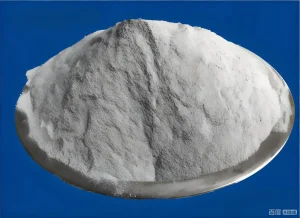
Produced in closed-loop supersonic nitrogen or argon atomization towers, our spherical aluminum powders exhibit superior sphericity (>95%), minimal satellite formation, exceptional tap density (1.50–1.75 g/cm³), and fluid Hall flow rates (<30 s/50g). Crucial for selective laser melting (SLM), direct energy deposition (DED), and high-reliability aerospace components requiring zero porosity.
Engineered for high chemical reactivity and physical interlock, nodular grades are manufactured under precisely metered oxygen environments. The microscopic roughness provides expansive specific surface areas (SSA) from 0.4 to 2.2 m²/g, delivering optimized combustion enthalpies and rapid reaction kinetics for pyrotechnics, aluminothermic metallurgy, and chemical synthesis.
Wet-milled or dry-milled using specialized aliphatic hydrocarbons or stearic acid leafing/non-leafing agents, lamellar flake powders offer extreme aspect ratios (diameter-to-thickness > 50:1). These structures align parallel to substrate surfaces, creating impenetrable tortuous barrier paths against moisture penetration in marine coatings and anti-corrosion primers.
| Grade Category | Primary Morphology | D50 Particle Range (μm) | Active Al Content (%) | Tap Density (g/cm³) | Target Industrial Application |
|---|---|---|---|---|---|
| Al-AM-Spherical Ultra | Gas Atomized Spherical | 15 – 45 μm | ≥ 99.70% | 1.55 – 1.70 | Laser Powder Bed Fusion (PBF-LB), Aerospace 3D Printing |
| Al-PV-Solar Conductive | Micro-Spherical / Spheroid | 1.8 – 4.5 μm | ≥ 99.50% | 1.40 – 1.62 | Crystalline Silicon Solar Cell Back-Surface Field (Al-BSF) Pastes |
| Al-Chem-Energetic High | Air Atomized Nodular | 45 – 125 μm | ≥ 99.20% | 1.05 – 1.30 | Industrial Energetics, Pyrotechnic Igniters, Mining Blasting |
| Al-Refrac-Alloy Blend | Irregular / Granular | 75 – 300 μm | ≥ 98.80% | 0.95 – 1.20 | Carbon-Bonded Refractory Bricks, Steel Deoxidation Agent |
| Al-Pigment-Leafing Flake | Lamellar Flake Plates | 10 – 35 μm | ≥ 95.00% (Solids) | 0.25 – 0.45 | Automotive OEM Coatings, Protective Marine Paints, Inks |
A granular examination of primary metallurgical feedstock proximity, continuous inert gas loop economics, scalable lot consistency, and international tariff competitiveness.
Our plants are strategically positioned in Chinese primary electrolytic aluminum industrial clusters. Direct access to molten aluminum hot-metal transfer reduces remelting energy by up to 25%, drastically trimming carbon footprints and shielding global buyers from secondary ingot market markups.
By leveraging cryogenic liquid nitrogen on-site gasification and computerized feedback atomization nozzling, we maintain ultra-low oxygen levels (<100 ppm) throughout the disintegration and classification zones. This ensures batch-to-batch coefficient of variation (CV) < 2.5% for precise particle size curves.
Handling pyrophoric and water-reactive solids demands seasoned expertise. Our dedicated chemical safety logistics desk coordinates UN-certified hermetic packaging, IMO Class 4.3 and 4.1 declarations, argon blankets, and real-time containerized humidity telemetry straight to major global ports.
A complete breakdown of analytical inspection methodologies required by global tier-1 manufacturers to mitigate metallurgical variance and downstream process downtime.
Standard sieve analysis is insufficient for high-speed automated processes. We validate each manufacturing master batch utilizing Malvern Mastersizer 3000 laser diffraction systems (ISO 13320) and dynamic image analyzers. We provide complete D10, D50, D90, and D99 distribution curves, ensuring that skewness and fine-end dust tails (<5 μm) are strictly controlled to prevent nozzle clogging in additive manufacturing and severe dusting hazards during handling.
Specific surface area is measured using multi-point Brunauer-Emmett-Teller (BET) nitrogen adsorption. Surface oxide thickness is tracked via X-ray Photoelectron Spectroscopy (XPS) and thermogravimetric analysis (TGA). For pyrotechnic and metallurgical buyers, maintaining active metallic aluminum (Al_met) content above 99.0% while ensuring a stable 2–4 nm amorphous Al₂O₃ passivation layer prevents spontaneous combustion while preserving burn rate consistency.
Using Inductively Coupled Plasma Optical Emission Spectrometry (ICP-OES) alongside inert gas fusion instruments (LECO), we quantify trace tramp elements including Iron (Fe), Silicon (Si), Copper (Cu), Zinc (Zn), Gallium (Ga), as well as interstitial Hydrogen (H), Oxygen (O), and Nitrogen (N). High iron contamination is systematically suppressed (<0.08%) to safeguard against localized galvanic corrosion in finished structural components.
Powder rheology governs die filling, powder bed spreadability, and thermal spray deposit efficiency. Conforming to ASTM B212, ASTM B213, and ASTM B527 standards, we verify Apparent Density, Tap Density, Hausner Ratio (<1.18 for premium spherical), and Hall Flow times. Consistent rheological behavior prevents density stratifications during silo storage and automated pneumatic transfer.
From solar photovoltaic cell back contacts in East Asia to aerospace turbine components in North America and refractory linings in European steelworks.
Modern crystalline silicon solar panels rely on high-efficiency Aluminum Back Surface Field (Al-BSF) pastes. Our micro-spherical powders (D50: 2.0–3.5 μm) feature an optimized melting point profile that forms a dense, low-resistance ohmic contact layer during rapid IR belt furnace firing, yielding high open-circuit voltages without substrate wafer warping.
For selective laser melting of complex lattice heatsinks and lightweight structural brackets, our AlSi10Mg, Scalmalloy, and 7075-equivalent spherical powders provide extreme packing densities, low interstitial hydrogen, and minimal spatter tendencies, guaranteeing as-printed tensile strengths surpassing 400 MPa post-T6 heat treatment.
In carbon-containing refractories for basic oxygen furnaces and steel ladles, coarse nodular aluminum powder (75–200 μm) functions as an in-situ carbon protector. At elevated temperatures (>800°C), aluminum reacts with CO gas to form fine Al₄C₃ and Al₂O₃ whiskers, suppressing carbon decarburization and multiplying refractory campaign life.
Fine spherical and bimodal aluminum powders serve as the core energetic burn-rate enhancer in composite solid rocket propellants (AP/HTPB matrices). Controlled combustion velocity, narrow particle distribution, and low moisture content (<0.05%) minimize agglomeration in rocket motor combustion chambers, ensuring maximum specific impulse.
Activated granular aluminum particles are the primary reactant in producing Polyaluminum Chloride (PAC) for municipal potable water treatment, alkylaluminum catalysts for Ziegler-Natta olefin polymerization, and specialized organoaluminum intermediates, providing rapid dissolution rates and clean exothermic yields.
Micro-flake aluminum paste, formulated with green surfactants, generates uniform hydrogen micro-bubbles when blended into lime and cement slurries. Precise gas evolution timing controls pre-cure cake expansion, producing low-density, high-insulation structural blocks complying with strict green building standards.
Anticipating regulatory shifts, CBAM decarbonization pressures, and the emergence of advanced multi-element nano-spherical powders for solid-state batteries and space exploration.
With global supply chains facing EU Carbon Border Adjustment Mechanism (CBAM) audits and stringent Scope 1-3 greenhouse gas disclosures, our primary production lines in Southwestern China are heavily electrified using regional zero-emission hydropower grids. Closed-loop inert gas recovery recycles up to 92% of working nitrogen and argon gas, delivering lower embedded carbon per kilogram than traditional Western remelters.
Next-generation applications—such as energetic additives for hypervelocity engines, conductive pastes for ultra-thin heterojunction (HJT) solar cells, and solid electrolyte matrix additives—demand sub-micron spherical powders (D50 < 800 nm). We are investing in inductive radio-frequency plasma atomization (RF-PA), synthesizing satellite-free, perfectly spherical nano-aluminum powders with customizable oxide shells.
Complementary chemical engineering compounds, rare gases, and functional liquid polymers supplying mission-critical processing lines across 80+ export markets.

Immediate answers to vital queries regarding dangerous goods shipping, moisture control, minimum orders, test certificates, and custom tailoring.
Depending on particle size and surface treatment, dry uncoated aluminum powder is classified under UN 1396 (Class 4.3, Water-Reactive Substances emitting flammable gases when wet) or UN 1309 (Class 4.1, Flammable Solids). Aluminum flake pastes in solvents are designated under UN 1325 or UN 3089. Every consignment leaves with accredited IMO/IMDG-approved sea freight documentation and UN-stamped packaging.
We implement a multi-barrier protection protocol. Powders are vacuum-packed in anti-static, hermetically heat-sealed aluminum-foil laminate liner bags under an inert argon or ultra-dry nitrogen purge (dew point < -60°C). Bags are encased within heavy-gauge steel drums with bolt-ring gasket clamp lids, desiccants, and container moisture traps, guaranteeing <0.05% moisture upon port delivery.
Yes. Utilizing advanced multi-stage Alpine air classifiers and ultrasonic screening systems, we can tailor custom particle size cuts ranging from ultra-fine micro-spheres (D50: 1.5–5 μm) for conductive inks, to tightly bounded fractions (e.g., 15–53 μm or 20–63 μm) for additive manufacturing, as well as coarse nodular granules (100–500 μm) for steelmaking deoxidizers.
Every dispatch contains a lot-specific Certificate of Analysis (COA) displaying laser PSD curves, active aluminum percentage, ICP-OES trace impurities, moisture content, and tap density. In addition, we supply bilingual GHS-format Safety Data Sheets (SDS), Technical Data Sheets (TDS), Certificate of Origin (COO), and third-party inspection releases (e.g., SGS, RoHS, REACH) upon formal request.
For standard industrial grades, commercial production MOQs start at 500 kg to 1,000 kg (palletized steel drums). For high-value aerospace-grade spherical powders or customized alloy blends, trial batch runs begin at 100 kg. Representative laboratory evaluation samples (250g to 2kg) can be arranged with complete COA documentation for verified enterprise clients.
By bypassing third-party trading intermediaries, buyers gain direct transparent access to Shanghai Metal Exchange (SME) and London Metal Exchange (LME) aluminum ingot index pricing. Our direct smelter-coupling ensures fixed processing margins (“metal index + fabrication fee”) with available long-term hedging contracts to buffer against raw material volatility.
