Explore our certified specialty gases, chemical additives, and high-performance reactive binders engineered to precise industrial standard operating procedures.
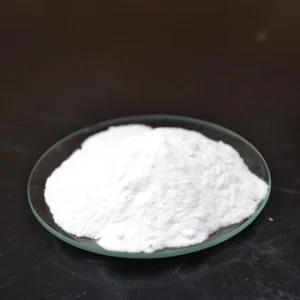
Caesium nitrate (CAS Registry Number 7789-18-6, EINECS 232-146-8) represents an apex alkali metal salt critical to modern frontier optics, energy conversion, and molecular catalysis. Synthesized through strict hydrometallurgical enrichment and high-purity liquid-liquid crystallization, CsNO3 is distinguished by its unique physicochemical, optical, and pyrochemical attributes.
Under ambient room conditions, CsNO3 crystallizes into a distinct trigonal crystal system (space group P31m) featuring lattice constants a = 10.82 Å and c = 7.76 Å. Upon reaching 154 °C (427 K), the crystal lattice undergoes a fully reversible solid-state phase transformation into a primitive cubic structure (space group Pm3m). This structural reorganization exhibits an exceptionally low volume distortion, making CsNO3 ideal for thermochemically stable high-density infrared emitters.
At our integrated refining plant, primary pollucite ore ((Cs,Na)2Al2Si4O12·H2O) undergoes specialized high-pressure hydrothermal digestion with concentrated mineral acids. The liberated caesium ions are purified using liquid-liquid solvent extraction (utilizing crown-ether and calixarene complexes) to eliminate rubidium, sodium, and potassium, followed by high-vacuum stoichiometric conversion with redistilled electronic-grade nitric acid (HNO3).
Every industrial and electronic batch produced undergoes rigorous verification under an audited ISO 9001:2015 and ISO/IEC 17025 testing paradigm. Our analytical labs utilize Inductively Coupled Plasma Mass Spectrometry (ICP-MS) and Glow Discharge Mass Spectrometry (GDMS) to establish empirical purity certificates spanning 68 individual metallic and anionic elements.
| Parameter / Impurity Threshold | Technical / Industrial Grade (99.0% min) | High-Purity Optical Grade (99.9% 3N) | Ultra-Pure Electronic Grade (99.999% 5N) | Methodology |
|---|---|---|---|---|
| Assay (CsNO3 Basis, dry) | ≥ 99.0% | ≥ 99.90% | ≥ 99.999% | Acid-Base Redox / ICP-OES |
| Rubidium (Rb) | ≤ 400 ppm | ≤ 50 ppm | ≤ 1.0 ppm | High-Resolution ICP-MS |
| Potassium (K) + Sodium (Na) | ≤ 150 ppm | ≤ 20 ppm | ≤ 0.5 ppm | Flame Atomic Absorption |
| Alkaline Earths (Ca, Mg, Ba, Sr) | ≤ 80 ppm | ≤ 10 ppm | ≤ 0.8 ppm | ICP-MS |
| Iron (Fe) & Heavy Metals (Pb, Cu, Ni) | ≤ 10 ppm | ≤ 2 ppm | ≤ 0.1 ppm | Graphite Furnace AAS |
| Halides (Chlorides as Cl⁻, Sulfates as SO4²⁻) | ≤ 50 ppm | ≤ 10 ppm | ≤ 1.0 ppm | Ion Chromatography (IC) |
| Moisture (Loss on Drying, 105 °C, 2h) | ≤ 0.10% | ≤ 0.05% | ≤ 0.015% | Karl Fischer / Gravimetric |
From accelerating heterogeneous chemical reaction rates to driving photovoltaic efficiency frontiers and stabilizing aerospace countermeasures, our engineered CsNO3 delivers unmatched functional leverage across mission-critical industries.
In tandem and single-junction perovskite solar cells (PSCs), Cs+ incorporation into mixed A-site cation lattices (e.g., FA_1-x-y MA_x Cs_y PbI_3) suppresses the formation of non-perovskite yellow phase (δ-phase), significantly boosting moisture resilience, open-circuit voltage (Voc), and thermal endurance under continuous 1-sun illumination.
Our ultra-pure (5N) caesium nitrate acts as an ideal precursor in chemical bath depositions and slot-die coatings, yielding defect-free crystalline films with low non-radiative charge recombination centers.
Caesium acts as an exceptional electropositive promoter in heterogeneous catalytic oxidation. Incorporated into supported silver catalysts for the industrial synthesis of Ethylene Oxide (EO), or combined with Vanadium Pentoxide (V2O5) for the oxidation of sulfur dioxide (SO2 → SO3) in sulfuric acid plants, CsNO3 reduces the required activation energy.
The low ionization energy of caesium optimizes surface electron densities, improving selectivity by up to 2.4% while mitigating side-stream combustion and prolonging catalyst active lifetimes.
In energetic formulations, Caesium Nitrate is the definitive active component for Near-Infrared (NIR) emitting tactical decoy flares and specialized signal payloads. Upon pyrotechnic deflagration with reducing agents such as atomized spherical aluminum-magnesium powder or boron, it generates high-intensity dual-emission atomic lines at 852.1 nm and 894.3 nm.
This emission profile effectively jams two-color optical seekers while minimizing visible-spectrum smoke plumes through complete oxidation balance.
The global caesium supply chain is one of the most structurally concentrated critical-minerals markets worldwide. Understanding the mineral reserve distribution, refining bottlenecks, and trade channels is vital for procurement longevity and risk mitigation.
Global caesium reserves reside predominantly in zoned pegmatite mineral complexes rich in pollucite. Historical reserves at the Tanco Mine (Manitoba, Canada), Bikita (Zimbabwe), and Sinclair (Western Australia) have transitioned into consolidated processing partnerships, placing China at the global center of chemical conversion and refining.
As a vertically aligned manufacturer in China, our operations maintain robust, multi-year precursor agreements, guaranteeing stable input supplies even amid volatile international raw material markets.
Driven by the exponential expansion of commercial gigawatt-scale perovskite manufacturing and escalating demand for low-emission chemical oxidizers, demand for high-grade CsNO3 has surged. The material's inclusion on strategic critical-minerals lists across the US, EU, and Asia-Pacific reflects its irreplaceable role across next-generation technologies.
We provide long-term contract pricing with forward-indexed escalators, shielding international R&D institutions and commercial enterprises from spot-market volatility.
Unlike regional toll chemical compounders, our industrial processing plants deploy continuous automated crystallization units capable of delivering multi-metric-ton monthly outputs. Every production run is backed by auditable quality records, strict environmental compliance, and complete batch-to-ore traceability.
This operational backbone guarantees continuous supply integrity for global technology firms, defense contractors, and specialized research consortia.
Caesium Nitrate is designated as hazardous cargo under international transport regimes. Safely handling, packing, certifying, and importing this chemical requires uncompromising regulatory expertise.
CsNO3 is officially cataloged under UN Number 1451, Primary Hazard Class 5.1 (Oxidizing Substances), Packing Group III. It promotes combustion through oxygen release when exposed to organic matter, requiring dedicated Class 5.1 handling procedures throughout global freight transit.
We supply materials packaged in certified UN 1G fiber drums, UN 1A2 steel drums with heavy-duty inner hermetic poly-liners, and moisture-proof vacuum aluminum barrier sacks (1 kg to 25 kg net). Packaging satisfies rigorous drop, hydrostatic, and stacking tests under IMDG and ICAO-TI/IATA standards.
Our regulatory team supports full commercial import compliance, providing 16-section GHS-compliant Safety Data Sheets (SDS), technical dossiers for EU REACH only-representative registrations, US TSCA chemical inventory declarations, and pre-shipment certifications of origin (CO) with verified batch COAs.
From hazardous-goods warehouse handling at origin ports (Shanghai, Qingdao, Ningbo) to specialized dangerous goods seafreight and certified air shipments for testing batches, our logistics network ensures continuous GPS monitoring, rapid customs clearance, and demurrage-free destination-port handling.
Explore how caesium nitrate is integrated into industrial manufacturing workflows, from chemical equations and thermal dynamics to optical and atomic engineering.
In the melting of optical crown glass, dense flint glass, and specialized infrared prisms, adding high-purity CsNO3 increases the glass refractive index while maintaining low optical dispersion values (Abbe number). The large ionic radius of the caesium cation ($Cs^+ = 1.67\,\text{Å}$) expands the silica/borate network, shifting absorption bands away from the near-infrared spectrum and enabling deeper transmission ranges up to 2.5 µm.
Furthermore, in scintillator crystal manufacturing (e.g., CsI:Tl and specialized radiation detectors for medical imaging and nuclear border protection), ultra-low rubidium and barium impurities are critical to prevent dark current anomalies and carrier trapping.
Vapor-cell atomic clocks and optically pumped atomic magnetometers utilize hyper-purified caesium vapor derived from thermal reduction of high-grade CsNO3 with non-volatile reductants such as zirconium powder:
2 CsNO3 + Zr → Cs2O (vapor) + ZrO2 + NOx followed by pure metal getter displacement.
Supplying CsNO3 with trace magnetic impurities (Fe, Co, Ni) certified below 100 ppb is critical to prevent atomic spin dephasing and maintain long quantum coherence times in magnetic-field-nulling test assemblies.
In concentrated solar power (CSP) generation and closed-loop nuclear secondary heat transfer systems, ternary and quaternary eutectic nitrate salt mixtures (e.g., NaNO3 - KNO3 - LiNO3 - CsNO3) are engineered to depress the liquidus freezing point below 80 °C, compared to ~220 °C for standard solar salts.
CsNO3 integration expands the operational liquid thermal range from 90 °C to over 580 °C, preventing winter crystallization blockages and lowering trace corrosion rates across high-temperature 316L stainless steel and Inconel piping.
Our engineering teams are actively driving technological innovations in caesium chemistry, prioritizing reduced carbon intensity, advanced zero-liquid-discharge (ZLD) closed-loop recycling, and atomic purity frontiers.
Traditional mineral acid leaching generates acidic waste streams that require neutralizing limestone slurries. Our next-generation extraction pilot lines integrate closed-loop bipolar membrane electrodialysis (BMED), recycling process nitric acid directly back to the dissolution reactor while precipitating aluminosilicate residues as eco-certified geopolymer binders for construction applications.
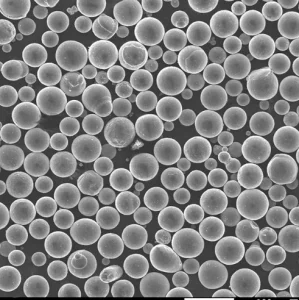
By coupling in-line Raman spectroscopy and dynamic image analysis (QICPIC) with neural-network feedback control, our crystallization reactors dynamically tune cooling gradients and supersaturation ratios. This system prevents secondary nucleation and produces spherical crystal aggregates with narrow size distributions, improving dry bulk flowability and packaging shelf-life.
Anticipating future decommissioning of utility-scale perovskite solar fields and solid-state batteries utilizing caesium-doped electrolytes, we are co-developing hydrometallurgical recycling protocols to selectively leach caesium from spent modules, reclaiming high-purity CsNO3 with overall recoveries exceeding 98.5%.
Expert insights and verified chemical answers addressing complex questions from chemical process engineers, quality control teams, and international procurement leads.
From a chemical perspective, caesium possesses the largest ionic radius (1.67 Å) and lowest ionization potential (3.89 eV) among all stable non-radioactive alkali metals. This confers exceptionally high electropositive character on Caesium Nitrate (CsNO3). Compared to sodium or potassium nitrate, CsNO3 decomposes at higher temperatures (>500 °C), exhibits far lower hygroscopicity, and features a solid-state crystallographic phase transformation at 154 °C from trigonal to cubic symmetry.
In catalytic systems, its large cationic radius provides superior electron-donating capability to adjacent transition metal centers, markedly enhancing catalytic selectivity and operational lifetime.
In triple-cation or formamidinium-dominated lead halide perovskites (e.g., FAPbI3), the photoactive black cubic phase (α-phase) is thermodynamically unstable at room temperature and tends to degrade into the non-functional yellow hexagonal phase (δ-phase). Incorporating 5% to 15% Caesium via high-purity CsNO3 or CsX precursors contracts the perovskite lattice framework toward ideal Goldschmidt tolerance factors (0.8 < t < 1.0).
This structural tuning suppresses phase segregation, enhances intrinsic chemical stability against moisture, reduces deep trap-state defects, and increases carrier diffusion lengths, enabling operational lifetimes well beyond 20,000 hours.
Purity confirmation for electronic grade CsNO3 cannot be achieved using standard titrations. We deploy High-Resolution Inductively Coupled Plasma Mass Spectrometry (HR-ICP-MS) and Glow Discharge Mass Spectrometry (GDMS). These techniques quantify 68 distinct trace elements with sub-ppb detection limits.
A sample batch meets 5N standards only when the sum of all measured metallic impurities—specifically Fe, Cu, Ni, Cr, Pb, Zn, and critical alkali metals (Rb, K, Na, Li)—remains below 10 ppm total (0.001%), with key individual transition metals remaining strictly below 0.1 ppm.
Caesium Nitrate is classified as UN 1451, Class 5.1 (Oxidizing Substance), Packing Group III. Under the International Maritime Dangerous Goods (IMDG) Code, it must be shipped in certified packaging (e.g., 1G fiber drums or 1A2 steel drums with hermetically sealed inner poly-liners). Containers must carry Class 5.1 hazard labels, correct shipping names, and UN specification markings.
Shipments must be accompanied by an audited Dangerous Goods Declaration (DGD), a current 16-section SDS in the destination language, and undergo dangerous-goods container packing inspections before port loading. Air transport via IATA-DGR is permitted up to 25 kg per package on passenger aircraft and up to 100 kg on cargo aircraft.
Yes. By adjusting temperature gradients, solvent saturation kinetics, and introducing selected organic crystal habit modifiers during crystallization, we tailor particle morphology. Options range from free-flowing micro-prismatic grains (median D50: 50–150 µm) optimized for dry automated metering, down to micronized crystalline powders (D50: 10–25 µm) designed for rapid low-temperature chemical dissolution baths.
Every shipment is accompanied by a comprehensive technical documentation packet: a batch-specific Certificate of Analysis (COA) specifying individual trace metallic impurities, an authenticated GHS Safety Data Sheet (SDS), a Technical Data Sheet (TDS), a Certificate of Origin (COO), and official packing lists with full packaging certification marks.
Explore our expanded commercial portfolio of high-purity inorganic nitrates, electronic industrial gases, liquid rubbers, and atomized alloy powders.
Partner directly with China's leading manufacturer of high-purity Caesium Nitrate. Connect with our chemical engineering team to evaluate customized particle metrics, request lot-specific analytical certificates, and schedule pilot trial shipments.