


Featured semiconductor-grade compressed gases, advanced atomized alloys, and functional liquid polymers ready for export with validated Batch COA & TDS.
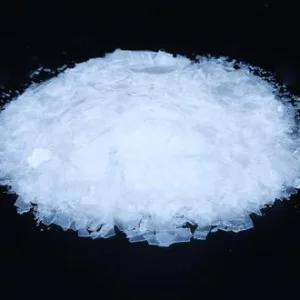







Carbon Tetrafluoride (Tetrafluoromethane, CAS 75-73-0, UN 1982) is the most thermodynamically stable perfluorocarbon, serving as a critical fluorine radical source across microelectronics fabrication.
The tetrahedral symmetry of four fluorine atoms shielding the central carbon atom grants CF4 extreme dielectric strength, zero dipole moment, and remarkable resistance to oxidation, acids, and nucleophilic attacks at ambient temperatures.
When exposed to high-frequency RF glow discharge in an inductive or capacitive plasma chamber, CF4 readily dissociates into fluorine free radicals (F*) and fluorocarbon ionic precursors (CF3+, CF2+), driving anisotropic dry etching.
Microchip lithography at sub-7nm nodes demands that critical volatile impurities (moisture, carbon monoxide, oxygen, carbon dioxide, nitrogen) remain below sub-ppm and ppb detection thresholds to eliminate wafer-level defects.
From deep-submicron plasma micro-machining to cryogenics and aerospace insulation, explore the specific engineering workflows where CF4 provides irreplaceable functionality.
CF4 serves as the workhorse chemical for Reactive Ion Etching (RIE) and Deep Reactive Ion Etching (DRIE) in silicon logic and memory fabs. In combination with oxygen, it selectively vaporizes silicon dioxide (SiO2), polycrystalline silicon, and tungsten silicide layers through volatile SiF4 byproduct generation.
High-efficiency solar cells, such as TOPCon and Heterojunction (HJT) architectures, utilize CF4 plasma to perform edge isolation and clean polysilicon parasitic wrap-around films. This prevents micro-shunts and optimizes photoelectric conversion efficiency.
In large-area substrate manufacturing (Generation 8.5 to Generation 10.5 fabs), CF4-based plasma strips insulating layers and cleans vapor deposition (PECVD) reaction chambers, guaranteeing optical transparency and defect-free thin film transistors.
Because of its chemical stability and boiling point (-128.1 °C), CF4 (Refrigerant R-14) is applied as an environmentally superior low-temperature refrigerant component in cascade refrigeration systems for biological preservation and cryo-pumps.
Engineers exploit the chemical inertness, high mass density, and non-corrosive characteristics of CF4 for high-altitude atmospheric movement monitoring, particle detectors, and specialized high-voltage circuit insulation envelopes.
CF4 plasma alters the surface energy of engineering plastics (PTFE, PEEK, Polyimide) before micro-electronic packaging and adhesive bonding, vastly improving interfacial shear strength without affecting bulk substrate properties.
Analyzing the raw material moat, synthesis technology, fractional distillation capability, and localized infrastructure driving China's global competitiveness in perfluorinated specialty gases.
China holds over 50% of the world's operational fluorspar (CaF2) mineral processing infrastructure. Integrated chemical clusters convert mineral fluorite into Anhydrous Hydrofluoric Acid (AHF) with direct pipeline connectivity to CF4 synthesis plants, completely insulating buyers from raw material bottlenecks and erratic market pricing.
Modern Chinese gas manufacturers have mastered both Direct Carbon-Fluorine Reaction routes and Halogen-Exchange Synthesis (CF3Cl or CH4 with elemental F2). Multi-stage cryogenic rectifying distillation towers operate continuously at negative temperatures to strip nitrogen, argon, and traces of CF3Cl to guarantee 99.999% purity.
Factories situated in dedicated chemical production zones in Shandong, Jiangsu, and Zhejiang maintain specialized Dangerous Goods (DG) haulage licenses. Export vessels depart directly from Qingdao, Shanghai, or Ningbo ports, cutting intermediate transit handling times and container demurrage costs for international buyers.
| Evaluation Parameter | Chinese Integrated Producer | Western Tolling Supplier | Regional Reseller / Distributor |
|---|---|---|---|
| Precursor Chain (AHF/F2) | 100% Backward Integrated Mine-to-Cylinder | Purchased Upstream Material | No Production; Pure Brokerage |
| Batch COA Purity Verification | Online GC-PDHID, FTIR, APIMS Certified | Analytical Lab Sampling | Relies on Third-Party Paperwork |
| Cylinder Packaging Options | 47L, 40L, 10L, Y-Ton, ISO-TUBE Modules | Standard Cylinder Only | Limited Fleet Availability |
| Price Advantage Margin | Baseline Factory Pricing (Direct Export) | +35% to +60% Markup | +70% to +120% Speculative Spread |
Shipping UN 1982 Carbon Tetrafluoride safely across continents requires rigorous adherence to dangerous goods packaging certifications, maritime protocols, and environmental reporting.
Compressed gas integrity begins at the cylinder wall. We provide complete vessel traceability: seamless steel and manganese steel cylinders manufactured in accordance with DOT-3AA (North America), ISO 9809-1 (Global), and TPED / π-stamped (European Union) directives.
Cross-contamination during fab cylinder connection can halt multi-million-dollar lines. Cylinders are fitted with brass or stainless steel valves strictly machined to regional CGA (CGA 580 / CGA 320), DIN 477 (No. 6), or JIS standards, with helium leak testing before shipment.
Every shipment is accompanied by verified GHS-compliant 16-section Safety Data Sheets (SDS), multimodal dangerous goods declarations (DGD), packing certificates, batch Certificate of Analysis (COA), and Certificates of Origin (CO) for duty exemptions.
How the semiconductor ecosystem balances the exceptional process repeatability of CF4 with international carbon footprint reduction goals.
Because of CF4's high GWP (6,500) and atmospheric lifetime of 50,000 years, tier-1 wafer foundries are mandating thermal combustor and plasma scrubber combinations capable of exceeding 99% destruction and removal efficiency (DRE) of effluent fluorocarbons.
While CF4 remains dominant due to recipe stabilization and validated etch rates, process engineers are actively screening replacement fluorinated compounds like C4F6, C3F8, and unsaturated hydrofluoro-olefins (HFOs) for non-critical chamber cleaning operations.
Leading Chinese plants are partnering with chipmakers to engineer on-site cryogenic trapping modules that recapture unreacted CF4 from waste exhaust gas, purifying it back into 4N/5N raw industrial streams for re-insertion into metallurgical or secondary etching cycles.
Essential technical and transactional guidance addressing the concerns of overseas sourcing directors and materials scientists.
For semiconductor wafer etching and microelectronics chamber cleaning, a minimum purity of 99.999% (5N) is essential, with moisture strictly controlled below 0.5 ppmv and total hydrocarbons below 0.1 ppmv. In contrast, cryogenic refrigeration (R-14) or non-critical surface modification typically operates effectively at 99.9% to 99.95% (3N-3.5N) industrial grades, significantly lowering input unit costs.
CF4 provides highly anisotropic etching of silicon oxide (SiO2) and silicon nitride (Si3N4) because the CFx radicals form a protective fluorocarbon polymer layer on sidewalls, enabling ultra-vertical aspect ratios. SF6 generates pure fluorine radicals that etch silicon spontaneously and isotropically (undercutting). NF3 is predominantly chosen for high-throughput PECVD chamber cleaning due to its fast radical generation without carbon residue.
We provide multiple UN-certified container systems tailored to client volume: standard 47L / 40L seamless high-pressure steel cylinders (DOT-3AA / ISO 9809, working pressure 150-200 bar), bundle packs (12 or 16 interconnected cylinders), 440L/800L Y-Ton cylinders, and large-scale multi-element ISO gas tube skids (MEGC) for high-volume fab continuous gas loop systems.
Every production batch undergoes round-robin verification utilizing online gas chromatography equipped with Pulsed Discharge Helium Ionization Detectors (GC-PDHID) and Atmospheric Pressure Ionization Mass Spectrometry (APIMS). Individual certificates of analysis (COA) specifying exact trace levels of N2, O2, CO, CO2, H2O, and SF6 accompany the physical shipping manifests.
Explore complementary specialty materials engineered to exacting institutional specifications for global advanced manufacturing.






Connect directly with YANXA application engineers. Receive batch-specific Certificates of Analysis (COA), safety protocols, cylinder fleet drawings, and volume pricing FOB/CIF delivered to your port.
