Wholesale Atomized Spherical Aluminum Magnesium Alloy Powder
Access Product Data


Precision engineered raw materials manufactured under ISO 9001 certified production lines with auditable Certificate of Analysis (COA) integrity.

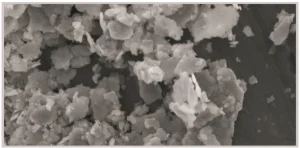
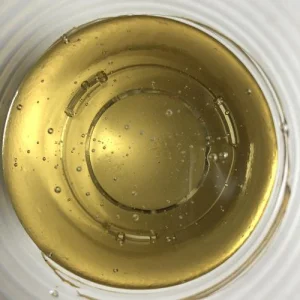
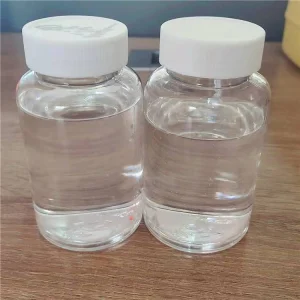
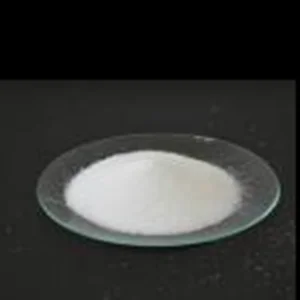

Ceric Ammonium Nitrate (CAN), chemical formula (NH₄)₂[Ce(NO₃)₆], is an indispensable one-electron oxidant and rare-earth intermediate. Its stability, high redox potential (E° ~ +1.61 V vs. NHE in 1 M HNO₃), and clean stoichiometric reduction to trivalent cerium make it a core reagent in modern chemical infrastructure.
CAN crystallizes as bright orange-red monoclinic crystals, featuring a 12-coordinate cerium(IV) center chelated by six bidentate nitrato ligands in an icosahedral configuration. This coordination matrix ensures maximum lattice stability and rapid dissolution profiles in acidic aqueous solutions.
Our modern Chinese manufacturing facilities deploy membrane-separated electrolytic cells. High-purity Cerium(III) nitrate solutions are converted into tetravalent Ce⁴⁺ under controlled current densities and titanium anode surfaces, avoiding destructive chlorine-based chemical oxidizers and guaranteeing minimal halide cross-contamination.
Post-electrolysis, mother liquor is treated with stoichiometric ammonium nitrate within vacuum crystallization chambers. Fractional temperature-controlled evaporation eliminates insoluble non-rare-earth impurities (Fe, Ca, Cu, Pb) to the parts-per-million (ppm) and parts-per-billion (ppb) tiers demanded by global fab lines.
| Analytical Parameter | Technical / Industrial Grade | Reagent / Analytical Grade (AR) | Electronic / Semiconductor Grade (SEMI) |
|---|---|---|---|
| Assay [(NH₄)₂Ce(NO₃)₆] | ≥ 98.5% | ≥ 99.5% - 99.9% | ≥ 99.99% (Metal-basis) |
| Chloride (Cl⁻) | ≤ 50 ppm | ≤ 10 ppm | ≤ 1 ppm |
| Sulfate (SO₄²⁻) | ≤ 100 ppm | ≤ 30 ppm | ≤ 5 ppm |
| Iron (Fe) | ≤ 30 ppm | ≤ 5 ppm | ≤ 0.5 ppm |
| Heavy Metals (as Pb) | ≤ 50 ppm | ≤ 10 ppm | ≤ 1 ppm |
| Total Non-Rare Earth Oxides | ≤ 0.05% | ≤ 0.01% | ≤ 0.002% |
| Insoluble Matter (Dilute HNO₃) | ≤ 0.03% | ≤ 0.005% | Sub-micron filtered (0.1 μm) |
Ceric Ammonium Nitrate functions as a primary enabler across microelectronics lithography, fine pharmaceutical synthesis, automotive emissions catalysts, and aerospace pyrotechnic binders.
In photolithographic chromium mask fabrication and thin-film transistor (TFT-LCD) manufacturing, CAN dissolved in perchloric or nitric acid serves as the global standard wet etchant. It exhibits exceptional etch-rate uniformity (>45 nm/min at 20°C) with negligible lateral undercut and leaves no particulate residue on sub-micron geometries.
CAN enables selective oxidative cleavage of PMB (p-methoxybenzyl), DMB, and related ether protecting groups under mild conditions, preserving sensitive chiral centers in APIs. Furthermore, CAN acts as an efficient single-electron transfer (SET) mediator for the generation of carbon-centered radicals in macrocyclic drug synthesis.
Serving as the ultimate water-soluble Ce⁴⁺ source, CAN undergoes thermal or sol-gel precipitation to form ultra-dispersed, high-surface-area nanocrystalline Ceria (CeO₂). These nanoparticles are utilized in three-way catalytic converters, solid oxide fuel cells (SOFCs), and chemical-mechanical planarization (CMP) slurries.
China accounts for the majority of global rare-earth refining capabilities. YANXA leverages integrated upstream rare-earth reserves combined with automated Industry 4.0 synthesis infrastructure to deliver reliable, unshakeable bulk output.
Direct long-term supply agreements with primary southern ion-adsorption and northern bastnäsite refineries ensure constant rare-earth cerium carbonate and cerium nitrate feedstock, shielding global partners from pricing volatility and supply bottlenecks.
Fully closed-loop DCS/SCADA systems regulate current densities, nitric acid feed rates, and batch crystallizer cooling curves. Human interaction with open reagents is minimized, eliminating contamination risks and providing lot-to-lot repeatability.
Continuous-flow electrochemical cell modules maximize operational uptime compared to antiquated chemical batch oxidation methods, reducing unit manufacturing power consumption by 28% and ensuring competitive industrial quote matrices.
Equipped with selective catalytic reduction (SCR) systems for continuous NOₓ off-gas scrubbing and closed-circuit water recycling loops, guaranteeing compliance with China's strict Tier-1 environmental mandates and continuous plant operation.
Procurement of Ceric Ammonium Nitrate demands rigorous alignment between engineering specifications, hazardous material logistics, and financial risk mitigation. Below is the procurement evaluation methodology required for enterprise chemical buyers.
Direct quotes must specify titration methodology. Redox titration with standard sodium oxalate or ferrous ammonium sulfate using ferroin indicator is standard. High-end buyers must verify if Ce³⁺ contamination is accounted for, as residual trivalent cerium degrades oxidizer efficiency in lithography baths.
For electronics applications, quote audits must examine ICP-MS trace elemental sheets for alkali metals (Na, K), transition metals (Fe, Cr, Ni, Cu), and radioactive isotopes (U, Th). Low radioactive trace levels are mandatory to prevent single-event upsets (SEU) in next-generation wafer processing.
YANXA offers transparent cost-plus formulas tied to global CeO₂ and nitric acid market indices. Volume buyers can lock quarterly or annual prices via CIF, FOB, or DDP terms, protecting operating budgets from spot freight spikes and rare-earth quota variations.
Ceric Ammonium Nitrate is internationally regulated as a strong oxidizer. Complete safety, documentation, and UN packaging compliance are mandatory to prevent maritime supply chain disruptions.
Designated as UN Number 1444, Hazard Class 5.1 (Oxidizing Substance), Packing Group II. Strict segregation rules (IMDG Code) prohibit stowage near organic reductants, flammable liquids, cyanides, and ammonium salts under high ambient heat conditions.
All commercial shipments are contained in heavy-gauge UN-certified fiber or steel drums (1A2 or 1G rated) with double heat-sealed polyethylene moisture liners. Palletized loads are wrapped in anti-static stretch film with corner protectors to maintain structural integrity throughout intermodal transit.
Every lot is supplied with a comprehensive 16-section Safety Data Sheet (SDS) fully harmonized with GHS Revision 8, EU REACH registration documentation, and US TSCA certification. Complete dangerous goods declarations (DGD) and maritime terminal bookings are handled seamlessly by our logistics wing.
As precision manufacturing scales below 3 nm nodes and green electro-organic syntheses replace hazardous heavy metals, Ceric Ammonium Nitrate chemistry is evolving rapidly.
Next-gen high-NA EUV photomasks incorporate ruthenium, molybdenum, and tantalum absorbers. R&D is focused on ultra-low defect CAN formulas featuring sub-10ppb metal ceilings and specialized non-ionic surfactant additives that suppress surface roughness at sub-nm line edge definitions.
Due to the Ce³⁺/Ce⁴⁺ couple's exceptionally high open-circuit potential (~1.7V), cerium-based redox flow battery electrolytes are actively developed. Modified CAN complexes are engineered for superior aqueous solubility (>2.5 M) and electrochemical reversibility in wide-temperature energy grids.
Future factory integration includes onsite, closed-loop electro-catalytic regeneration modules. In industrial pharmaceutical syntheses, spent Ce³⁺ streams can be regenerated directly to Ce⁴⁺ CAN at the customer's facility, eliminating downstream chemical waste streams and reducing the lifecycle carbon footprint by up to 60%.
Direct answers to the most common technical and commercial queries submitted by international quality assurance, R&D directors, and procurement leaders.
Explore secondary product categories supported by our integrated Chinese manufacturing plants, technical testing centers, and worldwide supply networks.