


Factory-direct technical supply lines verified under ISO 9001 quality management, complete with batch-certified Certificate of Analysis (COA) and global dangerous-goods documentation.


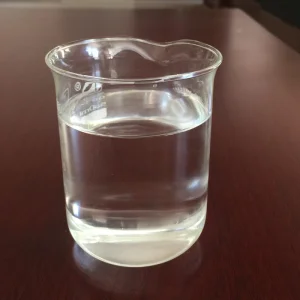

Navigating the thermodynamics of the monovalent copper cation (Cu⁺), non-aqueous coordination complexes, and avoiding common procurement pitfalls between copper(I) and copper(II) salts.
In industrial procurement and synthetic chemical literature, the terminology surrounding Cuprous Nitrate (Copper(I) nitrate, empirical formula CuNO₃) requires rigorous chemical clarification. Unlike standard divalent cupric nitrate [Cu(NO₃)₂·3H₂O or trihydrate], monovalent cuprous compounds possess a completely filled 3d¹⁰ electronic configuration. In uncomplexed aqueous solutions, the free Cu⁺ ion is thermodynamically unstable with respect to rapid disproportionation into elemental metallic copper (Cu⁰) and the divalent cupric ion (Cu²⁺) according to the standard reduction potential:
Fundamental Thermodynamic Equilibrium: 2 Cu⁺(aq) ⇌ Cu²⁺(aq) + Cu⁰(s) | E° = +0.37 V (Standard Aqueous Conditions)
Because of this intrinsic thermodynamic barrier, uncoordinated anhydrous cuprous nitrate cannot be isolated as an unassisted crystalline solid from aqueous solutions. Instead, modern fine chemical manufacturers in China synthesize and deliver Cuprous Nitrate through advanced coordination stabilization. The most industrially prevalent and robust commercial form is Tetrakis(acetonitrile)copper(I) nitrate ([Cu(CH₃CN)₄]NO₃, CAS Number: 61086-14-4), alongside bespoke organometallic and phosphine-coordinated adducts, or anhydrous solvated liquid concentrates.
Procurement directors and R&D engineers must clearly distinguish between three core copper-nitrate industrial streams when requesting commercial quotations:
Organonitrile or phosphine coordinated complexes ([Cu(MeCN)₄]NO₃). Used as a homogeneous catalyst in fine pharma synthesis, C-N coupling, Click chemistry (CuAAC), and advanced thin-film vapor deposition.
Chemical formula Cu₂(OH)₃NO₃ (Rouaite crystal structure). Highly insoluble green crystalline powder utilized extensively as an energetic catalyst in automotive airbag gas generants, pyrotechnics, and wood preservation.
Hydrated crystals [Cu(NO₃)₂·(H₂O)x] exhibiting high aqueous solubility. Primary precursor for copper oxide catalysts, electroplating baths, chemical mechanical planarization (CMP), and textile mordants.
How next-generation chemical engineering is overcoming oxidative degradation, scaling non-aqueous continuous synthesis, and unlocking sub-10nm semiconductor fabrication.
Transitioning from stirred glass-lined batch reactors to microchannel continuous flow synthesis. Enables millisecond-level stoichiometric control, mitigating local overheating and eliminating Cu⁰ nucleation.
Engineering crystallization protocols that depress residual chlorides and bromides to < 5 ppm. Essential for electronic-grade precursors preventing gate oxide corrosion in 3nm wafer interconnect metallization.
Replacing high-VOC solvent washing cycles with closed-loop supercritical CO₂ desolvation and vacuum freeze sub-cooling, lowering manufacturing carbon intensity by up to 34% per metric ton.
Developing molecularly encapsulated Cu(I) coordination networks inside metal-organic frameworks (MOFs), guaranteeing room-temperature shelf-life stability up to 24 months under open atmosphere.
| Performance Parameter | Legacy Batch Technology | Industry 4.0 Continuous Standard (YANXA) | Next-Gen Target (2028-2030) |
|---|---|---|---|
| Assay Purity [as Cu(I) complex] | 97.50% - 98.50% | ≥ 99.50% (High Purity) | ≥ 99.999% (5N Ultra-Electronic Grade) |
| Trace Fe / Heavy Metals | < 50 ppm | < 10 ppm (ICP-MS Certified) | < 500 ppb (Sub-ppm Class) |
| Disproportionation Resistance | Limited (Requires < -10°C storage) | Stable at 0°C to 5°C in inert packaging | Room Temperature Ambient Stabile (25°C) |
| Synthesis Cycle Duration | 48 - 72 Hours per Lot | 6 - 8 Hours (Automated Continuous Flow) | Continuous Inline Inline Production |
| Batch-to-Batch Variance (RSD) | ± 3.2% | ≤ 0.45% | ≤ 0.10% |
From pharmaceutical enantioselective catalysis to advanced aerospace energetic materials and precision electronics manufacturing.
Cuprous nitrate coordination complexes serve as clean, highly reactive homogeneous catalyst precursors for modified Ullmann, Goldberg, and Sonogashira coupling reactions. Delivering high stereoselectivity in active pharmaceutical ingredient (API) synthesis with minimal heavy metal byproduct loads.
As microchip interconnects shrink below 5nm nodes, vapor-phase delivery of high-purity Cu(I) precursors provides superior step coverage, barrier layer adhesion, and electromigration resistance compared to conventional acidic copper sulfate electroplating.
Working alongside basic cupric nitrate [Cu₂(OH)₃NO₃], precision-synthesized nitrate complexes regulate burn rates in non-azide automotive airbag propellants, suppressing toxic carbon monoxide emission while maximizing volumetric gas release speeds.
Precursor dispersion matrices for supported copper-zeolite (Cu-SSZ-13) selective catalytic reduction (SCR) catalysts, vital for heavy-duty diesel engines and industrial boiler flue gas clean-up complying with Euro VI and China VI emission mandates.
Integrated upstream copper smelting, closed-loop hazardous chemical parks, and automated distributed control systems (DCS).
Over the past fifteen years, China’s specialty chemical manufacturing sector has evolved from decentralized workshop processing to world-leading Industry 4.0 Eco-Industrial Chemical Parks. Headquartered in prominent metallurgical and chemical clusters across Jiangsu, Shandong, Henan, and Sichuan provinces, tier-1 producers leverage structural cost and supply advantages:
Direct pipeline supply of high-purity cathode copper (Cu ≥ 99.995%) and technical-grade nitric acid, mitigating intermediate logistics markups and shielding international buyers from raw commodity shocks.
Every reactor stage operates under real-time SCADA and Siemens DCS control, automatically adjusting reagent feed stoichiometry, purge flowrates, and crystallizer temperature to within ±0.1°C tolerance.
Fully compliant with Ministry of Ecology and Environment environmental standards. Multi-effect evaporation, organic mother-liquor fractionators, and acid scrubbers avoid regulatory shutdowns during winter inspections.
Navigating the Total Cost of Ownership (TCO), minimum order quantities, and realistic factory pricing structures.
Commercial quotations for cuprous nitrate complexes in China correlate directly with three fundamental cost components: LME/SHFE copper cathode spot price, fine synthesis solvent recovery costs, and specialized Dangerous Goods (DG) packing/export compliance charges. Generic B2B portals often advertise unrealistic sub-market quotes for non-existent raw salts. The following empirical quotation breakdown represents authentic 2025–2026 industrial contract standards for qualified buyers:
| Commercial Grade / Nomenclature | Typical Purity / Assay | Standard Export Packaging | Indicative Price Range (FOB China) | Standard MOQ |
|---|---|---|---|---|
| Tetrakis(acetonitrile)copper(I) Nitrate (High Purity Catalytic Grade) |
≥ 99.0% - 99.5% Cu Assay ~20.5% |
Argon-flushed, multi-layer vacuum foil bags inside UN-rated fiber drums (25kg net) | $45.00 – $68.00 / kg | 100 kg |
| Basic Cupric Nitrate (Gerhardtite/Rouaite) (Industrial Pyrotechnic / Gas-Bag Grade) |
≥ 98.0% Cu Assay ≥ 56.5% |
UN 1477 Class 5.1 woven outer bags with heavy PE inner liner (25kg or 1000kg bulk) | $8.50 – $12.50 / kg | 500 kg |
| Refined Cupric Nitrate Trihydrate (Electronics / Surface Finishing Grade) |
≥ 99.0% Trace Fe < 10 ppm |
Sealed plastic drums or moisture-barrier valve bags with desiccant packs | $4.80 – $7.20 / kg | 1,000 kg (1 MT) |
| Bespoke Custom Organocuprate(I) Precursors (Semiconductor R&D Spec) |
≥ 99.99% (4N-5N Trace Metals) | Fluoropolymer-lined stainless steel bubblers / ISO cylinders under Ar/N₂ | Direct Technical Consultation | 5 kg – 25 kg |
Total Cost of Ownership (TCO) Advisory: Sourcing reactive copper compounds requires evaluating landed costs beyond ex-factory invoices. Substandard vacuum sealing can lead to atmospheric oxidation (Cu⁺ → Cu²⁺) within 14 days at sea, invalidating entire production runs. Investing in hermetic UN-approved packaging and temperature-monitored reefers frequently yields 8% to 15% net savings across the annual production cycle.
Full alignment with IMO, ICAO, EU REACH, and GHS standards from factory floor to global port discharge.
Cuprous coordination salts and basic nitrates are classified under UN 1477 (Nitrates, inorganic, n.o.s.) or UN 3077 (Environmentally hazardous substances), Class 5.1/Class 9, Packing Group II/III. Every consignment ships with verified Dangerous Goods Declarations (DGD) and UN-certified testing certificates.
Backed by full REACH registrations and pre-registrations for European industrial entry, accompanied by multi-lingual, GHS-compliant 16-section Safety Data Sheets (SDS) matching country-specific worker-protection thresholds.
YANXA supports full pre-shipment inspections at factory loading bays or Qingdao/Shanghai ports. Independent laboratories audit moisture limits, metal impurities (Fe, Pb, Ni, As), particle sizing, and sealed gross weights.
Authoritative guidance on testing, sample trials, custom synthesis, and shelf-life optimization.
Under unopened, factory-sealed conditions with argon blanket and desiccants at 2°C–8°C, the product maintains full specification for 12 months. Upon opening, exposure to atmospheric moisture and oxygen promotes gradual disproportionation into green cupric complexes. It should be used under an inert nitrogen or argon drybox.
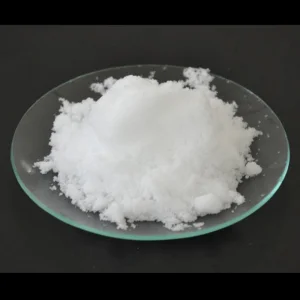
Pure monovalent copper coordination complexes are white to off-white crystalline solids. The appearance of a blue, turquoise, or deep green tint indicates surface oxidation to Cu²⁺. Analytically, ultraviolet-visible (UV-Vis) spectroscopy at 600–800 nm or iodometric titration quantitatively reveals any divalent contamination.
Yes. Using air-jet micronization and mechanical screening, we can tailor the particle size distribution (PSD) from D50 = 3–5 µm (ultra-fine pyrotechnic grade) up to D50 = 45–75 µm (free-flowing granules for chemical process feedstocks).
Every delivery includes a batch-specific Certificate of Analysis (COA), 16-section GHS Safety Data Sheet (SDS), Packing List, Commercial Invoice, Certificate of Origin (COO), and formal IMO/IMDG Dangerous Goods Declaration for maritime transport.
Qualified research laboratories and verified procurement entities can request 100g to 500g validation samples. Because reactive and nitrate salts are classified dangerous cargo, air courier transit requires certified DG packaging and courier DG handling protocols.
For long-term annual framework contracts (5 to 50+ metric tons), we offer flexible hedging instruments, including raw-material index-linked pricing formulas and fixed-margin conversion agreements backed by physical cathode copper stockpiling.
Complementary chemical intermediates produced to rigid technical data sheets for global synthesis, polymers, and metallurgical systems.






Connect with Yanxatech System Industries Limited chemical engineering specialists. Receive customized TDS, ICP metal impurity profiles, SDS dossiers, and exact CIF/FOB quotations within 24 hours.
