Direct supply capability across technical gases, inorganic compounds, functional elastomeric polymers, and engineered metal powders. All specifications backed by batch-specific COA and auditable quality verification.
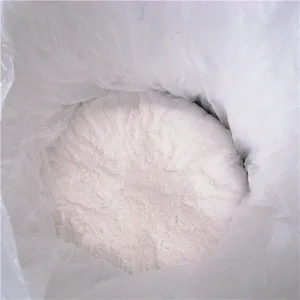

The global iron powder ecosystem is experiencing an unprecedented structural transition driven by automotive lightweighting, electromagnetic component miniaturization in electric vehicles (EVs), and the rapid expansion of net-shape powder metallurgy (PM).
Global original equipment manufacturers (OEMs) across North America, Europe, and East Asia are shifting toward strategic, direct-from-mill raw material sourcing to mitigate inflationary intermediaries and hedge against volatile metallurgical coke and scrap surcharges.
While traditional internal combustion engine (ICE) transmission gears and sprockets demanded dense, carbon-alloyed sintered parts, the rapid rise of 800V silicon carbide (SiC) inverters and traction drives has amplified global demand for Soft Magnetic Composites (SMC) fabricated from ultra-pure insulated iron powders.
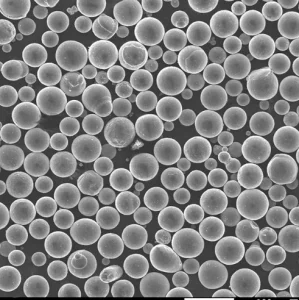
Metal Injection Molding (MIM) and Binder Jetting (BJM) processes require high-sphericity, sub-25 μm powders with exceptional flowability. China's massive expansion in high-pressure water-gas combined atomization has broken Western supply oligopolies, lowering operational unit costs by 28% to 42%.
Procurement efficiency relies on selecting the precise metallurgical powder morphology, apparent density, and particle size distribution (PSD) tailored specifically to your fabrication tooling and consolidation process.
| Classification | Manufacturing Technology | Apparent Density | Flowability (Hall) | Compressibility (600 MPa) | Dominant Global Applications |
|---|---|---|---|---|---|
| Reduced Sponge Iron | Tunnel kiln solid reduction / Hydrogen reduction of iron oxide ores | 2.40 – 2.80 g/cm³ | 28 – 35 s / 50g | 6.60 – 6.85 g/cm³ | Structural PM parts, welding flux electrodes, chemical reduction agents, deoxidizers |
| Water-Atomized Iron | High-pressure water jet disintegration of molten high-purity iron scrap | 2.85 – 3.20 g/cm³ | 24 – 28 s / 50g | 6.95 – 7.18 g/cm³ | High-density automotive transmission gears, synchronizer rings, self-lubricating bearings |
| Gas-Atomized Spherical | High-pressure inert gas (Ar/N2) jet atomization in high vacuum | 4.20 – 4.80 g/cm³ | 14 – 18 s / 50g | Consolidation via HIP / Sinter | Additive Manufacturing (SLM, BJM), thermal spray coatings, hot isostatic pressing (HIP) |
| Carbonyl Iron Powder (CIP) | Thermal decomposition of liquid iron pentacarbonyl Fe(CO)5 | 3.50 – 4.40 g/cm³ | Non-free flowing / sub-micron | MIM feedstocks | Metal Injection Molding (MIM), high-frequency inductors, radar absorbing materials (RAM) |
| Electrolytic Iron Powder | Aqueous ferric salt electrolyte refining and pulverization | 2.20 – 3.00 g/cm³ | 30 – 38 s / 50g | 6.80 – 7.05 g/cm³ | Pharmaceutical iron supplements, high-precision magnetic clutches, diamond tooling |
The performance of sintered ferrous components is strictly governed by green strength (the mechanical integrity of the un-sintered compact) and compressibility. Reduced sponge iron powder features an irregular, highly vesicular interior structure that promotes deep mechanical interlocking between adjacent particles under uniaxial cold compaction pressures ranging from 400 to 700 MPa. This morphology makes it the gold standard for intricate, multi-level components requiring exceptional green handling without fracturing.
Conversely, water-atomized iron powder produces rounded to semi-irregular solid particles with significantly lower internal porosity. Because internal voids are eliminated during liquid droplet solidification, atomized powders achieve superior sintered density exceeding 7.15 g/cm³ under standard single-press single-sinter (1P1S) sequences. For structural components subject to dynamic torsional stress—such as planetary carrier gears and engine timing sprockets—atomized powder delivers the tensile strength, impact toughness, and fatigue endurance essential for mission-critical assemblies.
B2B pricing for commercial and high-grade industrial iron powders is determined by raw scrap iron indexes, energy consumption tariffs (induction melting and hydrogen-atmosphere annealing), atomization media, and post-processing treatments.
| Grade Description | Mesh / Particle Size (D50) | Chemical Assay (Fe min) | Standard Export Packaging | MOQ | Indicative Price Range (FOB China Port) |
|---|---|---|---|---|---|
| Direct Reduced Sponge Iron Powder (Industrial) | 80 Mesh / 100 Mesh | ≥ 98.0% | 25kg PP valve bags / 1MT Jumbo bag | 5 Metric Tons | $680 – $820 / MT |
| Reduced Sponge Iron Powder (High-Purity PM) | -100 Mesh / -200 Mesh | ≥ 99.2% | 1000kg Bulk super-sack with nitrogen flush | 10 Metric Tons | $880 – $1,150 / MT |
| Water-Atomized Pure Iron Powder (Compressible) | -100 Mesh / 45–150 μm | ≥ 99.5% | 25kg moisture-proof vacuum bags + steel drum | 5 Metric Tons | $1,050 – $1,380 / MT |
| Diffusion-Alloyed / Pre-Alloyed Fe Powder (Ni-Mo-Cu) | -100 Mesh (Tailored blend) | Balance Fe, 1.5–4.0% Ni | 1MT moisture-barrier bulk bags | 5 Metric Tons | $1,650 – $2,450 / MT |
| Soft Magnetic Composite (SMC) Insulated Powder | 50 – 150 μm (Coated) | ≥ 99.6% (Fe core) | 25kg sealed steel drums with desiccant | 1 Metric Ton | $3,200 – $4,800 / MT |
| Gas-Atomized Spherical Pure Iron (AM / SLM) | 15 – 45 μm / 15 – 53 μm | ≥ 99.8% | 10kg / 20kg Argon-sealed aluminum canisters | 200 kg | $18.50 – $28.00 / kg |
| Carbonyl Iron Powder (Reduced Grade / Grade R) | 3.5 – 5.0 μm (D50) | ≥ 99.5% | 25kg poly-lined fiber drums | 500 kg | $8.50 – $14.50 / kg |
| Food / Pharma Grade Deoxidizer Iron Powder | 200 Mesh / 300 Mesh | ≥ 99.0% (Low As, Pb) | 25kg food-contact approved hermetic bags | 3 Metric Tons | $1,100 – $1,450 / MT |
Enterprise procurement professionals must account for several structural cost drivers when negotiating long-term Master Supply Agreements (MSAs):
From micro-inductors in smartphones to multi-ton counterweights and planetary transmissions, iron powder forms the foundational baseline of modern industrial production.
Engine valve seat inserts, variable valve timing (VVT) rotors, transmission synchronizers, and power steering pulleys. Utilizing water-atomized grades alloyed with copper and carbon enables net-shape sintering that eliminates secondary machining, cutting material waste from 40% in forgings to under 3% in PM.
High-permeability, low-core-loss iron powders with ultra-thin inorganic phosphate dielectric surface coatings. These allow 3D isotropic magnetic flux conduction in axial flux motors, EV traction drives, PFC chokes, and solar inverter inductors, outperforming traditional laminated silicon steel sheets above 1 kHz.
Super-fine reduced zero-valent iron (ZVI) powders serve as strong electron donors for environmental groundwater remediation, dechlorinating polychlorinated biphenyls (PCBs) and reducing hexavalent chromium (Cr VI). Also vital as an efficient catalyst in industrial organic synthesis, such as Bechamp reduction.
Controlled-reactivity reduced iron powder mixed with natural electrolytes serves as oxygen scavenger sachets within modified atmosphere packaging (MAP). It maintains residual oxygen concentrations below 0.01% in packaged pharmaceutical drugs, nuts, dried meats, and bakery goods, preventing lipid peroxidation without preservatives.
Heavy-duty railway brake pads, commercial vehicle ceramic-metallic brake linings, and diamond circular saw matrices. Irregular iron powder provides structural friction stabilization, prevents high-temperature rotor galling, and acts as an economical metallurgical binder for synthetic diamond abrasives.
Formulated into heavy-coated welding electrodes (AWS E7018 / E7024) and flux-cored arc welding (FCAW) wires. High-purity iron powder boosts metal deposition rates up to 140%, stabilizes the electric arc, minimizes spatter, and enhances joint bead aesthetics in structural steel shipyards.
The global metal powder industry is rapidly advancing to meet net-zero carbon mandates and support next-generation industrial electrification.
Transitioning from coal-based tunnel kilns to 100% green-hydrogen energized vertical shaft furnaces. This green direct reduced iron (H2-DRI) process eliminates fossil emissions, yielding high-purity sponge iron with lower carbon (< 0.01%) and trace oxygen (< 0.08%), perfect for premium electromagnetic alloys.
Next-generation Soft Magnetic Composites require operating frequencies in the 50 kHz to 500 kHz bracket for gallium-nitride (GaN) power electronics. Advanced research utilizes chemical vapor deposition (CVD) to deposit uniform 15 nm silica/phosphate dielectric shells over iron particles, dramatically lowering eddy current losses.
Merging fine gas-atomized iron powders with refractory and transition elements (Fe-Co-Ni-Cr-Mn) to formulate high-entropy alloy (HEA) systems. Designed specifically for binder-jet 3D printing and selective laser melting, these powders deliver unmatched cryogenic toughness alongside high yield strengths over 1.2 GPa.
Operating since 2008, Yanxatech System Industries Limited (YANXA) provides auditable, transparent export operations backed by rigorous chemical and metallurgical certification.
Every commercial lot is assigned an encrypted barcode linked directly to raw heat chemistry, annealing telemetry, sieve distribution profiles (Malvern Mastersizer 3000 laser diffraction), and Hall flowmeter calibration data. Every shipment includes certified batch COA, TDS, and GHS-compliant SDS.
Ultrafine metal powders with high specific surface areas can pose self-heating or flammability risks if exposed to moisture. We deploy UN-certified hermetic steel drums, nitrogen-purged multi-layer aluminum-plastic barrier liners, and containerized desiccant arrays to guarantee dry delivery across long maritime transit lanes.
Full support for international environmental mandates including EU REACH registrations, RoHS Directive adherence, and heavy metal restriction limits (Arsenic, Lead, Cadmium, Mercury testing via ICP-OES). We provide full documentation for authorized industrial customs clearance across European, American, and Asian borders.
In-depth technical answers addressing common questions from metallurgical engineers, quality directors, and global supply managers.
Complete supply solutions across engineered metal flake formulations, inorganic specialty salts, high-performance polyether polyols, and electronic-grade shielding gases.