


Explore our certified material catalog engineered for selective laser melting, thermal management, pyrotechnic catalysts, and semiconductor synthesis. Instant RFQs available with full batch COA.

From commodity powder metallurgy to sub-micron gas atomization, China's advanced material ecosystem has evolved into a strategic backbone for global aerospace, medical implant, and automotive tier-1 additive supply chains.
Early additive manufacturing was constrained by irregular powders derived from chemical reduction or water atomization, causing severe recoater jamming and internal porosity in Laser Powder Bed Fusion (LPBF). The migration to Vacuum Induction Melting Gas Atomization (VIGA) and Electrode Induction Melting Gas Atomization (EIGA) has established true spherical morphology with zero ceramic inclusion, drastically suppressing spatter and keyhole pores.
Global original equipment manufacturers (OEMs) face severe margin compression when relying on printer manufacturers for proprietary powders. Direct-from-factory sourcing from Yanxatech (YANXA) offers open-parameter flexibility, enabling significant raw material cost reductions (35% to 58%) while adhering strictly to ASTM B213, ASTM B212, and ASTM F3049 international certification protocols.
Industrial LPBF processes demand stringent interstitial control. Titanium Ti6Al4V Grade 23 (ELI) and Inconel 718 powders must maintain oxygen uptake below 0.08% and moisture levels below 200 ppm. Our hermetic argon closed-loop production, multi-stage ultrasonic sieving, and vacuum-sealed packaging guarantee pristine batch-to-batch consistency throughout global transport.
Understanding the microstructural mechanics, cooling velocity, and particle morphology across different atomization methods is essential for procurement managers specifying powders for LPBF, DED, and Binder Jetting.
| Atomization Technology | Typical Alloys Produced | Cooling Rate (K/s) | Sphericity & Satellites | Flowability (Hall) | Suitability |
|---|---|---|---|---|---|
| EIGA (Electrode Induction Melting Gas Atomization) | Ti6Al4V, Ti-Alloy, Refractory Metals (Zr, Nb) | 104 – 105 | Ultra-High (>99%), Zero Satellites | < 20 s / 50g | Aerospace & Implants (LPBF/EBM) |
| VIGA (Vacuum Induction Melting Inert Gas Atomization) | Inconel 718/625, 316L, 17-4PH, CoCrMo, Tool Steels | 103 – 105 | High (>97%), Minimal Satellites | < 24 s / 50g | Industrial Production (LPBF/DED/MIM) |
| PREP (Plasma Rotating Electrode Process) | Titanium Alloys, High-Entropy Superalloys | 103 – 104 | Near Perfect Sphere, Zero Hollows | < 18 s / 50g | Critical Flight Hardware & Orthopedics |
| Plasma Atomization (PA) | Tantalum, Tungsten, Pure Ti, Niobium | 105 – 106 | Superior Sphericity, Extremely Low Porosity | < 19 s / 50g | High-Temperature Propulsion Systems |
| Ultrasonic Gas Atomization (USGA) | AlSi10Mg, Scalmalloy, CuCrZr, Precious Metals | 104 – 105 | Excellent, Tight Standard Deviation PSD | < 25 s / 50g | Thermal Exchangers, Heat Sinks |
The aerodynamic behavior during recoating depends strictly on particle sizing curves. We customize fine-tail cutoffs to prevent powder clouding while maintaining coarse fractions to facilitate consistent bed packing density.
Oxygen, nitrogen, and hydrogen directly impair the ductility, fracture toughness, and fatigue life of printed components. Our vacuum atomization circuits ensure baseline elements remain strictly within flight-ready boundaries.
High apparent density (>55% of theoretical) and tap density (>65%) eliminate micro-voiding during the layer spread. Powder rheology is verified under dynamic shear conditions to ensure smooth recoater blade travel.
Yanxatech metal powders are validated across demanding structural, thermal, and biocompatible applications where part failure is never an option.
Turbine impellers, combustion chamber liners, and regeneratively cooled rocket nozzles manufactured via LPBF with YANXA Inconel 718 and Scalmalloy powders achieve superior high-temperature creep strength and oxidation resistance up to 700°C.
Our spherical Ti6Al4V ELI (Grade 23) and CoCrMo powders are manufactured in inert vacuum circuits, guaranteeing low cytotoxic impurity levels. Engineered trabecular lattice structures stimulate osseointegration in spinal cages and acetabular hip cups.
Conformal cooling channels in plastic injection mold inserts produced from Maraging Steel (18Ni-300) and H13 tool steel powders reduce molding cycle times by up to 35% while eliminating part warpage and thermal stress hotspots.
Procuring reactive metal powders internationally involves strict hazardous material protocols, safety documentation, and cross-border customs classifications. Yanxatech operates an end-to-end audit trail compliant with global shipping regulations.
Every shipment is serialized with a batch-specific Certificate of Analysis. Chemical limits are validated via glow discharge mass spectrometry (GDMS) and LECO gas analyzers, alongside particle distribution curves generated via Malvern laser diffraction.
Reactive metal powders (aluminum, magnesium, titanium, zirconium) are categorized under UN Hazard Class 4.1, 4.2, or 4.3. We utilize UN-certified hermetic steel drums filled with positive-pressure argon blankets to prevent oxidation during sea or air transit.
Sustained commercial competitiveness requires understanding powder reuse cycles. We assist global clients in establishing dynamic powder rejuvenation strategies, mitigating particle degradation, satellite shedding, and oxygen enrichment.
The next frontier of additive manufacturing pivots away from repurposed casting compositions toward materials synthesized specifically for ultra-rapid laser solidification cooling dynamics.
Multi-principal element compositions (e.g., FeCoCrNiMn) exhibiting outstanding fracture toughness at cryogenic temperatures, high radiation tolerance, and superior wear characteristics for nuclear and space exploration applications.
Development of crack-free pure tungsten (W), molybdenum (Mo), and tantalum (Ta) spherical powders utilizing plasma spheroidization, overcoming severe thermal conductivity discrepancies and grain boundary hot-tearing.
Custom elemental blend formulations allowing localized compositional grading within a single additive build volume, transitioning smoothly between magnetic and non-magnetic phases or variable thermal expansion profiles.
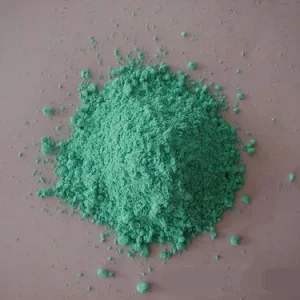
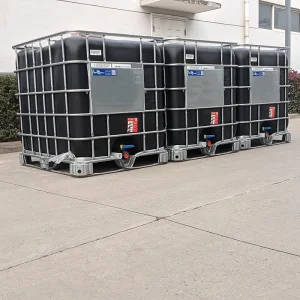
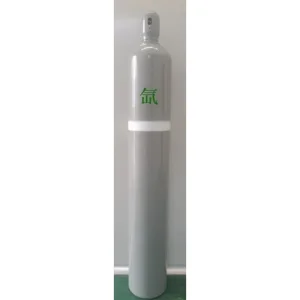
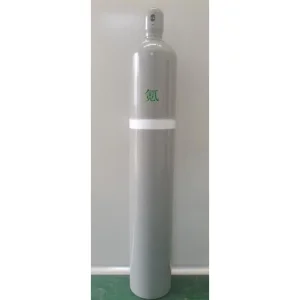
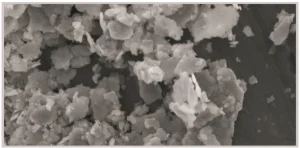
Comprehensive portfolio of advanced metal flakes, liquid copolymers, inorganic phosphates, and high-purity rare gases supporting international production operations.

Expert answers addressing the primary technical, contractual, and logistics considerations when purchasing 3D printing powders from China.
We employ closed-loop inert gas atomization utilizing high-purity argon (Ar > 99.999% purity) under strict vacuum chamber control (down to 10-3 Pa). Electrodes or ingots are ultrasonically cleaned before vacuum melting. Post-atomization classification, sieving, and vacuum-argon packaging are executed without atmospheric air exposure, guaranteeing oxygen content stays under 800 ppm for Ti6Al4V ELI and under 200 ppm for nickel superalloys.
Each batch ships with a serialized COA detailing: (1) Full elemental chemical assay via ICP-OES and LECO interstitial analysis, (2) Particle Size Distribution metrics (D10, D50, D90) verified via laser diffraction (ASTM B822), (3) Flowability measured via Hall Flowmeter funnel (ASTM B213), (4) Apparent Density (ASTM B212) and Tap Density (ASTM B527), and (5) SEM micrographs confirming particle sphericity and satellite reduction.
Yes. We regularly formulate and atomize bespoke chemistry heats starting from 50 kg test-pilot runs up to multi-ton production batches. Common custom projects include tailored Aluminum-Magnesium-Scandium (Al-Mg-Sc-Zr) variations, high-temperature copper alloys (CuCr1Zr, GRCop-42), and biologically non-toxic refractory compositions (Ti-Nb-Zr-Ta) with agreed chemical tolerances.
Alloys classified as Class 4.1 (flammable solids) or Class 4.3 (substances which in contact with water emit flammable gases) are packed in UN-rated steel drums lined with conductive, antistatic, and moisture-impermeable barrier foil bags purged with inert gas. Shipments are accompanied by GHS Safety Data Sheets, dangerous goods declarations (DGD), and certified packaging reports for compliant clearance through major ports globally.
We supply representative 2 kg to 10 kg evaluation samples with batch-specific COAs. Industrial customers run baseline PSD and flowability verification before printing standardized tensile, density (Archimedes), and metallographic test cubes on their SLM/LPBF platforms. Our technical support team assists in fine-tuning laser speed, hatch spacing, and beam power parameters to achieve greater than 99.8% relative density.