



Direct supply line from certified manufacturing units in China, delivering specification-consistent raw materials, precision gas grades, and advanced synthetic polymers.





Understanding molecular distribution, osmolality balancing, and the chemical precision required for gastrointestinal cleansing formulations.
Polyethylene Glycol 3350 and 4000 are high-molecular-weight linear polymers that undergo zero systemic absorption in healthy mucosal membranes. By acting strictly via iso-osmotic trapping, PEG retains massive water volumes within the lumen without disrupting plasma electrolytes.
Industrial medical grade PEG demands an exceptionally narrow PDI (Mw/Mn < 1.08). Chinese specialized catalytic polymerization guarantees uniform chain-length distribution, preventing the accumulation of low-weight oligomers that cause adverse metabolic shifts.
Supplied as API or premixed bulk with Sodium Sulfate, Sodium Bicarbonate, Sodium Chloride, and Potassium Chloride. This formulation balances ion shifts, eliminating intravascular hypovolemia and hypernatremia during severe bowel evacuation cycles.
Strict limit controls benchmarked against global standards to ensure clinical safety, endotoxin control, and trace volatility management.
| Analytical Parameter | USP / NF Method | Ph. Eur. (EP) Limits | China Export Benchmark (YANXA Level) |
|---|---|---|---|
| Nominal Molecular Weight | 3015 - 3685 Da (PEG 3350) | 3600 - 4400 Da (PEG 4000) | Target Monitored GPC ± 2.0% Tolerances |
| Ethylene Glycol & Diethylene Glycol | ≤ 0.25% w/w | ≤ 0.20% w/w | ≤ 0.05% GC-FID (High Purity Control) |
| Residual Ethylene Oxide (EO) | ≤ 10 ppm | ≤ 1 ppm (Gas Chromatography) | ≤ 0.5 ppm Headspace-GC Detection |
| Residual 1,4-Dioxane | ≤ 10 ppm | ≤ 10 ppm | ≤ 2 ppm Stringent Stripping Standard |
| Heavy Metals (Pb, As, Cd, Hg) | ≤ 5 ppm Total | ≤ 5 ppm Total | ≤ 1 ppm Inductively Coupled Plasma (ICP-MS) |
| Microbial Endotoxins (Bacterial) | < 0.5 EU/g | < 0.5 EU/g | Depyrogenated Lines: < 0.1 EU/g Batch Validated |
Evaluating tailored solutions across diverse health architectures, volume protocols, and next-generation drug delivery formulations.
Traditional 4-Liter lavages experience up to 25% patient non-compliance due to high fluid intake. Modern localized supply blends PEG-3350 with adjuvant osmotic accelerators (Ascorbate salts or Citrate) allowing 1L-to-2L split dosing protocols without compromising the mucosal cleansing score (Aronchick / Boston scale).
Formulations specifically calibrated for pediatric fecal impaction and chronic geriatric bowel conditioning require zero flavor enhancers that alter ionic absorption. Our pure powdered PEG active bases ensure precise dosage reconstitution without provoking electrolyte imbalances.
The manufacturing roadmap shifts from traditional batch loops to continuous micro-channel reactors. Guided by predictive AI thermal algorithms, continuous flow synthesis prevents localized overheating, completely mitigating 1,4-dioxane side-formation at source.
How direct integration with mega-scale petrochemical feedstock and automated synthesis provides an unmatched commercial moat for international buyers.
Direct pipeline adjacency to domestic mega-crackers ensures an uninterrupted supply of pristine EO. By eliminating hazardous road transport of raw pressurized gases, synthesis proceeds at reduced cost and zero logistical vulnerability.
State-of-the-art flaking and prilling towers operate within Class 100,000 clean rooms. Automated centrifugal spray chillers yield free-flowing, non-caking powder matrices with uniform dissolution rates in aqueous media.
Our collaborative facilities maintain active Type II Drug Master Files (DMF) lodged with US FDA and CEP certifications issued by EDQM, facilitating rapid regulatory cross-referencing for regional brand generic formulations.
Flexible supply options extending from multi-ton moisture-barrier aluminum-lined drums to high-speed pre-measured unit-dose sachets (e.g., 64g / 105g / 236g) packaged under controlled low-humidity conditions.
Comprehensive multi-industry chemical supply capabilities ensuring global baseline coverage for advanced polymer synthesis and heavy-duty applications.







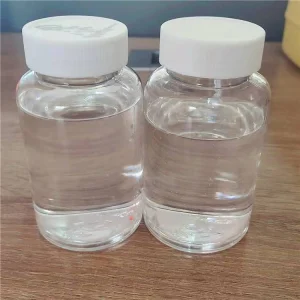
Comprehensive risk mitigation frameworks that protect sensitive polyethers, reactive nitrates, and high-purity gases throughout maritime and multimodal transit.
Polyethylene glycols are intrinsically hygroscopic. Absorption of ambient moisture accelerates oxidative chain cleavage and agglomeration. We utilize multi-layer laminated aluminum pouches inside heavy-gauge, tamper-evident fiber drums backfilled with dry nitrogen to ensure a 3-year shelf stability.
For operations combining polyethers with reactive reagents or metal formulations, our in-house certified safety advisers manage UN packaging, IMDG ocean transport, and Class 4/5 documentation smoothly through Shanghai and Qingdao maritime gateways.
To eliminate cross-border disputes, every lot is subjected to dual-testing: factory-level batch release COA matched with optional independent assays by SGS, Intertek, or Eurofins confirming identity (FTIR), viscosity, heavy metal limits, and residual volatiles.
Essential guidance addressing regulatory hurdles, molecular customization, minimum ordering requirements, and quote turnarounds.
The primary differentiation lies in geographic pharmacopeial convention and slight molecular weight calibration. PEG-3350 is dominant in North American formulations (USP), whereas PEG-4000 is favored across European monographs (Ph. Eur.). Both function through osmotic water retention in the colon without cellular absorption, demanding identical trace-impurity and ethylene oxide controls.
Advanced Chinese plants utilize multi-stage vacuum stripping towers accompanied by high-temperature nitrogen sparging immediately post-polymerization. Every commercial lot undergoes validated Headspace Gas Chromatography (GC) to guarantee residual 1,4-dioxane remains below 2 ppm and free ethylene oxide remains below 0.5 ppm.
Yes. We offer both API pure Polyethylene Glycol (USP/EP) for local pharmaceutical formulation lines and customized homogenous premixes containing precisely titrated ratios of Sodium Sulfate, Sodium Bicarbonate, Sodium Chloride, and Potassium Chloride, packed under RH < 30% clean-room conditions.
Each shipment is delivered with comprehensive batch Certificates of Analysis (COA), formal GHS-compliant Safety Data Sheets (SDS), technical dossiers detailing polymerization catalysts, declaration of non-animal origin (BSE/TSE free), nitrosamine assessment reports, and GMP compliance certificates.
Standard minimum order quantity for specialized pharmaceutical-grade PEG begins at 500 kg for trial runs and 1 FCL (approximately 10 to 14 metric tons) for commercial contracts. Delivery lead times range between 10 to 18 business days from final specification clearance to port loading.
We deploy high-integrity moisture-barrier aluminum-plastic multi-layer composite liners heat-sealed under positive nitrogen purge. Additionally, desiccants are integrated into container shipments to guard against atmospheric "container rain" during sea transit across tropical climate zones.