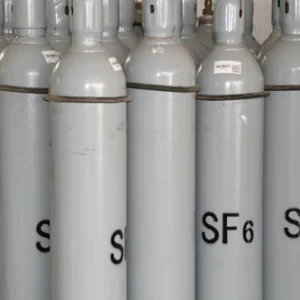
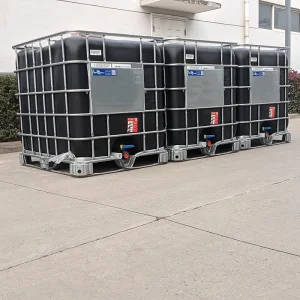
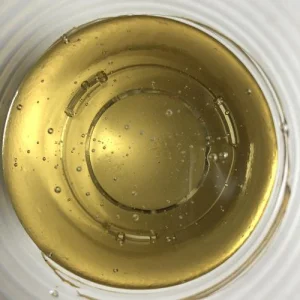
Alongside technical black aluminum powder, YANXA supplies precision-engineered chemical precursors, specialty carrier gases, and liquid elastomers configured for comprehensive formulation compatibility.

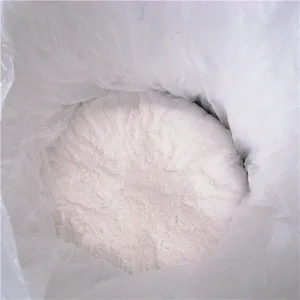
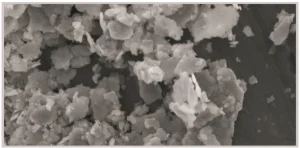

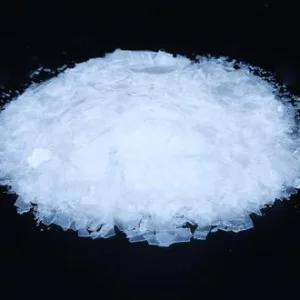
Often designated in military and energetic literature as "dark pyrotechnic aluminum" or "pyro grade flake", black aluminum powder represents an advanced morphology characterized by micro-fine particle distributions, an exceptionally high specific surface area, and controlled surface oxide passivations.
Traditional wet stamping with organic lubricants is increasingly replaced by ultra-pure nitrogen-purged ball milling and attrition systems. This maintains active metallic aluminum (Al Met > 92%) while curtailing volatile organic residues that destabilize composite energetic matrices.
Modern solid rocket propulsion systems, thermobaric mixes, and delay detonators require tighter granulometric tolerances. Dark aluminum powders provide a tailored surface-area-to-volume ratio that drastically shortens ignition lag and optimizes combustion heat output exceeding 31 MJ/kg.
Due to its characteristic dark charcoal coloration and microscopic trap geometry, black aluminum powder is gaining strategic momentum in solar thermal absorption coatings, high-emissivity radiation blankets, and anti-reflective electromagnetic shielding layers for avionics.
Procuring black aluminum powder on wholesale terms requires rigid technical reconciliation. Sourcing directors and chemical engineers must evaluate physical characteristics alongside energetic kinetics.
| Analytical Parameter | Commercial Grade (BAP-C) | Energetic Pyro Grade (BAP-EP) | Ultra-Fine Aerospace (BAP-UF) | Standard Test Methodology |
|---|---|---|---|---|
| Total Aluminum (Al min) | ≥ 98.5% | ≥ 99.2% | ≥ 99.7% | Titration / ICP-OES |
| Active Metal Content (Al Met) | ≥ 88.0% | ≥ 92.5% | ≥ 95.0% | Hydrogen Evolution (Gasometric) |
| Median Diameter (D50) | 25.0 – 45.0 µm | 8.0 – 18.0 µm | 2.0 – 5.5 µm | Laser Diffraction (ISO 13320) |
| Particle Morphology | Flake / Nodular | Irregular Lamellar Flake | Sub-micron Micro-Flake | Scanning Electron Microscopy (SEM) |
| Apparent Bulk Density | 0.45 – 0.65 g/cm³ | 0.25 – 0.40 g/cm³ | 0.15 – 0.30 g/cm³ | Scott Volumeter (ASTM B329) |
| Moisture (H₂O Volatiles) | ≤ 0.15% | ≤ 0.08% | ≤ 0.05% | Karl Fischer / IR Balance at 105°C |
| Iron (Fe) Impurity Limit | ≤ 0.25% | ≤ 0.15% | ≤ 0.08% | Spectrophotometry / ICP-OES |
| Silicon (Si) Impurity Limit | ≤ 0.20% | ≤ 0.12% | ≤ 0.05% | Direct ICP-OES Analysis |
Precision controlled oxidation layers (2–4 nm amorphous Al₂O₃) prevent catastrophic spontaneous auto-ignition while maintaining long-term shelf stability in sealed containers, adhering to strict volatile thresholds.
With surface areas spanning from 1.5 to over 8.5 m²/g, our formulations accelerate reaction propagation speeds in aluminothermic mixes and specialty explosive trains without clumping.
Every shipment corresponds to a traceable production lot backed by complete analytical documentation: PSD particle graphs, active gasimetric assay validation, and ICP trace-element verification.
Aluminum powder does not exist in isolation. At YANXA, our materials engineering specialists collaborate with downstream chemists to integrate dark aluminum powders into cohesive chemical systems.
Compounding black aluminum powder with functional binders such as HTBN, HTBS, and MLPB liquid rubbers yields exceptional specific impulse (Isp), enhanced elongation, and stable mechanical modulus under high g-load chamber pressures.
In aluminothermic reaction mixes for railway track welding, copper grounding joining, and ordnance demolition, high-reactivity dark flake aluminum drives rapid, high-temperature iron or copper reduction without requiring heavy chemical boosters.
In carbon-containing refractory bricks and monolithic casting powders, dark aluminum powders serve as high-performance anti-oxidants, reacting in-situ with carbon monoxide to synthesize Al₄C₃ and Al₂O₃ reinforcement networks at operating temperatures exceeding 1400°C.
Dispersed within high-molecular-weight specialty polyether or fluoropolymer vehicle matrices, nano-scale dark aluminum flakes achieve an optical absorptance (α) > 0.94 in the solar spectrum while maintaining thermal emittance (ε) < 0.08 in the infrared zone.
Aluminum powder in fine particulate or flake format carries intrinsic hazard classifications due to reactivity with water and hydrogen outgassing hazards. YANXA operates an export framework compliant with international maritime and aviation codes.
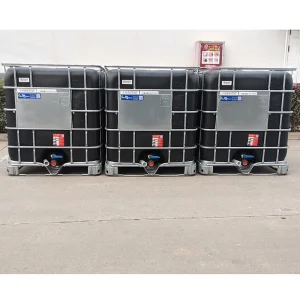
Shipments are secured in UN 1A2 steel drums with full removable heads, hermetically sealed gasket closures, inner heavy-duty anti-static conductive PE liners, and dry argon or nitrogen inert gas purging to prevent atmospheric oxidation during transit.
Fully certified for transport under UN 1396 (Aluminum Powder, Uncoated, Class 4.3, PG II) or UN 1309 (Aluminum Powder, Coated, Class 4.1, PG II/III). Complete IMO cargo declarations and Dangerous Goods Notes (DGN) accompany all sea consignments.
Material safety dossiers are continuously aligned with European REACH registration mandates, OSHA GHS 16-section Safety Data Sheets, and customs classifications (HS Code 7603.10 / 7603.20), eliminating customs demurrage and regulatory bottlenecks.
As defense, aerospace propulsion, and advanced metallurgical additive industries evolve toward higher energetic densities and lower sintering activation temperatures, YANXA's engineering research prioritizes three foundational technology pillars.
Implementing fluoropolymer (e.g., THV, PVDF) and aminosilane ultra-thin coatings directly onto sub-micron black aluminum particles. This passivates the core against hydrolytic oxidation while participating as an active fluorine oxidizer during detonation.
Incorporating in-line optical laser scattering sensors within closed-loop ultrasonic jet pulverizers. Real-time neural network compensation adjusts classifier rotor speeds dynamically to guarantee ultra-tight distribution bell curves (Span < 1.15).
Pioneering ball-milled nanostructured Al-Mg, Al-Ni, and Al-Ti-B reactive multi-elemental alloys designed to tailor burn rates, lower activation energy barriers, and provide superior ignition reliability across extreme cryogenic atmospheric profiles.
Essential answers covering synthesis, safety management, specification auditing, and international trade compliance for commercial buyers and engineering teams.
Unlike bright silver atomized powders which are largely spherical and possess low specific surface areas (0.2–0.8 m²/g), black aluminum powder consists of microscopic lamellar flakes or highly irregular agglomerates with deep charcoal/black optical properties. Its specific surface area is 3x to 10x higher, rendering it markedly more reactive in ignition trains, thermites, and pyrotechnics.
Total aluminum measures all Al atoms regardless of state, while Active Metal Content (Al Met) measures only non-oxidized, available zero-valent Al. YANXA determines this value via standard alkaline gasometric hydrogen displacement (reacting a sample with sodium hydroxide solution and measuring evolved H₂ gas against temperature/pressure corrections) according to ASTM / ISO standards.
Standard packaging comprises UN-certified 25 kg, 50 kg, or 100 kg open-head steel drums (UN 1A2/Y) equipped with rubber seals, locking rings, anti-static inner liners, and nitrogen blankets. Standard commercial MOQ is typically 500 kg; however, trial evaluation quantities (5 kg – 50 kg) can be scheduled for verified manufacturing entities.
Yes. Through multi-stage air classification and fine-tuned inert ball milling, we can modify target cut points (D10, D50, D90, and sieve mesh screen ratings from 200 mesh down to 2 µm) to fulfill the burn-rate parameters of custom propellant charges, detonating relays, or conductive coatings.
When kept unopened in our factory-sealed, nitrogen-purged steel drums in a cool, dry, grounded, and well-ventilated storage facility below 30°C and away from oxidizers, acids, and water sources, dark aluminum powder retains its active chemical content and flow properties for 24 months without deterioration.
Every export shipment includes: Batch Certificate of Analysis (COA), 16-section GHS Safety Data Sheet (SDS), Packing Inspection Certificate, UN Packaging Approval Certificate, and a Dangerous Goods Declaration compliant with the International Maritime Dangerous Goods (IMDG) Code.
Connect directly with our chemical engineers and commercial export desk for lot sampling, technical datasheets, and CIF/FOB pricing.
Complete export listings including synthetic polymers, curing precursors, dielectric gases, and energetic oxidizers supported by Yanxatech System Industries Limited since 2008.