Explore our core certified production catalog engineered for precision additive manufacturing, high-density pyrotechnics, semiconductor processing, and high-performance elastomers.
A comprehensive examination of CAS No. 68239-06-5 functional liquid polymers, reactive oligomers, and terminal telechelic backbones designed for high-stress industrial synthesis.
CAS No. 68239-06-5 designates a critical class of functionalized polymeric materials, predominantly engineered within the specialty liquid elastomer and high-molecular polyether copolymer domain. These specialized oligomeric matrices exhibit a controlled molecular architecture characterized by terminal reactive moieties, primarily hydroxyl groups or copolymerized butadiene-acrylonitrile frameworks.
The stability and mechanical elasticity of compounds governed by CAS No. 68239-06-5 originate from their optimized polymer network dynamics. The telechelic functionality guarantees complete cross-linking efficiency during polycondensation or polyaddition with polyisocyanates, epoxy resins, or phenolic curing agents. This prevents plasticizer migration, minimizes unreacted fractions, and preserves structural integrity in extreme environments.
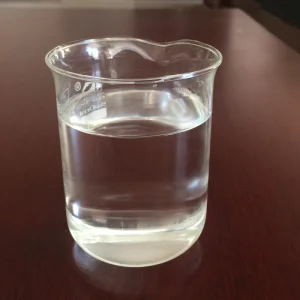
At standard ambient conditions (25°C, 101.3 kPa), CAS No. 68239-06-5 manifests as a transparent-to-light-amber, high-viscosity viscous liquid. Its unique cohesive energy density provides outstanding dampening capabilities, superior cryogenic flexibility, and resistance to thermo-oxidative decomposition.
The polymeric backbone features a glass transition temperature ($T_g$) falling between -55°C and -38°C depending on the comonomer ratio (e.g., bound acrylonitrile or ether block lengths). This enables formulated adhesives, liners, and solid composite matrices to maintain elastomeric compliance even under sub-zero aerospace and deep-sea industrial operational regimes.
| Analytical Parameter | Standard Reference Value | Testing Methodology | Industrial Relevance |
|---|---|---|---|
| Assay / Functional Purity | ≥ 99.2% (Oligomeric Content) | HPLC / Size Exclusion (GPC) | Eliminates volatile side chains and batch variations |
| Hydroxyl Value (OHV) | 0.60 – 0.95 mmol/g (Customizable) | Potentiometric Titration | Governs crosslinking density with diisocyanates (NCO:OH) |
| Viscosity (at 25°C, Brookfield) | 4,000 – 15,000 mPa·s | Rotational Viscometry (ASTM D2196) | Dictates processing flowability and resin wetting |
| Moisture Content (Karl Fischer) | ≤ 0.05% w/w | Coulometric Titration (ISO 12937) | Prevents micro-bubbling and side-reactions with NCO |
| Acrylonitrile / Polar Fraction | 10% – 18% (Tailored Grades) | Kjeldahl Nitrogen Analysis | Tunes polarity, fuel resistance, and epoxy compatibility |
| Total Ash & Trace Catalysts | ≤ 0.08% w/w | Thermogravimetric Furnace (TGA) | Essential for dielectric reliability and optical stability |
Strategic purchasing guidelines, real-time market drivers, volume tier discounts, and Incoterms structures for CAS No. 68239-06-5 procurement heads.
The manufacturing cost structure of CAS No. 68239-06-5 is fundamentally tied to upstream petrochemical benchmarks, specifically butadiene monomer, acrylonitrile (propylene ammoxidation route), and specialty initiating catalyst complexes such as hydrogen peroxide or azobisisobutyronitrile (AIBN) derivatizations. Energy tariffs in primary synthesis clusters and hazardous waste treatment mandates also play major roles in price setting.
Enterprise buyers are advised to track regional feedstock spreads across East Asian petro-hubs. Establishing quarterly indexed contract pricing linked to raw monomer indices protects manufacturing margins from acute spot-market shortfalls.
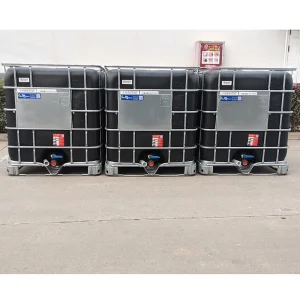
We supply CAS No. 68239-06-5 across flexible shipping terms: FOB Shanghai/Qingdao, CIF Major Global Ports (Rotterdam, Houston, Busan, Jebel Ali), and DDP to industrial zones. Standard packaging consists of heavy-gauge UN-certified steel drums (200 kg net) internally coated with epoxy-phenolic liners to eliminate trace metal contamination, as well as 1,000 kg nitrogen-blanketed IBC totes or 20-ton heated ISO tanks for continuous compounding facilities.
Sample requests (1 kg – 5 kg) are maintained in inventory for qualification trials with complete Certificate of Analysis (COA) within 48 hours.
Designed for R&D formulation & line trials
For mid-scale blending & continuous compounding
Direct factory contract with reserve inventory
From advanced aerospace propellants and structural adhesives to clean energy sealing and microelectronic underfills.
In aerospace solid propellant technologies, CAS No. 68239-06-5 provides an indispensable polymeric matrix. Its non-crystallizing, flexible backbone serves as the elastomeric binder crosslinked with polyfunctional isocyanates (such as IPDI or TDI). This structural binder encapsulates crystalline oxidizers (ammonium perchlorate) and fuel powders (spherical aluminum), absorbing acoustic resonance and maintaining structural viscoelasticity throughout steep acceleration profiles and temperature drops.
Modern crash-durable automotive adhesives (CDA) require high impact peel resistance across a range of -40°C to 90°C. Integrating CAS No. 68239-06-5 into standard bisphenol-A or bisphenol-F epoxy matrices promotes sub-micron elastomer phase-separation upon cure. These microscopic rubber domains arrest micro-crack propagation, boosting lap shear strength on galvanized automotive steel and carbon-fiber composite joints by more than 300% without sacrificing modulus.
In heavy industrial coatings for offshore wind installations, oil storage tankers, and subsea pipelines, CAS No. 68239-06-5 serves as an elastomeric polyether-copolymer modifier. The material imparts intrinsic hydrophobic barrier properties, extreme resistance to cathodic disbondment, and flexibility to withstand cyclical substrate expansion without pinholing or micro-fracturing under intense salinity and UV stress.
High-reliability semiconductor packaging and power electronic assemblies (IGBT modules) face severe coefficient of thermal expansion (CTE) mismatches between copper lead-frames, silicon dies, and resin matrices. Toughening formulations with ultrapure grades of CAS No. 68239-06-5 yields low-stress potting compounds that resist dielectric breakdown, mitigate thermal shock failure, and prevent micro-cracking across 1,000 thermal shock cycles (-55°C to 150°C).
Transitioning from traditional batch reactor dynamics to continuous tubular flow synthesis, reduced VOC architectures, and sustainable bio-comonomer incorporation.
Conventional production of CAS No. 68239-06-5 has historically relied on high-pressure stirred autoclave batch reactors. These often experience heat transfer limitations and polydispersity indexing shifts ($M_w/M_n > 2.2$). Our advanced synthesis route employs continuous micro-channel and tubular plug-flow reactors equipped with real-time NIR and Raman process analytical technology (PAT).
This closed-loop system restricts the polydispersity index to $M_w/M_n ≤ 1.65$, virtually eliminating low-molecular volatile cyclic oligomers and ultra-high-molecular gels. The resulting polymers feature precise hydroxyl capping functionality (>98.5% bifunctional telechelic purity) for repeatable, stoichiometric cure profiles in customer production lines.
With tightening carbon emissions regulations across the European Union and North America, our R&D pipeline is pioneering drop-in bio-derived comonomer pathways for CAS No. 68239-06-5. By deriving up to 35% of the polymer's carbon framework from sustainably sourced bio-polyols and renewable circular-feedstock butadiene, we reduce the Product Carbon Footprint (PCF) by an estimated 28% without altering physical or chemical specifications.
Simultaneously, we have eliminated heavy-metal organotin transesterification and condensation catalysts, transitioning to biocompatible bismuth and zirconium carboxylate complexes to ensure compliance with upcoming non-toxic chemical regulations.
A regional overview of production capacities, logistics routes, trade compliance, and enterprise supply chain risk mitigation.
The Asia-Pacific corridor, centered in China and South Korea, represents over 68% of global synthesis and processing capacity for CAS No. 68239-06-5 and related elastomeric binders. Integrated chemical industrial parks offer vertical feedstock integration, advanced waste handling, and streamlined port logistics. This infrastructure supports dependable bulk synthesis at pricing 20–35% below Western European domestic alternatives, making it an essential hub for multinational corporate procurement.
North American and European defense, aerospace, and high-performance electronics industries account for the highest-value consumption of CAS No. 68239-06-5. However, regional domestic capacity remains limited and constrained by environmental permitting. Sourcing teams in these territories rely heavily on audited Tier-1 Chinese suppliers capable of providing exhaustive regulatory documentation, local bonded inventory warehousing, and pre-cleared customs entry.
Given geopolitical tensions, fluctuating ocean freight dynamics, and canal choke-points, enterprise buyers are shifting from strict Just-In-Time (JIT) methods to regionalized inventory buffering. Our global operations support this by providing consigned buffer stockpiles at bonded warehouses in Antwerp, Rotterdam, and Houston, guaranteeing 48-hour plant-side emergency dispatch to mitigate assembly line downtime.
Stringent analytical testing protocols, dangerous goods logistics management, and global regulatory registration portfolios.
Our CAS No. 68239-06-5 lots are registered and certified in compliance with major jurisdictional safety frameworks:
Every batch produced under CAS No. 68239-06-5 goes through a 7-stage analytical release gate prior to shipping approval. Testing is conducted under strict ISO 9001:2015 and IATF 16949 quality management protocols. Our analytical capabilities include Gel Permeation Chromatography (GPC) for molecular distribution, Fourier-Transform Infrared (FTIR) identification, potentiometric titration for hydroxyl values, and headspace gas chromatography (HS-GC) for residual monomer verification.
Retained samples from every lot are archived under inert nitrogen at 15°C for a minimum of 24 months, providing continuous quality traceability for mission-critical client projects.
Clear, technical answers to common questions regarding CAS No. 68239-06-5 specifications, handling, and supply agreements.
The baseline commercial grade features an OH value between 0.60 and 0.95 mmol/g (equivalent to approximately 33–53 mg KOH/g). Our synthesis engineers can adjust reactor residence times and terminal quenching reagents to customize your OH value between 0.40 and 1.20 mmol/g, fitting your precise stoichiometric requirements when formulating with polyisocyanates like IPDI, HDI, or MDI.
The material should be stored in original, unopened steel drums under dry conditions between 10°C and 30°C. Because the polymer contains unsaturation or active hydroxyl ends, prolonged exposure to atmospheric oxygen or ambient humidity can cause slow oxidative crosslinking or moisture pickup. We pack all drums with high-purity nitrogen headspace blanketing (≥ 99.999% N2), securing a verified shelf life of 12 months from the packaging date.
Standard refined grades of CAS No. 68239-06-5 without residual free volatile solvents are classified as non-hazardous, non-DG cargo under IMDG (sea freight), ICAO/IATA (air freight), and ADR/RID (European road/rail). Each shipment includes a comprehensive GHS Safety Data Sheet (SDS) and an official non-DG transport certification issued by an accredited laboratory such as Shanghai Institute of Chemical Industry (DGM).
We maintain continuous pilot and FCL-ready inventories for standard specifications, allowing dispatch to Shanghai or Qingdao port within 3 to 7 business days. For customized polyether or telechelic grades requiring dedicated reactor batch cycles, typical manufacturing lead time spans 14 to 21 calendar days, inclusive of internal analytical release gates and independent pre-shipment inspection.
While Carboxyl-Terminated Butadiene Acrylonitrile (CTBN) reacts directly with oxirane rings at elevated curing temperatures (often requiring catalysts like triphenylphosphine), hydroxyl-functional materials like CAS No. 68239-06-5 are commonly used in isocyanate-cured systems or modified with anhydride pre-reactions. This allows for lower initial resin viscosity, better substrate wetting, and reduced risk of premature formulation thickening during extended warehouse storage.
Complete your supply chain integration with our secondary portfolio of fine chemicals, ultra-pure gases, and functional synthetic polymers.