


Verified batch consistency, ISO-certified quality parameters, and hazardous-goods logistics ready for worldwide bulk shipment.






A rigorous examination of bonding dynamics, thermal limits, and physical mechanisms governing the world’s most unreactive organic halocarbon.
The chemical formula for carbon tetrafluoride is CF₄ (CAS: 75-73-0, UN: 1982). Operating with a sp³ hybridization, it exhibits a perfect tetrahedral symmetry with a uniform bond angle of 109.5°. The carbon-fluorine bond dissociation energy clocks in at an astounding 544 kJ/mol, rendering it one of the strongest single bonds in covalent chemistry.
Due to multiple fluorine atoms exerting intense electronegative attraction towards the central carbon atom, the inter-atomic bond distance contracts to 1.32 Å. This inductive compression grants CF₄ unparalleled thermal resistance, maintaining chemical inertness up to 800°C under oxidative regimes and repelling attack from concentrated acids, bases, and oxidizing agents.
For semiconductor dry etch systems, micro-contaminants cause wafer lattice dislocations. Our manufacturing specifications restrict trace moisture (≤ 0.5 ppmv), dissolved oxygen (≤ 1.0 ppmv), carbon monoxide (≤ 0.5 ppmv), and heavy hydrocarbons down to the sub-ppb threshold, ensuring zero particulate fallout in sub-3nm node production lines.
Analyzing supply chain diversification, fab construction booms, and evolving regulatory boundaries.
The global electronic-grade CF4 market is pacing towards a 7.8% CAGR through 2032. The explosive footprint of High-Performance Computing (HPC), AI accelerative hardware (GPUs/TPUs), and multi-stacked 3D NAND flash memory (exceeding 232 layers) demands massive, unflagging cubic-meter throughput of fluorine source gases for deep-trench contact hole formation.
Geopolitical turbulence and high shipping tariffs have compelled global semiconductor leaders to bypass single-origin bottlenecks. Tier-1 foundries across North America, Europe, Taiwan, and South Korea increasingly enforce strict dual-sourcing mandates, favoring integrated fluorochemical suppliers capable of providing direct ISO-container marine logistics.
CF4 bears a 100-year Global Warming Potential (GWP) of approximately 7,380 and an atmospheric lifetime exceeding 50,000 years. Consequently, global buyers are integrating closed-loop vacuum recovery lines, catalytic abatement burners operating over 1,400°C, and plasma scrubbing modules to decompose effluent CF4 into neutral fluorite minerals (CaF2).
How the chemical formula for carbon tetrafluoride is actualized in state-of-the-art cleanrooms and industrial facilities.
In inductively coupled plasma (ICP) reactors, CF4 dissociates into CF3+, CF2+, and energetic fluorine radicals (F*). These radicals aggressively volatilize solid silicon dioxide into gaseous silicon tetrafluoride (SiO2 + CF4 → SiF4↑ + CO2↑), allowing anisotropic nanometer trench profiles.
Residual silicate and tungsten films on PECVD chamber walls deteriorate process reproducibility. A CF4/O2 plasma mix converts stubborn wall residues into volatile byproducts without requiring mechanical disassembly or cooling cycles, slashing preventative maintenance downtime.
Operating with an ultra-low boiling point (-128.1°C) and robust dielectric integrity, specialized formulations of CF4 function as cryogenic working fluids in low-temperature closed-loop pulse tubes, heat pipes, and spaceborne sensory refrigeration units.
Controlled CF4 plasma immersion modifies the surface energy of engineering plastics and elastomers. By replacing hydrogen with fluorine atoms on polymer chains, materials achieve chemical resistance and hydrophobicity while retaining mechanical elasticity.
Continuous Gas Chromatography-Mass Spectrometry (GC-MS) verification backed by batch Certificate of Analysis (COA).
| Analytical Parameter | Industrial Grade (3N5 / 99.95%) | Display Grade (4N5 / 99.995%) | Electronic / VLSI Grade (5N / 99.999%) | Testing Methodology |
|---|---|---|---|---|
| Assay Purity (CF4) | ≥ 99.95% | ≥ 99.995% | ≥ 99.999% | GC-TCD / Trace Impurity Differential |
| Moisture (H2O) | ≤ 15.0 ppmv | ≤ 2.0 ppmv | ≤ 0.5 ppmv | Cavity Ring-Down Spectroscopy (CRDS) |
| Oxygen + Argon (O2+Ar) | ≤ 50.0 ppmv | ≤ 5.0 ppmv | ≤ 1.0 ppmv | Gas Chromatography with DID Detector |
| Nitrogen (N2) | ≤ 150.0 ppmv | ≤ 15.0 ppmv | ≤ 2.0 ppmv | Thermal Conductivity GC Detection |
| Carbon Monoxide (CO) | ≤ 5.0 ppmv | ≤ 1.0 ppmv | ≤ 0.2 ppmv | Infrared Absorption Spectrometry (NDIR) |
| Carbon Dioxide (CO2) | ≤ 15.0 ppmv | ≤ 2.0 ppmv | ≤ 0.5 ppmv | Non-Dispersive Infrared Spectrophotometry |
| Other Halocarbons (C2F6, CHF3) | ≤ 50.0 ppmv | ≤ 10.0 ppmv | ≤ 2.0 ppmv | GC-FID with Methanizer |
Eliminating delivery volatility through certified pressure fleet infrastructures and cross-border dangerous-goods proficiency.
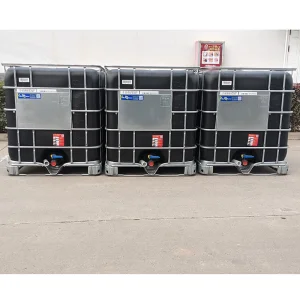
From individual 47L seamless steel cylinders (CGA 580 / CGA 350 valves) to 20-foot and 40-foot multi-element gas containers (MEGCs) and ISO tank containers, our logistics support 100 kg pilot trials up to 20-metric-ton bulk campaigns under UN 1982 transport approvals.
Every lot is coupled with 16-section GHS-compliant Safety Data Sheets (SDS), lot-traceable Certificates of Analysis (COA), packaging pressure certificates, and verified Dangerous Goods Declarations (DGD) satisfying IMDG (maritime) and IATA (air cargo) criteria.
Before filling, all empty gas cylinders undergo an intensive ultrasonic bath, high-vacuum thermal baking up to 180°C, and inert gas purge passivation cycles to purge lingering moisture films and prevent sub-micron particle generation during transit.
Authoritative insights addressing synthesis, purity certification, handling precautions, and procurement.
The chemical formula is CF4 (Tetrafluoromethane). Industrial synthesis typically proceeds via direct fluorination of high-purity silicon carbide or direct catalytic fluorination of methane/chlorofluorocarbons using elemental fluorine gas (F2): CH4 + 4F2 → CF4 + 4HF. The crude product undergoes multi-stage low-temperature fractional distillation and chemical scrubbers to eliminate trace hydrogen fluoride (HF) and atmospheric gases.
CF4 provides an optimal balance between dissociation energy and radical generation. Under RF plasma fields, it breaks down cleanly into CF3 radicals and free fluorine atoms without excessive carbon polymer deposition on target wafers. When combined with controlled oxygen (O2) feeds, the etch rate of silicon dioxide (SiO2) and silicon nitride (Si3N4) increases substantially while sparing underlying photoresist masks.
Carbon tetrafluoride is a non-flammable, non-toxic compressed gas (DOT Hazard Class 2.2). However, because it is heavier than air (vapor density 3.05 relative to air), accidental releases in unventilated areas can lead to rapid asphyxiation through oxygen displacement. Thermal decomposition exceeding 800°C or exposure to electric arcs generates toxic fluorinated species, including carbonyl fluoride (COF2) and hydrogen fluoride (HF).
Every commercial consignment includes a comprehensive batch Certificate of Analysis (COA) documenting actual trace contaminant levels (H2O, O2, N2, CO, CO2, and other halocarbons). In addition, customers receive GHS-compliant 16-section Safety Data Sheets (SDS), Technical Data Sheets (TDS), and export dangerous-goods certificates for seamless maritime and customs clearance.
Yes. Depending on destination regional regulations and fab manifold compatibility, we accommodate North American CGA (CGA 580 / CGA 350), British BS-4, German DIN 477 (No. 6 / No. 10), and Japanese JIS valve assemblies, with internal electropolishing (EP) available for 5N grade deliveries.
Explore our parallel production lines engineered to meet demanding military, aerospace, and polymer synthesis benchmarks.








