Explore our export-ready specialized chemical precursors, atomized alloy powders, and electronic-grade compressed gases manufactured to international quality standards.

A rigorous examination of physicochemical constants, thermodynamic stability, and impurity limits for Halocarbon-14 / Refrigerant-14 in high-yield nanofabrication and low-temperature thermal cycles.
Freon 14 (chemically designated as Carbon Tetrafluoride, Perfluoromethane, or R-14; CAS Registry Number: 75-73-0; UN Number: 1982) stands as the most stable perfluorocarbon molecule within modern chemical engineering. Possessing a tetrahedral molecular geometry bonded by four exceptionally strong carbon-fluorine bonds (bond dissociation energy approaching 544 kJ/mol), CF4 exhibits near-complete chemical inertness under atmospheric temperatures and pressures. It does not react with acids, bases, or strong oxidizing agents under conventional circumstances, which makes it an ideal processing gas and ultra-low-temperature refrigerant.
Within semiconductor manufacturing, however, the intense radiofrequency (RF) fields generated within plasma dry-etch chambers dissociates Freon 14 into active fluorine radicals (F*) and fluorocarbon polymer-forming precursors (CF3+, CF2:). This dual reaction mechanism makes CF4 the foundational etchant for silicon dioxide (SiO2), silicon nitride (Si3N4), polycrystalline silicon, and refractory metal silicides. Yanxatech System Industries Limited (YANXA) engineers Freon 14 from raw industrial grade up to 99.9995% electronic grade, eliminating destructive trace impurities such as carbon monoxide, moisture, SF6, and heavy metals that undermine wafer die yield.
| Analytical Parameter | Industrial Grade (3N) | Electronic Pure (4N5) | VLSI Grade (5N) | ULSI / Sub-7nm Grade (5.5N) |
|---|---|---|---|---|
| Assay Purity (CF4) | ≥ 99.9% | ≥ 99.995% | ≥ 99.999% | ≥ 99.9995% |
| Oxygen + Argon (O2 + Ar) | ≤ 100 ppmv | ≤ 10 ppmv | ≤ 1.0 ppmv | ≤ 0.2 ppmv |
| Nitrogen (N2) | ≤ 350 ppmv | ≤ 25 ppmv | ≤ 4.0 ppmv | ≤ 0.8 ppmv |
| Carbon Monoxide (CO) | ≤ 20 ppmv | ≤ 2.0 ppmv | ≤ 0.5 ppmv | ≤ 0.1 ppmv |
| Carbon Dioxide (CO2) | ≤ 30 ppmv | ≤ 3.0 ppmv | ≤ 0.5 ppmv | ≤ 0.1 ppmv |
| Moisture (H2O) | ≤ 15 ppmv | ≤ 3.0 ppmv | ≤ 1.0 ppmv | ≤ 0.5 ppmv |
| Sulfur Hexafluoride (SF6) | ≤ 15 ppmv | ≤ 2.0 ppmv | ≤ 0.5 ppmv | ≤ 0.1 ppmv |
| Other Halocarbons (CHF3, C2F6) | ≤ 80 ppmv | ≤ 15 ppmv | ≤ 2.0 ppmv | ≤ 0.5 ppmv |
| Total Metals (Fe, Cu, Ni, Cr) | N/A | ≤ 100 ppbw | ≤ 10 ppbw | ≤ 1.0 ppbw |
Capitalizing on China's world-leading fluorite mineral reserves, integrated hydrofluoric acid production belts, and proprietary distillation technology to secure uninterrupted, cost-optimized supply.
Direct supply partnerships in China's major fluorochemical hubs (Zhejiang, Jiangxi, and Inner Mongolia) secure mineral fluorite (CaF2) and anhydrous hydrogen fluoride (AHF) feedstocks, insulating our buyers from global price volatility.
Our facility operates multi-column cryogenic distillation trains operating under hyper-baric pressures down to -140°C. This cleanly removes critical volatile fractions including low-boiling nitrogen, oxygen, and carbon monoxide.
Electronic gas cylinders undergo an intensive 5-step internal passivation procedure: high-temperature ultrasonic degreasing, multi-cycle helium leak testing, high-vacuum thermal bake-out (180°C), and internal wall micro-polishing.
Flexible packaging solutions engineered to balance volume demand, gas consumption rates, valve safety protocols, and cross-border transport economics.
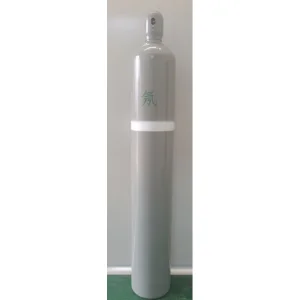
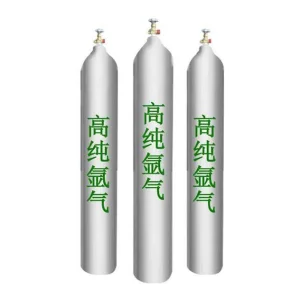
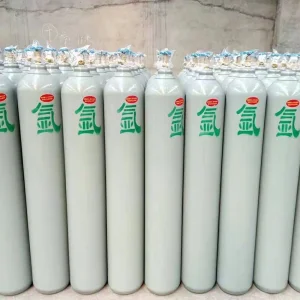
Seamless carbon steel or manganese steel gas cylinders (DOT-3AA or ISO 9809-1 standards) pressurized to 13.7 MPa (137 bar) at 20°C. Ideal for pilot R&D lines, laboratory texturing, and moderate-consumption facilities.
Interconnected manifolded cylinder packs (MCPs) engineered for continuous gas delivery without interruption during cylinder swap-outs. Features centralized purge valves, dual burst disks, and protective external roll cages.
Large-capacity intermediate bulk gas containers built to ASME and DOT-500 standards. Equipped with liquid and vapor extraction dip tubes, pressure-relief safety devices, and heavy-duty flange protectors for automated fab bulk gas pads.
For mega-scale fabs and national distributors, our 20-foot and 40-foot multi-element gas containers (MEGCs) provide bulk transfer capabilities exceeding 12 to 18 metric tons per shipment under IMDG Class 2.2 dangerous goods compliance.
From reactive ion etching (RIE) in sub-micron semiconductor fabs to deep-space simulation chambers, discover where ultra-pure Halocarbon-14 drives precision outcomes.
In inductively coupled plasma (ICP-RIE) and capacitively coupled plasma (CCP) reactors, CF4 is blended with Oxygen (O2) or Argon (Ar). Under glow discharge, F* radicals selectively volatilize dielectric thin films into volatile SiF4 gas.
Following chemical vapor deposition (CVD) cycles of silane-based films, interior quartz chambers and showerheads suffer heavy polysilicon buildup. CF4 plasma cycles strip residues into gaseous byproducts without chamber dismounting.
In multi-stage cascade refrigeration compressors, R-14 operates as the low-stage evaporating fluid. Reaching evaporating thresholds down to -130°C, it cools biomedical storage, LNG pre-chilling, and cryogenic material test rigs.
Yanxatech System Industries Limited eliminates border-clearance roadblocks with verified international accreditations, localized multi-lingual documentation, and strict maritime Hazmat protocol execution.
Every shipment of Freon 14 complies fully with destination import laws: EU REACH registration dossier, US EPA Toxic Substances Control Act (TSCA) inventory listing, and Korean K-REACH electronic notification.
Classified under UN 1982, Carbon Tetrafluoride is a compressed, non-flammable, non-toxic gas. YANXA enforces strict IMDG (maritime) and ICAO/IATA (airfreight) shipping requirements.
Every single dispatch lot is accompanied by transparent, certifiable documentation issued by accredited testing centers and independent inspection agencies (SGS / Bureau Veritas available on request).
Analyzing key structural shifts shaping the production, plasma consumption, environmental abatement, and reclamation of electronic fluorinated compounds.
The global demand for high-purity Carbon Tetrafluoride continues to expand alongside the construction of mega-scale wafer fabs dedicated to High-Bandwidth Memory (HBM), 3D NAND flash scaling past 300 vertical layers, and leading-edge logic below 3nm. Because 3D structures require ultra-high aspect ratio (HAR) contact hole etching, precise control over the polymerizing ratio of CF4 to additive oxidizers is critical. Even minor variations in halocarbon cross-contamination (such as trace C2F6 or CHF3 above 1 ppm) alter the polymer deposition rate, leading to micro-masking defects or etch stops that destroy wafer yields.
Concurrently, the global microelectronics sector is confronting strict greenhouse gas reduction targets. While CF4 possesses a high Global Warming Potential (GWP of 7,380 over a 100-year horizon) and an atmospheric lifetime exceeding 50,000 years, manufacturers are not abandoning CF4; instead, they are pairing ultra-pure supply with advanced Point-of-Use (POU) thermal and catalytic plasma abatement scrubbers. These abatement systems decompose unreacted exhaust CF4 into harmless water-soluble fluorides (HF) that are precipitated as calcium fluoride (CaF2) and recycled back into the industrial fluorite chemical loop. YANXA assists global partners in designing zero-leak gas delivery loops that optimize consumption efficiency and minimize environmental releases.
Direct technical answers addressing purity verification, valve compatibility, packaging lead times, and dangerous goods transport compliance.
Every production batch is tested via Gas Chromatography with Pulsed Discharge Helium Ionization Detectors (GC-PDHID) and Dielectric Barrier Discharge Detectors (GC-DID) to quantify trace permanent gases (O2, N2, CO, CO2) down to 10 ppb. Moisture is determined by cavity ring-down spectroscopy (CRDS), and trace metals are analyzed using Inductively Coupled Plasma Mass Spectrometry (ICP-MS).
We configure cylinder heads to match your facility's gas delivery cabinet: CGA 580 and CGA 320 for North American buyers; DIN 477 No. 6 (or No. 10) for European destinations; JIS B 8246 for Japanese and Korean equipment; and ultra-high-purity DISS 638 connections equipped with PCTFE or polyimide valve seats for semiconductor cleanroom operations.
We enforce dedicated gas cylinder fleet management. Cylinders dedicated to 5N and 5.5N Freon 14 are never rotated into industrial or alternative halocarbon services. Each cylinder retains a digital barcode tracking its evacuation history, internal surface inspection, valve rebuilding cycles, and previous batch purity metrics.
Standard cylinder packages (40L/47L/50L) typically ship within 14 to 21 working days from order confirmation, allowing time for batch sampling, GC verification, and DG maritime declaration approval. Custom valve fittings or ISO tube trailer assignments require approximately 3 to 4 weeks depending on port routing.
Yes. YANXA delivers complete DG documentation sets for every shipment: Dangerous Goods Declarations (DGD), multimodal dangerous goods forms, packing certificates, GHS-compliant multilingual Safety Data Sheets (SDS), commercial invoices, packing lists, and certified Certificates of Analysis (COA).
Because CF4 is an inherently non-reactive, stable compound, it possesses an indefinite chemical shelf life when stored in clean, passivated steel cylinders. We recommend storage in a dry, well-ventilated location below 50°C (122°F), protected from direct sunlight and corrosive environments, with valve caps secured until connection.
Complementary electronic materials, functionalized liquid polymers, and precision industrial chemicals available for consolidated export shipments.
Connect directly with our chemical engineering and export sales teams. Receive batch-specific COAs, quotation matrixes, cylinder packaging advice, and comprehensive IMDG shipping schedules.