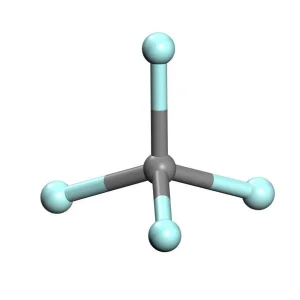
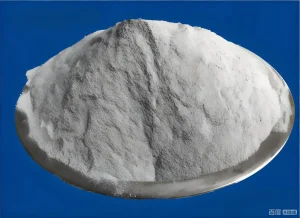
Alongside our primary calcined mineral processing lines, YANXA facilitates integrated procurement workflows across functional additives, liquid elastomers, spherical metal metallurgy, and high-purity cylinder chemicals.
Magnesium oxide (CAS No. 1309-48-4)—commonly designated magnesia or calcined magnesite—represents one of the most chemically versatile alkaline earth mineral oxides in global industry. Sourcing bulk MgO requires an engineering-level understanding of thermal calcination thresholds, crystal morphology, and reactivity metrics.
Enterprise buyers often mistakenly treat magnesium oxide powder as a uniform commodity. In practical operations, the calcination profile—ranging from Light Burned/Caustic Calcined Magnesia (CCM, 700°C–1000°C) to Dead Burned Magnesia (DBM, 1500°C–2000°C) and Fused Magnesia (FM, >2800°C)—dictates specific surface area (BET), citric acid reactivity, and lattice dissolution rates. Mismatched reactivity in hydrometallurgy, flue gas desulfurization, or polymer compounding leads to massive batch failure and equipment foul.
| Magnesia Grade | Calcination Temp | MgO Assay (%) | Specific Surface Area (BET) | Citric Acid Reactivity | Primary Industrial Sector |
|---|---|---|---|---|---|
| Caustic Calcined (CCM) | 700°C – 1000°C | 80.0% – 94.0% | 15 – 60 m²/g | 15 – 60 seconds | Wastewater, Hydrometallurgy, Flue Gas, Animal Nutrition |
| Dead Burned (DBM) | 1500°C – 2000°C | 90.0% – 97.5% | < 1 m²/g | Virtually unreactive (> 1200s) | Refractory Bricks, Tundish Coatings, EAF Slag Formers |
| Fused Magnesia (FM) | > 2800°C (Arc Furnace) | 96.0% – 98.5% | Near zero (porosity < 2%) | Inert crystal periclase | Tubular Heating Elements, Ultra-high Duty Crucibles |
| Synthetic Technical (Nano/Fine) | Precipitated / Controlled | 98.5% – 99.8% | 80 – 160 m²/g | Ultra-fast (< 15 seconds) | Polymer Flame Retardants, Specialty Rubbers, Silicon Steel |
Magnesium oxide operates as a critical chemical intermediate, pH regulator, and thermal barrier across five key macroeconomic sectors. Our supply is engineered to exact line requirements.
Caustic calcined MgO is the industry benchmark precipitant for recovering nickel, cobalt, and rare earths from high-pressure acid leach (HPAL) streams. Offering precise pH buffering (controlled at ~7.2 to 8.2), MgO prevents excessive co-precipitation of manganese and iron, ensuring higher cathode cake grades than caustic soda or quicklime, while generating low-volume, free-filtering gypsum-free cakes.
Thermal power utilities and smelting operations deploy magnesium hydroxide/oxide slurry systems for ultra-low SOx mitigation. A single ton of MgO neutralizes approximately 1.58 tons of SO2 with exceptional reaction kinetics. Unlike calcium hydroxide, magnesium-based scrubbing produces highly soluble magnesium sulfite/sulfate, drastically reducing scrubber scaling and gypsum sludge disposal liabilities.
In high-performance ruminant nutrition, feed-grade calcined magnesite (typically 85% to 92% MgO) serves as a potent ruminal acid buffer to counter Subacute Ruminant Acidosis (SARA) during high-starch grain rations. Its high elemental magnesium bioavailability (up to 75% ruminal solubility at pH 5.5) completely halts hypomagnesemic grass tetany while optimizing butterfat output in lactating dairy cows.
Ultra-fine precipitated magnesium oxide functions as a premier smoke suppressant, halogen acid acceptor, and thermal conductivity booster in crosslinked polyethylene (XLPE), EVA, and technical fluoroelastomer/neoprene compounds. In polychloroprene (CR) and chlorosulfonated polyethylene (CSM), high-surface-area MgO acts as a scorch retarder and vulcanization activator without vulcanizate discolouration.
Dead burned magnesia (DBM) and fused periclase (FM) withstand working slag temperatures up to 2800°C in Basic Oxygen Furnaces (BOF) and Electric Arc Furnaces (EAF). Injected as dolomitic or high-purity MgO calcines into liquid steel baths, it saturates molten slags, preventing the chemical dissolution and scouring of costly magnesia-carbon brick refractory linings.
Global MgO spot and contract rates fluctuate based on raw natural magnesite extraction quotas, rotary kiln energy dynamics (natural gas/coke), localized power rationing, and international bulk ocean freight. Below is our baseline volumetric indexing matrix.
| Commercial Grade Specification | Assay (MgO %) | Granulometry / Mesh | Standard Packaging | Indicative Price Range (FOB / MT) | Order Volume Tiers |
|---|---|---|---|---|---|
| Agricultural Feed Grade CCM | 85.0% Min | 100–200 Mesh Powder | 1.0 MT Jumbo Bags w/ Liner | $145.00 – $195.00 | MOQ: 20 MT (1 FCL) |
| Hydrometallurgy Precipitant Grade | 90.0% Min | 200–325 Mesh Powder | 1.2 MT UN-certified Poly Bags | $220.00 – $280.00 | 50 MT – 500 MT |
| Technical/Industrial High Reactivity | 93.0% – 95.0% | 325 Mesh (D90 < 45µm) | 25 kg Valve Bags on Pallets | $310.00 – $410.00 | 20 MT – 100 MT |
| Refractory Grade DBM (Dead Burned) | 90.0% – 97.0% | 0–1mm, 1–3mm, 3–5mm, Powder | 1.0 MT / 1.5 MT Bulk Bags | $380.00 – $580.00 | 100 MT – 5,000 MT |
| Electrically Fused Magnesia (FM) | 97.0% – 98.5% | 0–10mm Granules / Milled | Steel Drums or 1.0 MT Bags | $750.00 – $1,250.00 | Contractual Scale |
| Precipitated High-Purity Synthetic | 99.0% – 99.5% | D50: 1.5 – 3.0 µm (Fine) | 20 kg Multiwall Paper / Foil | $1,850.00 – $3,200.00 | LCL to FCL Batches |
*Disclaimer: Pricelist indices are representative of high-volume industrial shipments. Actual quotation depends on particle size distribution (PSD), citric acid reactivity thresholds, heavy metal purity limits (Pb, As, Cd), and destination CIF incoterms.
International trade in bulk chemical minerals demands rigorous traceability, batch homogeneity, and uncompromising compliance with destination-market chemical registries.
Every industrial production run undergoes automated X-ray Fluorescence (XRF) spectroscopy to quantify major components (MgO, CaO, SiO2, Fe2O3, Al2O3) and determine trace contaminants. X-ray Diffraction (XRD) certifies precise periclase crystalline phase development, confirming that residual uncalcined magnesite (MgCO3) is kept strictly below your technical LOI specifications.
Milled powder distributions are measured utilizing wet and dry Malvern Mastersizer laser diffraction analyzers. Detailed reporting provides exact D10, D50, and D90 percentiles alongside sieve residue percentages (e.g., +325 mesh residue < 0.2%), preventing aggregate agglomeration in downstream polymer extrusion or pneumatic conveying bottlenecks.
Our magnesium oxide exports are fully supported by EU REACH Lead Registrant dossiers, UK REACH notifications, and strict heavy metal compliance (Pb < 10 ppm, As < 3 ppm, Cd < 1 ppm, Hg < 0.1 ppm). While natural calcined MgO is non-hazardous under UN Dangerous Goods regulations, custom desiccant-lined sea-bulk packaging prevents premature hydration to Mg(OH)2 during long ocean transits.
The future of magnesium oxide synthesis intersects directly with industrial decarbonization, circular economy slag utilization, and nano-engineered composite fillers.
Conventional calcination of magnesite (MgCO3 → MgO + CO2) releases substantial process carbon. The industry is currently transitioning toward electrified fluid-bed reactors and oxy-fuel rotary kilns. These next-generation systems yield concentrated, capture-ready CO2 off-gas streams, substantially reducing the carbon footprint of structural reactive magnesia binders.
Unlike Portland cement, which generates significant lifecycle emissions, reactive caustic calcined MgO binders harden via rapid atmospheric CO2 absorption, producing stable hydrated magnesium carbonates (lansfordite, nesquehonite, hydromagnesite). These cements demonstrate compressive strengths up to 65 MPa while acting as verifiable net-negative carbon sinks in precast construction.
Demand for sub-micron and nano-scale MgO is accelerating across electric vehicle (EV) battery packs and 5G high-frequency printed circuit boards. Surface grafting with functional silanes or titanate coupling agents optimizes wettability within epoxy resins, achieving exceptional isotropic thermal conductivity (> 2.5 W/m·K) while maintaining electrical breakdown resistances above 20 kV/mm.
Critical technical considerations answered by our chemical engineers for industrial procurement and process directors.
YANXA's manufacturing supply chain provides certified export deliveries across specialty acetate salts, surface-modified zinc powders, reactive polymers, and functional telechelic resins.