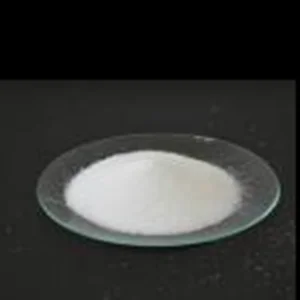
Direct factory supply with certified batch tracking, comprehensive COA, and global dangerous/non-dangerous cargo clearance protocols.




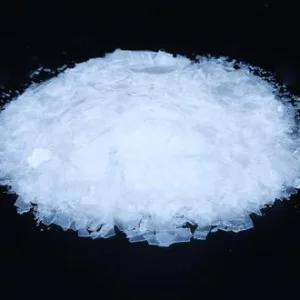

Polyethylene Glycol 4000 (CAS No. 25322-68-3) represents a high-molecular-weight condensation polymer of ethylene oxide and water, distinguished by its white, wax-like solid flake or spherical powder morphology. At an average molecular weight distribution between 3,700 and 4,400 Daltons, PEG-4000 strikes an optimal balance between structural rigidity and high water solubility. Unlike lower-weight oligomers (such as PEG 200–600, which remain liquid at ambient temperatures), the 4000 variant exhibits notable physical plasticity, high thermal degradation resistance, non-volatility, and physiological neutrality.
| Analytical Parameter | USP/EP Pharmacopeia Grade | Technical / Industrial Grade | Analytical Protocol |
|---|---|---|---|
| Appearance | White flakes or micro-prills | White to light off-white flakes | Visual Inspection |
| Average Molecular Weight (g/mol) | 3,700 – 4,400 | 3,600 – 4,500 | Hydroxyl Value Calculation |
| Hydroxyl Value (mg KOH/g) | 25.0 – 30.0 | 24.0 – 32.0 | Potentiometric Titration |
| Congealing / Freezing Point | 53.0°C – 59.0°C | 52.0°C – 58.0°C | Capillary Freezing Assay |
| Kinematic Viscosity (99°C, mm²/s) | 110 – 158 | 105 – 165 | Ubbelohde Viscometer |
| Residual Ethylene Oxide | ≤ 1 ppm | ≤ 10 ppm | Headspace Gas Chromatography (GC-MS) |
| Dioxane Residue | ≤ 5 ppm | ≤ 20 ppm | Static Headspace GC |
| Heavy Metals (as Pb) | ≤ 5 ppm | ≤ 20 ppm | ICP-OES / AAS |
Engineered for precise performance matrices across pharmaceutical, metallurgical, rubber vulcanization, and advanced ceramic fabrication.
Widely utilized as a non-ionic water-soluble binder, plasticizer, and matrix carrier for solid dosage forms.
High-efficiency organic temporary binder for precision technical ceramics and powder metallurgy sintering processes.
Auxiliary plasticizer, mold-release promoter, and internal lubricant for advanced synthetic elastomers and paper coatings.
Mitigating commercial disruptions through structured chemical logistics, strategic hedging of ethylene oxide chains, and end-to-end audits.
PEG synthesis relies directly on the upstream catalytic oxidation of ethylene (C2H4) to ethylene oxide (EO). Procurement teams must anticipate upstream crude fluctuations and petrochemical crack spreads. We offer forward index-linked pricing structures to insulate long-term industrial contracts from volatility.
Because of its polyether structure, PEG 4000 exhibits hygroscopic properties under conditions exceeding 60% relative humidity. Our standard bulk export packaging features 25kg multi-wall kraft paper bags with co-extruded high-density polyethylene (HDPE) vapor-barrier liners or 1000kg nitrogen-purged big bags.
Full documentation suites are supplied to guarantee cross-border customs and health agency clearance. Every shipment includes certified Batch COA, multi-language SDS conforming to GHS/CLP Rev.9, REACH full registration dossier data, and non-animal/BSE/TSE declaration letters for life-science applications.
Pioneering green alkoxylation catalysts, tight dispersity controls, and ultra-low aldehyde impurity profiles for advanced manufacturing.
Transitioning from traditional base-catalyzed alkoxylation to Double Metal Cyanide (DMC) complex catalysts, narrowing the polydispersity index (PDI = Mw/Mn ≤ 1.05) to ensure hyper-precise thermal crystallization curves.
Integrating post-reactor thin-film vacuum stripping modules to strip free aldehydes, 1,4-dioxane, and residual ethylene oxide below 0.5 ppm, satisfying stringent FDA USP-NF monograph tolerances.
Validating bio-ethanol dehydration pathways to generate bio-ethylene oxide, enabling production of 100% bio-based Polyethylene Glycol 4000 to substantially slash carbon emissions in multinational supply chains.
Upgrading standard drum flakers to nitrogen-shielded atomized prilling towers, yielding perfectly spherical free-flowing PEG-4000 micro-spheres that eliminate compaction and dissolution clumping.
Delivering unmatched technical authority, third-party laboratory verification, and localized fulfillment solutions.
Every industrial lot is released only after automated multi-point parameter confirmation. Our ISO/IEC 17025 accredited quality labs execute automated Karl Fischer moisture titrations, capillary melting point verification, and high-performance gas chromatography to ensure specification fidelity.
We provide enterprise procurement partners direct access to chemical synthesis engineers. Whether adjusting dissolution kinetics in pharmaceutical coatings or eliminating foaming dynamics in technical wastewater emulsions, our team provides custom formulation adjustments.
To insulate high-volume processing lines from maritime congestion and canal bottlenecks, we operate regional bonded warehousing nodes across Europe, Southeast Asia, and North America, maintaining 60-day safety stock buffers for contract supply partners.
Detailed answers regarding synthesis parameters, material stability, regulatory compliances, and bulk storage requirements.
While both are solid flakes/powders, PEG 4000 features a lower melting point (53–59°C) and lower melt viscosity compared to PEG 6000 (55–63°C). In pharmaceutical tablet compression and ceramic pressing, PEG 4000 provides faster dissolution and slightly higher initial plastic flow, whereas PEG 6000 offers higher mechanical green hardness and slower release rates.
Polyethylene Glycol 4000 must be stored in cool, dry conditions (< 30°C and < 60% relative humidity) away from direct sunlight and radiant heat sources. Because it exhibits slight hygroscopicity, pallets should not be double-stacked in high-temperature zones to prevent compression agglomeration of the bottom bags.
Yes. Our pharmaceutical-grade PEG 4000 is manufactured in cGMP-audited clean facilities and strictly aligns with current USP-NF and Ph. Eur. monographs. Full multi-compendial compliance certificates, heavy metal test reports, and residual solvent clearances are provided per batch.
No. Under the UN Model Regulations for Dangerous Goods, IMDG Code, and IATA DGR, PEG 4000 is classified as non-hazardous, non-combustible cargo. It requires no special dangerous goods ocean declaration, streamlining export clearance and lowering maritime insurance freight costs.
Yes. In addition to our standard solid white flake grades, we offer custom cryogenic pin-milling and classification services, allowing us to supply 60-mesh, 80-mesh, and 120-mesh super-fine powder forms with added anti-caking silica upon industrial request.
We primarily determine molecular weight through titration of the terminal hydroxyl value according to phthalic anhydride or acetic anhydride esterification methods. Alternatively, Size Exclusion Chromatography (SEC / GPC) is utilized to verify precise polydispersity indices (PDI).
Expanding technological capabilities across energetic formulations, specialty elastomers, rare atmospheric gases, and inorganic salts.