Explore our core industrial grade polymer bases, inorganic crystalline salts, and specialty polyethers with comprehensive batch traceability and standardized certificates of analysis.
A rigorous examination of molecular weight distribution, kinetic ring-opening polymerization, and solid-state thermodynamic behavior for multi-sector industrial procurement.
Polyethylene Glycol 6000 (CAS No. 25322-68-3) manufactured under automated double-metal cyanide (DMC) or controlled alkaline catalysis delivers an exceptionally tight molecular weight band centered between 5,400 and 6,600 g/mol. This eliminates low-molecular fraction leaching and maintains uniform melt kinetics across processing cycles.
Strict batch degasification and continuous multi-stage wiped-film molecular distillation eliminate trace monomeric species. Stringent gas chromatography-mass spectrometry (GC-MS) protocols verify levels far below international pharmacopeial limits.
PEG 6000 exhibits zero flash-flammability in solid flake/powder form and exceptional compatibility with polar organic matrices. Readily soluble in water, ethanol, and dichloromethane, while virtually insoluble in aliphatic hydrocarbons, diethyl ether, and mineral oils.
Standardized parameters compliant with United States Pharmacopeia (USP43-NF38), European Pharmacopoeia (Ph. Eur. 10.0), and Chinese Pharmacopoeia (ChP 2025).
| Analytical Parameter | USP / NF Specification | Ph. Eur. / BP Standard | Industrial Grade Tolerance | Testing Methodology |
|---|---|---|---|---|
| Mean Molecular Weight | 5,400 – 6,600 g/mol | 5,400 – 6,600 g/mol | 5,200 – 6,800 g/mol | Gel Permeation Chromatography (GPC) |
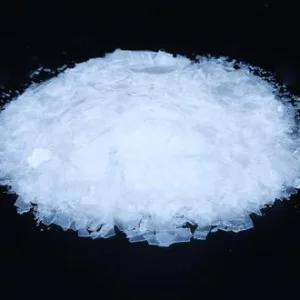
| Physical Appearance | White flake, powder or pastille | White/almost white waxy solid | White to creamy white flakes | Visual Inspection under D65 Light |
| Hydroxyl Value | 16.0 – 22.0 mg KOH/g | 16.0 – 22.0 mg KOH/g | 15.0 – 24.0 mg KOH/g | Potentiometric Titration |
| Dynamic Viscosity (20°C, 50% aq) | 210 – 280 mPa·s | 200 – 300 mPa·s | 190 – 320 mPa·s | Capillary / Rotational Rheometry |
| Freezing / Melting Point | 56.0 – 63.0 °C | 55.0 – 62.0 °C | 54.0 – 63.0 °C | Differential Scanning Calorimetry (DSC) |
| Residual Ethylene Oxide | ≤ 1.0 μg/g (≤ 1 ppm) | ≤ 1.0 ppm | ≤ 5.0 ppm | Headspace Gas Chromatography (HS-GC-FID) |
| Residual 1,4-Dioxane | ≤ 10.0 μg/g | ≤ 10.0 ppm | ≤ 20.0 ppm | HS-GC-MS Detection |
| Water Content (Karl Fischer) | ≤ 1.0% | ≤ 1.0% | ≤ 1.5% | Coulometric Karl Fischer Titration |
How wholesale polyethylene glycol PEG 6000 serves as an indispensable processing aid, excipient, and functional modifier in contemporary multinational manufacturing.
In modern active pharmaceutical ingredient (API) formulations, poor aqueous solubility accounts for over 40% of newly discovered chemical entities. PEG 6000 functions as a hydrophilic polymeric matrix in hot-melt extrusion (HME) and solvent evaporation, creating amorphous solid dispersions that elevate dissolution rates and oral bioavailability by up to 300%.
Within semiconductor packaging and printed circuit board (PCB) microvia filling, high-purity PEG 6000 acts as a critical suppressor additive in acid copper electroplating baths. It selectively adsorbs at via openings through chloride ion bridging, inhibiting copper deposition at planar regions while promoting void-free, bottom-up superfilling.
In the fabrication of ceramic capacitors, zirconia dental blocks, and alumina substrates, PEG 6000 serves as a temporary organic binder and plasticizer. It imparts exceptional green strength to spray-dried granules, preventing delamination during dry pressing and decomposing cleanly at 350°C without leaving residual carbon contamination.
As an internal lubricant and mold release agent, PEG 6000 prevents scorch and promotes vulcanization homogeneity in ethylene propylene diene monomer (EPDM) and nitrile butadiene rubber (NBR) compounding. Its high thermal decomposition point guarantees clean mould surfaces and zero sticky surface bloom.
Its complete non-ionic nature and compatibility with anionic and cationic surfactants allow PEG 6000 to act as a crystal-free bodying agent and humectant in stick deodorants, facial cleansers, and hair grooming waxes, maintaining stability through extreme freeze-thaw transportation cycles.
Under next-generation solid-state battery initiatives, high-purity PEG 6000 derivatives are deployed in polyethylene oxide (PEO) composite solid electrolytes. The ether oxygen atoms (–C–C–O–) effectively coordinate with lithium cations (Li+), enabling safe ionic conductivities up to 10⁻⁴ S/cm at elevated working temperatures.
Ensuring frictionless clearance and end-user safety under rigorous regulatory regimes including EU REACH, US FDA, and international Dangerous Goods (DG) transit protocols.
Sourcing Polyethylene Glycol 6000 requires unwavering audit compliance. Our production facilities maintain active ISO 9001:2015 quality systems, ISO 14001:2015 environmental protocols, and GMP certifications for pharmaceutical excipient grades. Full substance dossiers support EU REACH Full Registration (01-2119958838-16-XXXX), guaranteeing legitimate, tariff-compliant supply into the European Economic Area.
For North American clients, our PEG 6000 complies strictly with FDA 21 CFR §172.820 (direct food additive) and §178.3750 (indirect contact food packaging polymers). Comprehensive Drug Master Files (DMF Type IV) and CEP dossiers are available to fast-track your ANDA and NDA drug formulation approvals.
Polyethylene Glycol is inherently hygroscopic. Exposure to ambient moisture during maritime shipping leads to caking, hydrolysis, and particulate agglomeration. To safeguard material integrity, our export shipments feature multi-ply moisture-barrier packaging engineered for extreme ocean conditions.
Strategic technological initiatives driving transition toward zero-carbon footprint manufacturing, bio-based precursors, and high-purity mono-disperse architectures.
Transitioning from petroleum-derived ethylene to sugarcane bio-ethanol feedstock. By catalytic dehydration of bio-ethanol to bio-ethylene and subsequent epoxidation, our next-generation green PEG 6000 achieves up to 98% renewable carbon content (ASTM D6866), allowing global brands to meet Scope 3 emissions commitments without altering formulation viscosities.
Deploying specialized heterogeneous metal-organic frameworks (MOFs) to achieve near-monodisperse molecular weight distribution (PDI < 1.03). This breakthrough minimizes crystalline defect planes during hot-melt coating, boosting mechanical flex-life in drug delivery coatings and reducing porosity in green-state technical ceramics.
Pioneering the co-polymerization of captured industrial carbon dioxide with ethylene oxide to formulate poly(ether carbonate) polymers. This technology locks 20–30% by weight of CO₂ into the polyether backbone, drastically reducing cradle-to-gate carbon intensity while elevating flame retardance in electronic applications.
In-depth answers curated by chemical engineers to resolve operational, quality assurance, and commercial inquiries from industrial buyers.
The core distinctions lie in regulatory certification, volatile impurity thresholds, and manufacturing environment controls. Pharma Grade PEG 6000 is produced in dedicated cleanroom suites adhering to cGMP (ICH Q7) guidelines. It complies with strict USP/EP limits for residual ethylene oxide (≤ 1 ppm), 1,4-dioxane (≤ 10 ppm), heavy metal elemental impurities (ICH Q3D), and microbial limits (< 100 CFU/g). Industrial Technical Grade is optimized for cost-effective binding, lubrication, and plating, operating under slightly broader hydroxyl value tolerances and standard packaging.
PEG 6000 should be stored in original, unopened hermetically sealed packaging in a cool, dry, well-ventilated warehouse below 30°C (86°F) with relative humidity strictly maintained below 60%. Because polyethers are subject to auto-oxidation in the presence of atmospheric oxygen and trace moisture, prolonged exposure above 50°C can lead to chain scission, resulting in lowered freezing points and increased acidity. Nitrogen padding is recommended during bulk transfer or when storage exceeds 24 months.
Yes. In addition to our standard free-flowing flakes (thickness 0.5–1.2 mm), our facilities operate cryogenic pin-mill micronization systems. We supply calibrated PEG 6000 powder grades ranging from D90 < 150 μm (100 mesh) to fine direct-compression powders with D90 < 75 μm (200 mesh). Controlled particle size distribution eliminates hot spots and guarantees rapid dissolution when compounding with shear-sensitive compounds.
Every commercial shipment includes a comprehensive document portfolio: Batch Certificate of Analysis (COA) specifying tested GPC molecular weights, hydroxyl value, and moisture; 16-section Globally Harmonized System (GHS) Safety Data Sheet (SDS); Certificate of Origin (COO / Form E / Form R); Packing List; Commercial Invoice; and clean On-Board Bill of Lading. For pharmaceutical buyers, BSE/TSE-free statements, allergen certificates, and Non-GMO declarations are systematically provided.
PEG 6000 exhibits an exceptionally clean thermal debinding profile. In thermogravimetric analysis (TGA), thermal decomposition commences at 280°C in air and is completed below 390°C with zero ash content (≤ 0.05%). The degradation products are exclusively volatile steam and carbon dioxide, preventing carbon inclusions, micro-cracks, and internal blistering in high-density alumina, silicon nitride, and piezoelectric transducers.
Complementary specialty materials supplied under rigorous technical specifications for advanced aerospace, electronics, and synthetic rubber compounding.