Direct factory access to our comprehensive portfolio of specialty gas formulations, inorganic precursors, and engineered polymers for global enterprise fabs.
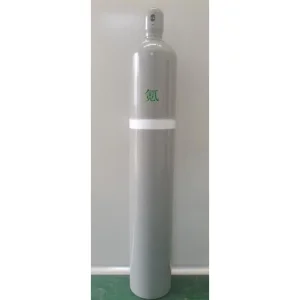
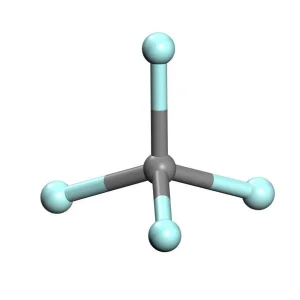
Refrigerant 14 (R-14), chemically designated as Carbon Tetrafluoride (CF₄, CAS: 75-73-0, UN 1982), represents the most thermodynamically stable perfluorocarbon within industrial fluorochemistry. Characterized by exceptional bond dissociation energies (C-F bond energy of approximately 515 kJ/mol), R-14 serves as a non-flammable, non-corrosive, highly electronegative compressed gas vital to both cryogenic thermal physics and sub-micron semiconductor plasma chemistry.
At Yanxatech System Industries Limited (YANXA), our supply infrastructure stratifies R 14 into defined technical grades ranging from Industrial Refrigeration Grade (≥99.9%, 3N), Standard Electronic Grade (≥99.995%, 4.5N), to Ultra-High Purity (UHP) VLSI/ULSI Semiconductor Grade (≥99.999% to 99.9999%, 5N–6N). In microelectronic fabrication, even sub-ppm levels of volatile contaminants like moisture (H₂O), oxygen (O₂), carbon monoxide (CO), carbon dioxide (CO₂), and light fluorinated alkanes (C₂F₆, CHF₃) jeopardize critical dielectric layer integrity, cause micro-masking defects, and induce undesirable chamber corrosion.
| Analytical Parameter | Industrial Grade (3N) | Electronic Grade (4.5N) | VLSI/ULSI Fab Grade (5N5 - 6N) | Detection Methodology |
|---|---|---|---|---|
| Assay Purity (CF₄) | ≥ 99.90% | ≥ 99.995% | ≥ 99.9995% | Gas Chromatography (GC-DID) |
| Moisture (H₂O) | ≤ 15.0 ppmv | ≤ 2.0 ppmv | ≤ 0.5 ppmv | Cavity Ring-Down Spectroscopy (CRDS) |
| Oxygen + Argon (O₂ + Ar) | ≤ 50.0 ppmv | ≤ 5.0 ppmv | ≤ 1.0 ppmv | Trace Gas Chromatography |
| Nitrogen (N₂) | ≤ 100.0 ppmv | ≤ 15.0 ppmv | ≤ 2.0 ppmv | Thermal Conductivity Detection (TCD) |
| Carbon Monoxide (CO) | ≤ 10.0 ppmv | ≤ 1.0 ppmv | ≤ 0.1 ppmv | Fourier Transform Infrared (FTIR) |
| Carbon Dioxide (CO₂) | ≤ 15.0 ppmv | ≤ 2.0 ppmv | ≤ 0.2 ppmv | FTIR / Non-Dispersive Infrared (NDIR) |
| Halocarbons (SF₆, C₂F₆, CHF₃) | ≤ 80.0 ppmv | ≤ 10.0 ppmv | ≤ 1.0 ppmv | GC-Mass Spectrometry (GC-MS) |
| Acidity (as HF) | ≤ 1.0 ppmw | ≤ 0.1 ppmw | ≤ 0.05 ppmw | Ion Chromatography (IC) |
Commercial pricing for Carbon Tetrafluoride is dictated by multi-variable economic inputs: upstream acid-grade fluorspar ($CaF_2$) costs, electrochemical fluorination energy expenditures, multi-stage cryogenic fractioning overheads, container testing protocols, and dangerous goods freight. Below is our baseline spot and contractual volume pricing index for international enterprise procurement.
| Purity Grade | Packaging Configuration | Net Filling Weight | Order Volume Tier | FOB China Benchmark (USD/kg) | Packaging Deposit & Valve Specs |
|---|---|---|---|---|---|
| Industrial R 14 (3N / 99.9%) | 40L / 47L Steel Cylinder | 25 kg – 30 kg | 100 – 500 kg | $14.50 – $18.00 / kg | CGA 580 / DIN 477 No. 6 (Steel) |
| Industrial R 14 (3N / 99.9%) | ISO Tank Container | 10 – 14 Metric Tons | Full Container Load | $11.80 – $13.50 / kg | ISO Tank Lease / Purchase Options |
| Electronic R 14 (4.5N / 99.995%) | 47L / 50L Seamless Steel | 30 kg – 32 kg | 500 – 2,000 kg | $22.00 – $27.50 / kg | DISS 638 / CGA 580 (Stainless Valve) |
| Electronic R 14 (5N / 99.999%) | 47L Aluminum / Cr-Mo | 30 kg | 1,000 – 5,000 kg | $32.00 – $38.50 / kg | DISS 638, Electropolished Ra < 0.25µm |
| UHP Fab Grade (5.5N–6N / 99.9995%+) | 47L Treated Alloy Cylinder | 30 kg | Annual Long-Term Blanket | $45.00 – $58.00 / kg | Ultra-clean DISS 638, He-Leak Tested |
Due to volatility in energy tariffs and basic anhydrous hydrogen fluoride (AHF) pricing, tier-one semiconductor fabs utilize quarterly indexed formulas pegged to raw fluorspar indices. YANXA delivers price-lock mechanisms for 6 to 12-month procurement cycles, absorbing mid-stream logistics volatility.
Gas cylinder fleet procurement accounts for up to 35% of total landed expenditure. We offer direct sale, rotation fleet lease, or customer-owned cylinder cross-filling under international DOT-3AA and ISO 9809 certifications, drastically mitigating recurring demurrage charges.
Shipping hazardous Class 2.2 non-flammable gases requires IMDG-compliant booking, maritime freight surcharges, and hazardous port handling fees. Consolidating full container loads (FCL, approx. 400 cylinders per 20GP) compresses logistical landed unit costs by up to 28% compared to LCL shipments.
China controls greater than 60% of the world's commercial acid-grade fluorite mining and upstream fluorine chemical processing capacity. YANXA's direct production integration translates raw mineral sovereignty into unwavering electronic gas supply chain resilience, insulating global buyers from transatlantic supply crunches.
From metallurgical fluorspar digestion to high-purity anhydrous hydrofluoric acid (AHF) synthesis and direct electrochemical fluorination, our unsegmented supply continuum mitigates raw material scarcity risk.
Purification is performed across 6-stage cryogenic distillation columns. Volatile non-condensables (N₂, O₂) and heavier chlorofluorocarbon residuals are stripped down to sub-ppb thresholds.
Every filling station is linked to continuous in-line GC-DID and CRDS analyzers. Lots are quarantined until comprehensive testing verifies that no cross-contamination occurred during cylinder manifold transfer.
With an annual Carbon Tetrafluoride capacity surpassing 3,500 metric tons, YANXA provides substantial unit cost advantages over localized Western regional distributors and intermediate blenders.
Carbon Tetrafluoride's dual chemical persona—inert non-toxic carrier gas under atmospheric ambient, yet a fiercely reactive fluorine radical source under high-density RF/microwave plasma—unlocks vital manufacturing processes across core tech sectors.
In sub-14nm advanced CMOS and 3D NAND memory production, CF₄ is energized in inductively coupled plasma (ICP) reactors to dissociate into $CF_3^+$ and atomic fluorine ($F^*$). It selectively etches silicon dioxide ($SiO_2$), silicon nitride ($Si_3N_4$), and refractory silicides ($WSi_x$), generating volatile $SiF_4$ byproduct that is extracted via high-vacuum turbo-pumps.
During chemical vapor deposition of silica and silicon-based dielectric layers, chamber sidewalls accrue heavy amorphous deposits. Thermally or microwave-activated CF₄/O₂ mixtures volatilize silicon oxides rapidly, restoring process cleanliness without exposing delicate wafer vacuum chambers to atmospheric ambient.
R-14 serves as a mission-critical component in binary ultra-low-temperature refrigerant blends (such as ASHRAE R-508B, consisting of 54% R-23 and 46% R-14). Applied in cascade refrigeration systems, it sustains operating temperatures between -80°C and -130°C for biological sample cryo-freezers, biomedical cold chains, and aerospace thermal-vacuum chambers.
Tier-one TOPCon and Heterojunction (HJT) solar cell manufacturers deploy CF₄ dry etching for edge isolation and anti-reflective silicon nitride thin-film structuring, achieving higher photoelectric conversion efficiencies than traditional wet chemical acid etching.
Under research and deployment as a replacement or dilution carrier for high-GWP Sulfur Hexafluoride (SF₆), CF₄ gas mixtures provide formidable dielectric breakdown strength and arc-quenching capabilities within gas-insulated switchgear (GIS) substations located in extreme arctic environments.
Due to its moderate molecular weight (88.00 g/mol), superior chemical inertness, high gas storage density, and absence of condensation within deep-space vacuum manifolds, carbon tetrafluoride is engineered as a clean micro-propellant for small-satellite orbital station-keeping attitude control systems.
Carbon Tetrafluoride is regulated internationally under UN 1982, Class 2.2 Non-Flammable Compressed Gases. Transporting high-pressure specialty cylinders demands absolute mechanical packaging integrity, verified hydrostatic inspection cycles, and seamless cross-border customs documentation.
Every shipment is packaged in newly manufactured or re-certified seamless steel cylinders conforming strictly to US DOT-3AA, ISO 9809-1 / 9809-2, or European TPED (Pi Mark) requirements. Working pressures are verified up to 150 bar / 200 bar, with test pressure safety factors exceeding 250 bar.
Each production lot ships with an unambiguous, traceable documentation dossier: Batch Certificate of Analysis (COA), 16-section GHS Safety Data Sheet (SDS), Technical Data Sheet (TDS), Commercial Invoice, Packing List, and certified dangerous cargo declaration (IMO DGD).
YANXA maintains regulatory readiness across target jurisdictions, including EU REACH compliance dossiers, US TSCA notifications, and support for importers subject to F-Gas quota reporting and Kigali Amendment greenhouse phase-down accounting frameworks.
The international fluorochemical industry stands at the nexus of semiconductor scaling and aggressive global climate targets. Carbon Tetrafluoride possesses an elevated Global Warming Potential (GWP ≈ 6,630) and an atmospheric lifetime exceeding 50,000 years, steering industry innovations across abatement and purification.
As foundry architectures migrate from FinFET to Gate-All-Around (GAA) nanosheet structures, permissible etch gas contamination thresholds have plummeted from ppm to sub-ppb regimes. The industry requires 99.9999% (6N) purity to eliminate metallic micro-particulates (Fe, Ni, Cr) and residual fluorinated polymers that cause lethal short circuits in ultra-fine device channels.
Global ESG reporting requires fab operators to eliminate PFC effluent. Leading manufacturers couple R 14 etching skids directly with high-temperature thermal/plasma combustors and wet scrubbers, decomposing unreacted CF₄ at temperatures above 1,300°C into benign water-soluble fluorides ($HF$) for on-site acid neutralization.
Given rising carbon border adjustment taxes and F-Gas quotas, progressive semiconductor hubs are piloting closed-loop cryo-condensation capture systems on tool exhaust streams. YANXA actively partners with technological consortia to provide toll-refining and purification protocols for captured, recycled raw fluorocarbon feedstocks.
Optimizing semiconductor plasma processes requires balancing selectivity, etch rate, global warming potential, and material compatibility. The following matrix illustrates where CF₄ remains indispensable versus alternatives like C₄F₈, NF₃, and SF₆.
| Gas Precursor | Primary Plasma Radical | Oxide-to-Silicon Selectivity | Polymerizing Tendency | Handling Toxicity | Typical Applications |
|---|---|---|---|---|---|
| Carbon Tetrafluoride (CF₄ / R 14) | $F^*$, $CF_3^+$ | Moderate (3:1 to 5:1) | Low | Non-toxic (Asphyxiant) | Isotropic & Anisotropic SiO₂/SiN Etch, Chamber Clean |
| Octafluorocyclobutane (C₄F₈) | $CF_2^*$ | Ultra-High (>20:1) | Very High (Passivation) | Non-toxic | Deep Reactive Ion Etching (Bosch Process), High Aspect Ratios |
| Nitrogen Trifluoride (NF₃) | Atomic $F^*$ | Poor (High silicon erosion) | Zero | Toxic (TLV 10 ppm) | High-throughput CVD Chamber Cleaning, LCD Plasma Cleans |
| Sulfur Hexafluoride (SF₆) | Atomic $F^*$ | Low | Zero | Non-toxic (High GWP) | Fast Isotropic Silicon Etch, MEMS release, Arc-quenching |
| Trifluoromethane (CHF₃ / R 23) | $CF_3^*$, $H^*$ | High (Selective to $Si_3N_4$) | Moderate | Non-toxic | Contact hole etching, Deep sub-micron passivation |
Direct insights answering the most critical inquiries submitted by international procurement officers, chemical plant engineers, and hazardous freight managers.
Complementary raw materials engineered for aerospace metallurgy, high-voltage equipment, and advanced polymer synthesis from YANXA's ISO 9001 certified facilities.

Our technical engineering team collaborates directly with cleanroom facility directors, gas system engineers, and strategic procurement officers to verify product specifications, execute blind sample trials, and construct robust, multi-year supply chains.