


Direct factory supply of high-purity barium, strontium compounds, and rare noble gases matching precise analytical thresholds for Victorian advanced electronics, optical glass, and synthesis lines.


Wholesale Strontium Acetate hemihydrate Manufacturer, Quotes

Wholesale High purity xenon & Ultra-pure xenon (Xe: 5N, 5.5N, 6N) Supplier, Suppliers
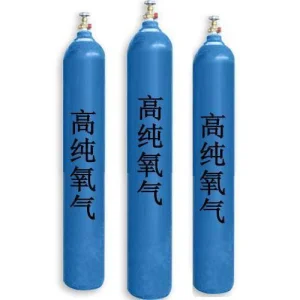
Wholesale Pure oxygen,High purity oxygen,Ultra-pure oxygen (O2) Supplier, Pricelist
Melbourne, standing as the industrial gateway of Victoria, is undergoing a profound structural evolution from conventional manufacturing toward precision chemical synthesis, energetic composites, advanced polymers, and clean energy storage.
Spanning Altona, Laverton North, and Brooklyn, this manufacturing nexus houses critical petrochemical facilities, surface treatment operations, and specialty compounding plants. Our inorganic salt supply addresses the rigorous purity demands required by continuous bath electrolysis, passivation treatments, and high-spec crosslinking.
Victoria's premier automotive and defense manufacturing base demands zero-failure chemical inputs. From high-grade lithium nitrate for advanced molten salts to specialized barium and strontium compounds used in precision pyrotechnics and aerospace primers, we provide documented compliance with AS/NZS specifications.
Partnering with cutting-edge university consortia, CSIRO laboratories, and private biotech incubators. The local requirement focuses on ultra-trace purity profiles (ICP-MS verified) where transition metal impurities must remain below sub-ppm levels for precision catalysis and electronic thin films.
Navigating global supply chain volatility demands a reliable partner capable of balancing high-volume inorganic synthesis with stringent quality and export protocols.
In modern industrial engineering, inorganic salts serve as the indispensable backbone for synthesis, electrochemistry, and functional material fabrication. Geopolitical dislocations, environmental plant curtailments, and freight disruptions have exposed the vulnerabilities of single-source procurement models. Yanxatech System Industries Limited (YANXA) addresses these macro disruptions through multi-facility manufacturing nodes, end-to-end quality validation, and direct shipping corridors into the Port of Melbourne.
Our macroscopic solution integrates raw material beneficiation, tightly controlled fractional crystallization, controlled precipitation, and automated gas-inert packaging. This closed-loop manufacturing prevents atmospheric moisture absorption and heavy-metal cross-contamination, ensuring that products arriving at Victorian storage facilities or manufacturing sites mirror the exact chemical properties verified at the plant gate.
| Material Category | Primary Industrial Functions | Key Performance Indicators | Melbourne Application Fields |
|---|---|---|---|
| Inorganic Nitrates (Li, Ba, Sr) | Oxidizing agents, thermal energy storage, glass clarification | Assay ≥ 99.0%, Cl ≤ 0.005%, Fe ≤ 0.001% | Molten salt batteries, defense pyrotechnics, structural ceramics |
| Inorganic Acetates (Ba, Sr) | Catalyst precursors, mordants, organic synthesis stabilizers | Water insolubles ≤ 0.01%, Heavy metals (as Pb) ≤ 5 ppm | Polymer polymerization, textile processing, analytical reagents |
| Phosphates (TCP / Super-fine) | Flow agents, anti-caking additives, calcium enrichment | FCC / E341 compliance, Sub-micron particle distributions | Food manufacturing, ceramic slurries, pharmaceutical excipients |
| Atomized Metal Powders | Solid-state propellants, conductive inks, thermal spray | Spherical morphology, Oxygen pick-up < 0.15% | Additive manufacturing, automotive tooling, aerospace components |
Importing hazardous chemicals and industrial salts into Australia requires flawless technical documentation and unyielding alignment with statutory frameworks.
All imported industrial chemicals must satisfy the Australian Industrial Chemicals Introduction Scheme (AICIS). We supply full chemical identity data, CAS registrations, and ecological/toxicological dossiers ensuring swift, lawful introductions without regulatory bottlenecks or customs holds.
Under WorkSafe Victoria regulations, every consignment is paired with compliant, 16-section Safety Data Sheets strictly aligned with GHS 7 standards. Emergency contacts, Australian local poison schedules, and UN Dangerous Goods classifications are fully incorporated on outer packaging.
From Class 5.1 Oxidizers (Nitrates) to Class 4.3 Flammable Solids (Alloy Powders), our logistics operations feature UN-certified heavy-gauge steel drums, foil-barrier liners, desiccated seals, and full IMDG maritime manifests for incident-free discharge at Webb Dock and Swanson Dock.
Our industrial chemical derivatives, inorganic salts, and specialty alloys interface directly with key Victorian economic drivers.
Victoria's transition to grid-scale renewables demands robust thermal storage media. Industrial lithium and potassium nitrates engineered by YANXA deliver low melting thresholds, elevated thermal conductivity, and minimal eutectic degradation for concentrated thermal power and grid backup facilities.
Chemical blenders across Sunshine and Braeside utilize our liquid carboxylated and hydroxyl-terminated rubbers (L-XNBR, HTBN) paired with inorganic surface modifiers to impart impact resistance, thermal endurance, and adhesion into commercial structural epoxies.
Victorian aerospace contractors rely on closely fractionated atomized Al-Mg powders, barium acetate, and strontium precursors to achieve precise burn propagation, luminescence, and safety stabilization in severe operating conditions.
Driving higher atom efficiency, reduced scope-1 manufacturing emissions, and micro-engineered crystalline salts for tomorrow's industrial landscape.
Replacing conventional batch crystallizers with micro-fluidic channels to govern crystal habit formation. This ensures exact particle size distribution (narrow D50 curves), eliminating unground agglomerates and enhancing dissolution kinetics for high-throughput automated chemical compounding.
Incorporating recovered industrial acids and secondary mineral concentrates back into the reaction train via multi-stage membrane purification. This low-carbon roadmap empowers Victorian manufacturers to lower the embodied Scope 3 carbon footprint across their finished commercial outputs.
Deploying automated robotic packaging lines equipped with high-purity argon blanket systems. This eliminates moisture contamination during transport across equatorial maritime shipping routes, ensuring materials arrive ready for immediate, dry-room processing.
Direct factory-line inventory for Melbourne procurement managers: liquid rubbers, atomized alloy powders, polyether matrices, and electronic grade gases.

China Liquid Rubber-Random Carboxy Nitrile Butadiene Rubber (L-XNBR) Supplier, Quotes
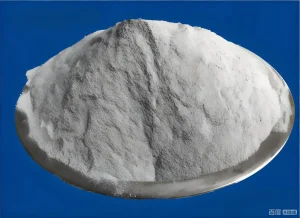

China Specialty Polyether-Low Molecular Weight PET Polyether Factory, Factories

Wholesale Liquid Rubber-Hydroxyl Terminated butyronitrile Rubber (HTBN) Supplier, Factories
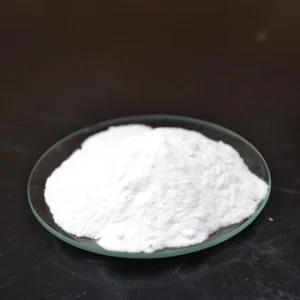
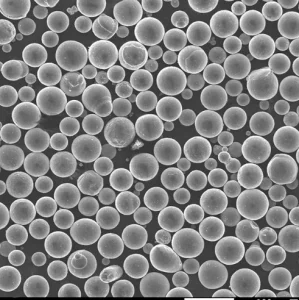
Wholesale Atomized Spherical Aluminum Magnesium Alloy Powder Manufacturer, Factory
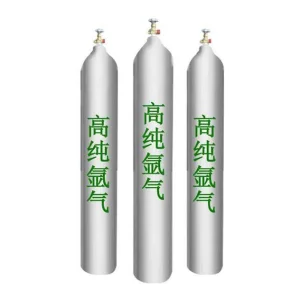

Wholesale Argon gas for electronic industry (Ar) Manufacturers, Suppliers
Insights into procurement, quality verification, and port clearances for Australian commercial buyers.
Connect directly with chemical synthesis directors and export logistics specialists. Request technical specification sheets, comprehensive lot COAs, or volume quotes tailored to your exact manufacturing requirements.
Send Inquiry Now