


Export-grade precursor elements, specialized liquid rubbers, inorganic nitrates, and electronic inert gases engineered for aerospace, electronic etching, and advanced composite synthesis.







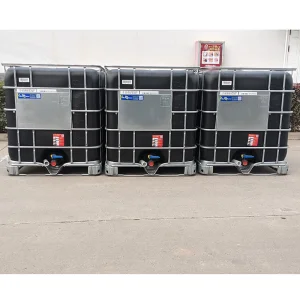
Anhydrous hydrazine (CAS 302-01-2) density serves as the primary inline non-destructive indicator of water contamination, fuel-mass propellant stoichiometry, and energetic payload optimization.
The standard liquid density of high-grade anhydrous hydrazine is precisely 1.0045 g/cm³ at 20°C and 1.011 g/cm³ at 15°C. Any deviation exceeding ±0.0015 g/cm³ typically indicates hygroscopic atmospheric moisture absorption, creating hydrazine monohydrate (N₂H₄·H₂O) complexes which reduce the theoretical specific impulse (Isp) in monopropellant reaction engines.
Hydrazine expands linearly with thermal exposure across typical satellite storage regimes (-5°C to +50°C). Precision propellant loading calculation requires density interpolation through the empirical polynomial: ρ(T) = ρ₀ - α(T - T₀), where the thermal volumetric expansion coefficient α ≈ 0.00097 g/(cm³·°C) governs direct tank ullage pressurization dynamics.
Density consistency prevents selective phase segregation inside high-pressure titanium (Ti-6Al-4V) or 304L/316L stainless steel storage containers. China's top synthesis complexes incorporate ultra-pure electrochemical passivation circuits, curbing catalytic metallic decomposition into ammonia, nitrogen, and hydrogen gases during multi-year storage.
| Temperature (°C) | Absolute Density (g/cm³) | Vapor Pressure (kPa) | Dynamic Viscosity (mPa·s) | Refractive Index (nD20) | Assay Purity Threshold |
|---|---|---|---|---|---|
| 0.0 (Near Freezing) | 1.0253 | 0.68 | 1.32 | 1.4720 | ≥99.2% Standard |
| 15.0 | 1.0112 | 1.44 | 0.98 | 1.4705 | ≥99.5% Military Grade |
| 20.0 (Reference Standard) | 1.0048 | 1.92 | 0.90 | 1.4698 | ≥99.8% Aerospace Spec |
| 25.0 | 0.9998 | 2.53 | 0.83 | 1.4691 | ≥99.8% Aerospace Spec |
| 50.0 | 0.9754 | 9.31 | 0.58 | 1.4632 | ≥98.5% Industrial Precursor |
Anhydrous hydrazine synthesis factories in China are uniquely positioned to bridge international supply constraints, meeting rigid quality specs for aerospace propulsion, agricultural actives, and boiler deoxygenation.
Commercial constellation thrusters (Reaction Control Systems) mandate monopropellant hydrazine of precise density to ensure predictable mass-flow through iridium-coated catalytic beds (Shell 405). Density variations induce chamber acoustic instability and premature thruster degradation.
Global agrochemical conglomerates utilize anhydrous hydrazine as an uncompromising bifunctional nucleophile in synthesizing high-potency heterocyclic ring compounds, such as triazole-class fungicides and pyrazole herbicides, demanding negligible non-volatile residue (NVR).
Supercritical boiler plants implement anhydrous hydrazine solutions for sub-ppb dissolved oxygen scavenging. Volatile zero-solids chemistry eliminates sodium buildup in steam turbine blades while facilitating a stable magnetite (Fe₃O₄) passive layer on boiler tube internals.
The specialty plastics and polymer compounding sector relies on pure hydrazine derivatives (such as azodicarbonamide, ADC) engineered via tight precursor density parameters to achieve microcellular cell density in EVA, PVC, and high-performance polyolefin foams.
How leading Chinese chemical conglomerates overcome azeotropic distillation bottlenecks to deliver consistent liquid density and ppb-level metal impurities.
Oxidation of ammonia using sodium hypochlorite in the presence of methyl ethyl ketone (MEK) yields intermediate ketazine, shielding hydrazine from catalytic over-oxidation and yielding primary hydrazoic streams.
Overcoming the 68.5% water-hydrazine azeotrope via concentrated anhydrous NaOH chemical dehydration or extractive vacuum distillation columns utilizing aniline/toluene solvents.
Continuous closed-loop Coriolis oscillation meters continuously calibrate mass density at ±0.0002 g/cm³, immediately adjusting reflux ratios in the high-vacuum fractional towers to maintain assay ≥99.5%.
Sub-ppm water purge systems fill transport vessels with high-purity nitrogen (99.999%), preventing atmospheric ingress, oxidative decomposition, and vapor-space pressure elevation during sea voyages.
Procuring anhydrous hydrazine requires deep adherence to international safety treaties, dedicated Class 8 (6.1, 3) ISO-tank allocations, and factory audit capabilities.
Shipments leave Chinese port terminals (Ningbo-Zhoushan, Qingdao, Shanghai) in specialized UN 1A1 heavy-gauge 304/316L stainless steel drums (50L, 200L) or dedicated T14/T22 ISO portable tank containers equipped with bursting rupture discs, dual-stage needle valves, and permanent N₂ blanket systems.
Every commercial lot is cleared with batch Certificate of Analysis (COA) specifying density @ 20°C, aniline traces, iron (Fe), chlorides (Cl), non-volatile residue, alongside 16-section multi-lingual GHS SDS, Marine Pollutant Declarations, and End-User Verification documentation.
Quotes are structured on FOB, CFR, or CIF delivery baselines with tiered volume matrices (metric tons per year). Hedging agreements on natural gas and liquid ammonia feedstocks ensure firm pricing protection over standard multi-quarter delivery commitments.
Direct answers concerning specifications, laboratory density validation, export control regulations, and factory handling.
High-purity noble gases, atomized spherical powders for additive manufacturing, and specialty synthetic rubbers manufactured to rigorous ISO 9001:2015 traceability standards.








