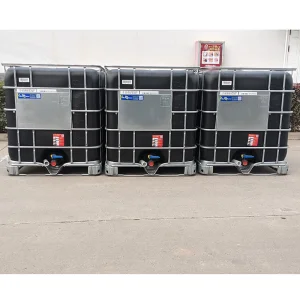
Enterprise portfolio engineered to rigorous international QA/QC benchmarks, supported by complete analytical documentation and global sea/air shipping certifications.
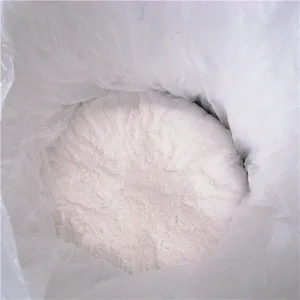
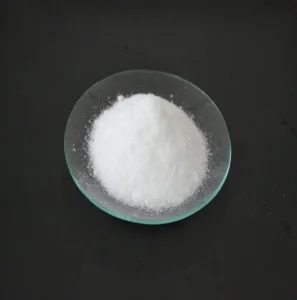


From high-temperature turbine blades to next-generation semiconductor target sputters, chromium powder underpins extreme-environment metallurgy.
Metallic chromium powder (Cr) has emerged as an irreplaceable raw input across mission-critical aerospace, energy transformation, electronics, and hardfacing sectors. Renowned for its superior oxidation resistance, elevated melting threshold (1,907°C), thermodynamic stability, and passivation characteristics against corrosive acids, pure chromium powder operates at the technical frontier of powder metallurgy. Over the last decade, transition from standard aluminothermic flakes to sophisticated vacuum inert gas atomized (VIGA) spherical powders and ultra-pure electrolytic variants has expanded its utility from basic thermal spray overlays to complex additive manufacturing (laser powder bed fusion) and high-density semiconductor sputtering targets.
Widely deployed in HVOF (High-Velocity Oxygen-Fuel) and plasma spray coatings for gas turbine components, boiler tubes, hydraulic rods, and mining equipment where severe abrasive wear and corrosive friction coincide.
Spherical micro-powders (15–45μm and 45–106μm) serve as foundational alloying agents in Oxide Dispersion Strengthened (ODS) superalloys and nickel-chromium matrices fabricated for next-gen rocket propulsion.
High-purity (99.9% to 99.99%) powders consolidated via Hot Isostatic Pressing (HIP) produce targets used to deposit barrier coatings, optical reflections, touch-panel touch sensors, and anti-reflective solar wafers.
Rigorous breakdown of typical physical and chemical specifications across mainstream production routes.
| Classification Grade | Production Route | Purity (Cr Base) | Standard Particle Range | Morphology | Primary Industrial Sector |
|---|---|---|---|---|---|
| Industrial Metallurgical (F-Cr-99) | Aluminothermic Reduction | ≥ 99.0% - 99.2% | -60 mesh, -100 mesh, -200 mesh | Angular / Irregular Flake | Welding consumables, cored wires, master alloys |
| High-Purity Electrolytic (E-Cr-995) | Aqueous Electrowinning & Milling | ≥ 99.5% - 99.8% | -200 mesh, -325 mesh (15–45 μm) | Deformed blocky / Irregular | Friction linings, diamond tools, target synthesis |
| Thermal Spray Grade (TS-Cr-996) | Crushing, Classification & Spheroidizing | ≥ 99.6% | 15–45 μm, 45–106 μm | Sub-angular to semi-spherical | HVOF, APS coatings, automotive valve seats |
| Additive Grade Spherical (AM-Cr-998) | Vacuum Inert Gas Atomization (VIGA) | ≥ 99.8% - 99.9% | 15–53 μm, 20–63 μm | Highly Spherical (Hall Flow ≤ 18s/50g) | LPBF/EBM 3D printing, aerospace components |
| Electronic Pure (EP-Cr-9995) | Vacuum Degassing + Hydrogen Anneal | ≥ 99.95% - 99.99% | -100 mesh to -325 mesh tailored | Clean faceted agglomerate | PVD/CVD sputtering targets, semiconductor microelectronics |
Crucial to engineering design is controlling interstitial gas impurities. Standard aluminothermic powder typically retains oxygen levels of 0.3%–0.6% and nitrogen levels around 0.05%, which can cause embrittlement during sintering. In contrast, vacuum-degassed electrolytic powder and argon-atomized spherical powders undergo multiple refinement phases, driving dissolved oxygen below 500 ppm and nitrogen below 80 ppm. This ensures optimal fracture toughness and full-density consolidation in downstream hot isostatic pressing.
Why Tier-1 international defense, aerospace, and energy contractors partner directly with Chinese manufacturing clusters.
Direct downstream integration with major regional chromite smelting bases ensures continuous raw feed availability, shielding buyers from raw material spot market panics.
Investment in high-capacity continuous vacuum inert gas atomizers (VIGA) and electrode induction melting inert gas atomization (EIGA) guarantees tight particle morphology with minimal batch variances.
Streamlined energy consumption architectures, automated classification loops, and optimized yield recovery rates reduce net processing overhead by 20%–35% compared to European or North American operations.
Chinese tier-1 plants maintain rigorous ICP-MS, LECO oxygen/nitrogen/carbon/sulfur combustion analysis, and laser diffraction (Malvern Mastersizer) particle sizing on every individual lot.
Indicative price structures derived from raw material purity, processing complexity, gas atomization parameters, and packaging standards.
| Material Grade | Purity Threshold | Granulometry / Mesh Size | MOQ | FOB China Indicative Price (USD/kg) | Packaging Medium |
|---|---|---|---|---|---|
| Aluminothermic Flake Powder | 99.0% Cr min | -60 to -100 mesh | 500 kg | $11.50 – $14.20 / kg | 50 kg Steel Drums with inner liners |
| Standard Electrolytic Powder | 99.5% Cr min | -200 mesh (D50 ~ 45μm) | 200 kg | $16.80 – $21.50 / kg | Argon-flushed UN-rated drums |
| Thermal Spray Spheroidized | 99.5% - 99.7% | 15–45 μm / 45–106 μm | 100 kg | $28.00 – $36.00 / kg | 5 kg / 10 kg Vacuum sealed foil bags |
| Spherical AM Grade (VIGA) | 99.8% - 99.9% | 15–53 μm (Laser AM) | 50 kg | $65.00 – $92.00 / kg | Argon-purged anti-static containers |
| Ultra-Pure Target Precursor | 99.95% - 99.99% | Custom D50 20–75 μm | 25 kg | $110.00 – $180.00 / kg | Double-sealed vacuum nitrogen canisters |
Variables Influencing Pricing Adjustments:
1. Raw Chrome Flake & Chromite Ore Rates: Global chromium prices are anchored to South African, Zimbabwean, and Turkish chrome ore supply lines, combined with local industrial power tariffs.
2. Deoxygenation Protocols: Reductions in oxygen content from 2,500 ppm down to below 400 ppm require multi-pass hydrogen annealing furnaces or vacuum degassing, which directly drives processing cost.
3. Yield Loss from Narrow Fractioning: Spherical additive powders targeting exact 15–53 μm cuts typically exhibit only 35%–45% raw atomization yield; off-size fractions must be recycled or redirected into secondary markets, influencing final batch pricing.
Specific metallurgical systems relying on high-reliability Chinese chromium powder feeds.
In heavy drilling tools, continuous casting rolls, and marine engine exhaust valves, chromium powder is blended with cobalt, tungsten, and carbon to produce tough protective matrices capable of resisting galling and molten metal erosion up to 800°C.
Used widely across power utility boilers, gas turbines, and chemical reactor vessels. Chromium powder forms an adhesive, dense protective scale that shields base carbon steels from sulfur dioxide, chlorine, and vanadium pentoxide attack.
Chromium-based interconnect alloys (such as Cr-5Fe-1Y2O3) require ultra-pure, sub-sieve chromium powders. The close thermal expansion match with ceramic electrolytes and exceptional thermal conductivity ensure structural integrity over 40,000 continuous hours.
Navigating environmental standards, logistics compliance, and technical due diligence in cross-border procurement.
Global environmental mandates (including EU REACH) are accelerating investments in closed-loop, emission-free electrowinning facilities across China, completely eliminating harmful hexavalent chromium discharges during synthesis.
Radio-frequency induction plasma spheroidization (RF-IPS) has entered mainstream commercialization in China, enabling cost-effective transformation of irregular electrolytic chromium feedstocks into perfectly spherical powders for aerospace LPBF printing.
Finely divided metallic chromium powder with sub-sieve particles may carry UN Class 4.1 (Flammable Solid) hazard ratings. Qualified Chinese suppliers maintain rigorous UN packaging certifications, full GHS documentation, and export licensing capabilities.
In-depth responses covering sampling, morphology selection, documentation, and international shipping.
Aluminothermic chromium powder is produced via the thermite reduction of chromic oxide with aluminum powder, typically yielding 99.0%–99.2% purity with residual metallic aluminum (0.2%–0.5%) and higher interstitial oxygen. Electrolytic chromium powder is electrowon from pure aqueous electrolyte solutions, yielding 99.5% to 99.99% purity with virtually no metallic inclusions, making it ideal for electronics and advanced superalloys.
Morphology dictates powder feeding stability and in-flight melting behavior. Semi-spherical or agglomerated-sintered powders deliver uniform feeding rates without nozzle bridging, optimizing thermal heat absorption. Highly irregular powders may exhibit irregular drag coefficients and inconsistent melting, leading to higher coating porosity and lower deposition efficiency.
Every commercial production batch is accompanied by an auditable batch Certificate of Analysis (COA) specifying exact trace elemental assay (ICP-MS/OES), interstitial gases (C, S, O, N via combustion analysis), and particle size distribution (D10, D50, D90). Safety documentation includes an updated 16-section GHS Safety Data Sheet (SDS), Packing Inspection Certificate for Dangerous Goods (if classified UN 3089 / 4.1), and Certificate of Origin.
Yes. Chinese Tier-1 manufacturing plants utilize precision dry ultrasonic sieving and centrifugal air classification loops. Custom distributions—such as ultra-narrow cuts (e.g., 20–45 μm, 5–25 μm, or sub-micron master mixes)—can be engineered according to your technical data sheet requirements.
Finely divided metal powders readily chemisorb atmospheric moisture and oxygen. To prevent surface degradation during ocean transit, material is hermetically packaged inside heavy-gauge aluminum foil bags backfilled with high-purity argon gas, then encased in desiccant-loaded steel drums with tamper-evident clamping rings.
Standard catalog mesh cuts (-60, -100, -200 mesh) typically ship within 7–12 business days from existing inventory buffers. Customized gas-atomized spherical powders or ultra-low oxygen degassed runs require 3–4 weeks for atomization, secondary air classification, quality sign-off, and DG maritime inspection clearance.
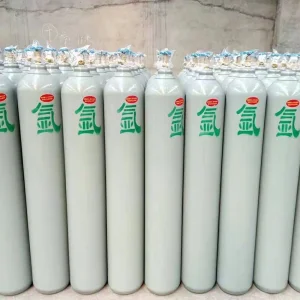
Explore complementary product lines spanning inorganic nitrates, specialty polymers, liquid elastomers, and technical noble gases.