


Explore YANXA's specification-led production spectrum. Each lot undergoes comprehensive chemical assay and particle morphology validation with full traceability.


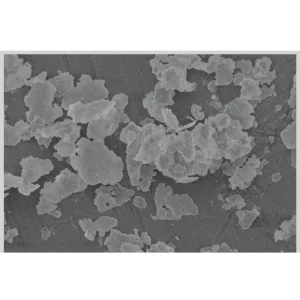
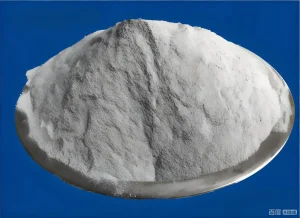
Bridging global inorganic precursor deficits through stable, high-capacity, environmentally compliant iron(III) chemistry synthesis in China.
Global disruptions in nitric acid production and energy price volatility have destabilized Western manufacturing of transition metal nitrates. Chinese integrated chemical clusters allow continuous supply stability through vertically integrated raw acid pipelines and localized iron feedstock, reducing lead times from 16 weeks to less than 21 days for global export.
Advanced semiconductor photolithography etching and high-end battery cathode precursors require iron salts with parts-per-billion (ppb) heavy metal limits. By leveraging multi-stage continuous re-crystallization, our China-based manufacturing isolates iron(III) nitrate nonahydrate crystals free from detrimental copper, zinc, chloride, and sulfate ions.
Navigating cross-border hazardous chemicals requires comprehensive regulatory synchronization. Our export lots are accompanied by verified GHS-compliant Safety Data Sheets (SDS), full EU REACH dossier dossiers, and strictly audited packaging under UN 1466 Class 5.1 oxidizer mandates for international maritime routing.
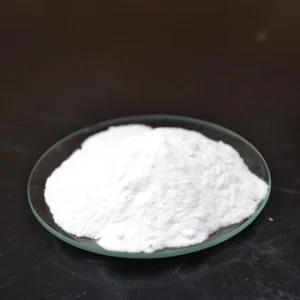
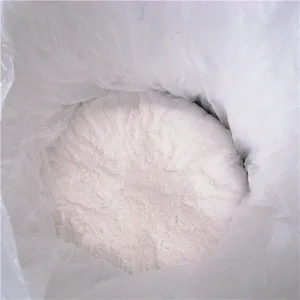
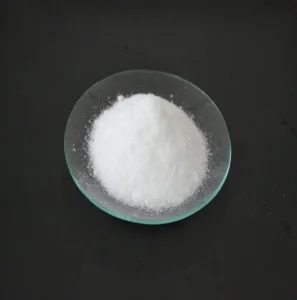
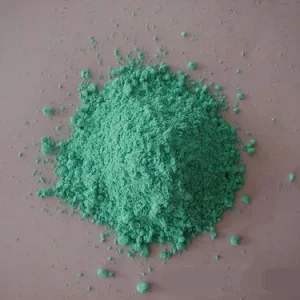
Ferric Nitrate Nonahydrate (CAS: 7782-61-8 | Molecular Weight: 404.00 g/mol) is a light violet to pale lilac monoclinic crystal synthesized through the exothermically controlled dissolution of pure iron in concentrated nitric acid.
| Analytical Parameter | Industrial Grade (Technical) | Reagent Grade (AR Grade) | Electronic / Battery Precursor Grade |
|---|---|---|---|
| Assay [Fe(NO₃)₃·9H₂O] | ≥ 98.0% | ≥ 98.5% – 99.0% | ≥ 99.5% |
| Iron (Fe) Elemental Content | ≥ 13.5% | ≥ 13.8% | 13.8% – 14.1% |
| Chloride (Cl⁻) | ≤ 0.005% (50 ppm) | ≤ 0.001% (10 ppm) | ≤ 0.0005% (5 ppm) |
| Sulfate (SO₄²⁻) | ≤ 0.02% (200 ppm) | ≤ 0.005% (50 ppm) | ≤ 0.002% (20 ppm) |
| Heavy Metals (as Pb) | ≤ 0.005% (50 ppm) | ≤ 0.001% (10 ppm) | ≤ 0.0002% (2 ppm) |
| Water Insoluble Matter | ≤ 0.05% | ≤ 0.005% | ≤ 0.002% |
| Free Acid (as HNO₃) | ≤ 0.5% | ≤ 0.2% | ≤ 0.05% (Strictly Controlled) |
| Melting Point | Approx. 47.2°C (deliquescent) | Approx. 47.2°C (deliquescent) | Approx. 47.2°C (deliquescent) |
The manufacturing process proceeds via the controlled, staged reaction of high-purity iron turnings or reduced iron powder with industrial nitric acid in titanium-clad reactors:
Fe + 4HNO₃ (dilute) → Fe(NO₃)₃ + NO↑ + 2H₂O
Fe(NO₃)₃ + 9H₂O → Fe(NO₃)₃·9H₂O↓ (Crystallization)
Exothermic runaway is prevented by closed-loop refrigerated thermal management. Liberated nitrogen oxides (NOx) are captured through a dual-stage counter-current absorption cascade, regenerating dilute nitric acid for zero-effluent sustainability.
Ferric Nitrate Nonahydrate features a low incongruent melting point at 47.2°C, losing molecules of water of hydration and dissolving in its own crystal water if ambient temperatures are not regulated. It is exceptionally hygroscopic and rapidly deliquesces in environments where the relative humidity exceeds 45%.
Our packaging facilities utilize desiccant-nitrogen flushed cleanrooms with controlled humidity (<30% RH at 18°C) to prevent caking, crystal clumping, and premature phase degradation prior to moisture-barrier containment.
Understanding regional procurement trends, raw material cost drivers, and landed-cost optimization models for international supply chain managers.
Ferric nitrate pricing is heavily tied to upstream ammonia synthesis (for nitric acid) and premium iron ore smelting. With localized coal-to-chemical synthesis routes in China providing lower cost volatility compared to natural gas-based European synthesis, Chinese manufacturers offer a sustained 18% to 32% cost advantage on bulk FOB contracts.
Classified as UN 1466, Class 5.1 Oxidizing Substances, Packing Group III, shipping ferric nitrate necessitates specialized sea freight booking under the International Maritime Dangerous Goods (IMDG) code. We offer dedicated FCL dangerous goods container consolidation from Qingdao, Tianjin, and Shanghai ports directly to Rotterdam, Houston, Busan, and Hamburg.
Demand in North America and Western Europe is increasingly centered on fine-chemical catalysts and ultra-clean electronics etching solutions. Conversely, Southeast Asia and Latin America demonstrate explosive growth in water reclamation and industrial effluent treatment where iron salts supersede traditional aluminum sulfates.
From microchip fabrication lines to municipal water purification plants, ferric nitrate acts as a versatile oxidant, mordant, and synthetic chemical building block.
In high-density semiconductor fabrication, ferric nitrate is the primary oxidant in chemical mechanical planarization slurries for tungsten (W) interconnect etching. It offers exceptional etching uniformity, rapid material removal rates (MRR), and extremely low trace metal contamination, ensuring wafer surface roughness is maintained below 0.2 nm.
Ferric nitrate aqueous formulations provide an eco-friendly, highly selective etchant for copper, silver, and specialty stainless-steel alloys. Unlike ferric chloride, ferric nitrate eliminates hazardous chloride ion stress-corrosion cracking and does not leave corrosive halide residues on treated alloy substrates.
Crucial in petrochemical Fischer-Tropsch synthesis and selective catalytic reduction (SCR) systems. Ferric nitrate serves as the water-soluble precursor for calcined iron oxide nanoparticles (α-Fe₂O₃ and γ-Fe₂O₃), providing tailored pore volume, high surface area (>120 m²/g), and uniform dispersion on silica or alumina supports.
Used widely in high-fastness textile printing and dyeing processes. The iron(III) ion coordinates with natural tannin and synthetic chromophore groups on fibers, producing deep, wash-fast, and light-stable shades while ensuring low fiber embrittlement compared to ferric sulfate mordanting baths.
Industrial effluent standards mandate phosphorus discharge limits below 0.1 mg/L. Ferric nitrate solution efficiently precipitates orthophosphates into insoluble iron hydroxyphosphates while simultaneous biological denitrification benefits from the addition of nitrate as an electron acceptor in anaerobic digestion zones.
In the burgeoning field of lithium iron phosphate (LiFePO₄) and sodium-ion Prussian blue analogues (Na₂-xFe[Fe(CN)₆]), ferric nitrate acts as an ultra-pure liquid iron precursor. Its complete water solubility and clean decomposition during thermal calcination leave zero non-volatile ash residues.
Stringent analytical quality release and international maritime dangerous goods compliance built to satisfy top-tier audit requirements.
Every manufacturing batch produced at YANXA undergoes strict laboratory validation prior to release. Our on-site analytical center utilizes state-of-the-art testing instrumentation:
Retained sample libraries are preserved under humidity-controlled storage for 24 months, ensuring complete batch auditability throughout the global chemical supply lifecycle.
Because Ferric Nitrate Nonahydrate is classified under UN 1466, Class 5.1, standard commercial plastic sacks are legally prohibited for maritime transport. We employ specialized triple-barrier packaging architecture:
Advancing next-generation inorganic chemical engineering through zero-emission synthesis, continuous microchannel reactors, and battery-grade crystal purity.
Transitioning from conventional stirred-tank reactors to modular microchannel reactors. This breakthrough achieves precise control over exothermic reaction residence time, virtually eliminating local overheating, reducing free nitric acid byproduct, and narrowing crystal size distribution (CSD).
Implementation of catalytic scrubbers operating with green hydrogen peroxide (H₂O₂) to completely eliminate NOx chimney plume emissions. The closed loop converts gaseous nitrogen dioxide directly back into high-purity nitric acid, reducing environmental carbon footprint by 42%.
Developing ultra-pure crystal refining lines capable of delivering 99.9999% (6N) purity ferric nitrate for sub-2nm node photolithography slurries and next-generation quantum dot precursors, bypassing conventional recrystallization energy constraints.
Expert answers addressing the real-world operational challenges of procurement officers, chemical plant engineers, and shipping coordinators.
Ferric Nitrate Nonahydrate melts at 47.2°C and is extremely hygroscopic. For trans-equatorial shipments, we utilize insulated shipping containers (Reefer set at 15°C–20°C upon request) or enforce specialized heavy-duty vacuum hermetic bags accompanied by multi-layer active silica gel and montmorillonite clay desiccant packs to maintain relative humidity below 30% inside the pallet envelope.
The distinction lies primarily in insoluble matter, free nitric acid levels, and trace heavy metals. While Industrial Grade allows up to 50 ppm chloride and 200 ppm sulfate, Electronic and AR grades limit chloride to <5 ppm and total heavy metals to <2 ppm. Electronic grade also requires microfiltration to remove sub-micron insoluble particles that could disrupt wafer polishing.
Every commercial consignment is supported by a comprehensive documentation package: GHS-compliant 16-section Safety Data Sheet (SDS), Batch Certificate of Analysis (COA), Certificate of Origin (COO / Form E / Form A), Packing List, Commercial Invoice, Dangerous Goods Declaration (DGD), and certified UN Packaging Test Certificate.
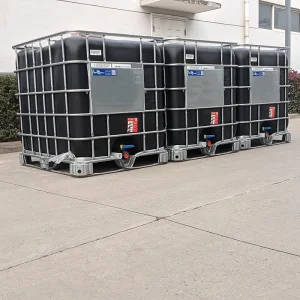
Yes. For large-scale industrial etching plants and municipal water utilities that prefer to avoid dissolving solid crystals on-site, YANXA provides stabilized liquid ferric nitrate (typically 45% to 50% solution) transported in lined ISO tank containers or 1000L intermediate bulk containers (IBC totes).
Our standard MOQ is 1 metric ton (1000 kg) for crystal grades. Standard stock specifications can be dispatched to Chinese ports within 5 to 7 business days. Custom grain size or low-acid specifications require an average manufacturing batch run of 10 to 14 days from contract signing.
Ferric nitrate should be stored in a cool, dry, well-ventilated dedicated chemical warehouse away from combustible organic materials, strong reducing agents, sulfur, and concentrated acids. Ambient temperature must be maintained strictly below 30°C to prevent crystal softening and package ballooning.
YANXA delivers comprehensive materials science sourcing across high-purity gases, liquid rubbers, and specialized inorganic salts from China.
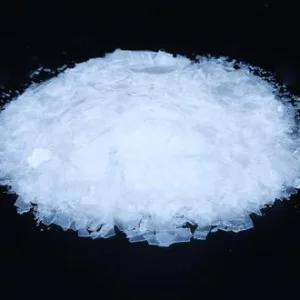

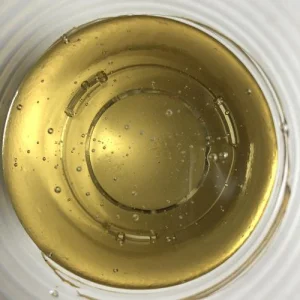


Connect directly with our chemical engineering and hazardous supply chain logistics directors in China. Receive comprehensive COA verification, TDS documents, and firm FOB or CIF freight quotes within 24 hours.
