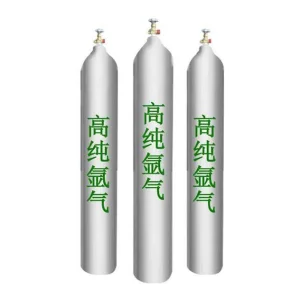
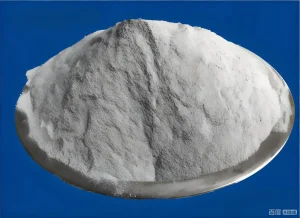
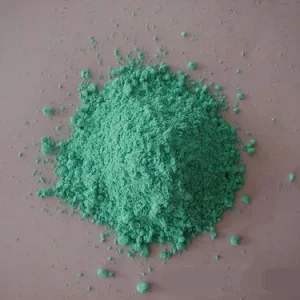
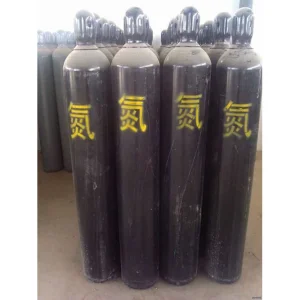
Alongside Ferric Nitrate Nonahydrate synthesis, YANXA provides factory-direct wholesale pricing for precision alloys, specialized polyethers, and ultra-pure noble gases.
Understanding molecular purity, hydration dynamics, and market-driven supply chain demands across North America, the EU, and Asia-Pacific manufacturing clusters.
Iron(III) Nitrate [Fe(NO₃)₃·9H₂O, CAS 7782-61-8], commonly isolated as nonahydrate monoclinic crystals, represents a cornerstone oxidizer and Lewis acid catalyst. Achieving ultra-low heavy metal content (Pb ≤ 5 ppm, As ≤ 2 ppm, Chloride ≤ 10 ppm) dictates operational success in microelectronic wafer planarization and delicate organic synthesis.
Global demand is expanding at an estimated CAGR of 5.8%, catalyzed by high-density lithium battery cathode precursor manufacturing, CMP (Chemical Mechanical Polishing) slurry formulations for sub-7nm semiconductor fabrication, and high-efficiency municipal denitrification catalysts.
Regulated under UN 1466, Class 5.1 (Oxidizing Substances), Packing Group III, the global transboundary shipment of Ferric Nitrate demands rigorous moisture-barrier engineering and compliance with IMDG/IATA mandates to prevent deliquescence and spontaneous oxidation under varying cargo microclimates.
How state-of-the-art closed-loop crystallization, upstream nitric acid synthesis, and deep logistics clusters deliver an unassailable pricing and stability advantage for global enterprises.
Our domestic facilities maintain co-located feed lines for concentrated HNO₃ and high-purity iron scrap/sponge iron. This vertical integration circumvents intermediate transport premiums and shields end-purchasers from the raw material volatility typical of non-integrated western refiners.
Utilizing computerized continuous falling-film crystallization instead of batch evaporators ensures strict control over mother liquor supersaturation. This delivers uniform nonahydrate crystal morphology, eliminating free acid entrapment and preventing clumping during transoceanic shipping.
High throughput synthesis units spanning 50,000 MT per annum output optimize thermal energy utilization. The resulting operational leverage permits YANXA to extend factory quotes 15% to 28% below European and North American baseline distributor margins.
From nanoscale semiconductor polishing to heterogeneous catalysis and textile dyeing, explore how precise grade selection dictates commercial efficiency.
In electronic planarization, ultra-pure Ferric Nitrate functions as a primary oxidant for tungsten (W) and copper (Cu) chemical mechanical planarization slurries. Ultra-trace impurity control eliminates wafer defectivity and catastrophic gate oxide breakdown during nanoscale wafer layering.
Serves as the key aqueous iron precursor for impregnating silica, alumina, and zeolitic catalyst carriers. Critical in the synthesis of Fischer-Tropsch catalysts for synthetic fuel synthesis and Haber-Bosch ammonia decomposition networks where exact surface area dispersion is required.
Provides controllable, aggressive oxidation kinetics for silver, copper, and specialized alloy striping without generating halogenated waste streams. Extensively employed in high-precision aerospace chemical milling and printed circuit board (PCB) fine-pitch circuitry etching.
Acts as an indispensable mordant within technical textile processing and leather tanning, forming stable coordinate covalent bonds with complex polyphenolic dyes to impart maximum UV-fastness and mechanical abrasion resistance across industrial fabrics.
Emerging as an alternative high-solubility iron precursor for next-generation hydrothermal and sol-gel synthesis of Lithium Iron Phosphate (LiFePO₄) nanocrystals, eliminating sulfur contamination inherent to conventional ferrous sulfate synthesis routes.
Employed in critical municipal and industrial wastewater utilities to remediate hydrogen sulfide (H₂S) emissions via rapid sulfide precipitation, simultaneous with phosphate removal via stable ferric hydroxy-phosphate matrix coagulation.
Compare analytical assay boundaries, typical contaminants, and industrial standard compliance parameters to determine the appropriate cost-performance tier for your production line.
| Analytical Parameter | Technical / Industrial Grade | Reagent / Analytical Grade | Electronic / CMP Grade (Ultra-Pure) | Verification Method |
|---|---|---|---|---|
| Assay [Fe(NO₃)₃·9H₂O] | ≥ 98.0% | ≥ 99.0% | ≥ 99.9% | Potentiometric Titration / EDTA |
| Insoluble Matter in H₂O | ≤ 0.01% | ≤ 0.005% | ≤ 0.001% (10 ppm) | Gravimetric Membrane Filter |
| Chloride (Cl⁻) | ≤ 0.005% | ≤ 0.001% | ≤ 0.0002% (2 ppm) | Ion Chromatography (IC) |
| Sulfate (SO₄²⁻) | ≤ 0.02% | ≤ 0.005% | ≤ 0.001% (10 ppm) | Turbidimetric / Spectrophotometry |
| Lead (Pb) & Copper (Cu) | ≤ 0.002% | ≤ 0.001% | ≤ 0.0001% (< 1 ppm) | ICP-MS Spectrometry |
| Free Acid (as HNO₃) | ≤ 0.5% | ≤ 0.2% | ≤ 0.05% | Acid-Base Titration |
| Physical Form | Pale violet / light purple crystals | Deliquescent light-purple crystals | Monoclinic uniform crystal matrix | Visual & Morphological SEM |
Actionable criteria for procurement managers and supply chain directors navigating transboundary hazardous material importation from China.
Because Iron(III) Nitrate Nonahydrate has a low melting point (approx. 47.2°C) and profound hygroscopic affinity, temperature excursions within maritime containers cross oceanic equatorial zones can trigger crystal melting. YANXA resolves this through UN-certified triple-layer hermetic composite barrier bags enclosed in poly-lined HDPE drums with integrated desiccants, guaranteeing solid crystal flowability upon port clearance.
Supply delays typically stem from mismatched dangerous goods declarations. YANXA delivers full IMDG Class 5.1 compliant export dossiers prior to vessel loading: bilingual SDS strictly formulated under GHS Rev. 8/9, verifiable batch Certificate of Analysis (COA), packaging inspection certificates (dangerous packaging approval), and custom HS code classifications (HS 2834.2990).
Critical inquiries resolved by our chemical manufacturing and international logistics teams.
Anhydrous ferric nitrate is thermodynamically unstable and exceedingly difficult to prepare directly from solution because heating drives the loss of nitric acid vapors rather than simple dehydration, producing basic iron nitrates or iron(III) oxide (Fe₂O₃). Commercial and technical operations universally refer to the nonahydrate form [Fe(NO₃)₃·9H₂O] when specifying Ferric Nitrate for industrial, catalyst, or etching applications.
Quotes depend on three primary criteria: purity grade (Industrial 98.5% vs. Ultra-Pure 99.9%), order volume (FCL 20ft containerload vs. LCL consolidation), and packaging type (25kg kraft-poly bags vs. UN-rated plastic drums). Because Iron Nitrate is classified as Class 5.1 Dangerous Goods, freight rates include Class 5.1 surcharge allocations, port hazardous storage assessments, and carrier hazardous declaration approvals.
Iron(III) Nitrate Nonahydrate displays a melting point of approximately 47.2°C and is deliquescent. To guarantee crystalline integrity during transport across high-heat maritime corridors, YANXA utilizes sealed vapor-impermeable internal liners, container humidity absorbing poles, and optional reefer (temperature-controlled) container shipping kept below 25°C upon purchaser request.
Yes. As a primary synthesis factory, YANXA operates secondary recrystalization loops and multi-stage sub-micron filtration lines. We routinely establish custom Quality Assurance Agreements (QAA) restricting specific trace cations (such as Cu, Ni, Cr, Pb) to under 1 ppm for wafer fabrication and precision optical glass applications.
All pilot and trial samples are accompanied by a lot-specific Certificate of Analysis (COA) detailing ICP-OES and titration results, an OSHA/REACH compliant Safety Data Sheet (SDS), and technical application guidelines. Dangerous goods certified courier handling is managed through certified chemical forwarding networks.
Explore YANXA's complementary advanced materials lines for aerospace, metallurgy, high-voltage electrical, and chemical processing facilities.
Inquire directly with YANXA inorganic chemical engineers. Furnish your required purity grade, volume thresholds, and destination seaport for an expedited, fully compliant FOB/CIF pricing proposal within 24 business hours.
Initiate Technical Quote Request