



Integrated sourcing selections from accredited manufacturing facilities across China, inspected and verified under ISO 9001 guidelines.
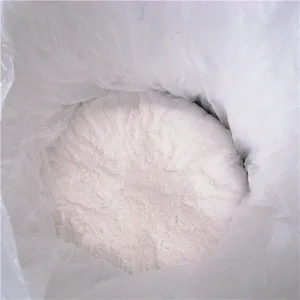





In-depth technical overview of compound characteristics, shifting global supply corridors, and pricing determinants in modern chemical processing.
Lead in its tetravalent oxidation state, represented chemically as Pb(NO3)4, presents high thermodynamic oxidative potential. Unlike common Lead(II) nitrate, tetravalent derivatives require specialized cryo-controlled oxidation reactions, typically using fuming nitric acid systems and anhydrous nitrogen dioxide mediums. The synthesis parameters necessitate strict moisture prevention to inhibit spontaneous hydrolysis into lead dioxide (PbO2) and nitric acid.
International market pricing for Lead(IV) compounds is heavily influenced by the London Metal Exchange (LME) refined lead index, regional environmental audits on nitric acid plants, and dedicated hazardous cargo surcharges. Chinese manufacturers leverage vertically integrated chemical industrial parks (CIPs) to stabilize upstream nitric acid costs, resulting in a predictable FOB cost advantage compared to Western specialty producers.
Demand is driven by high-tech industries requiring selective high-potential oxidizers without chloride contamination. Primary applications include specialty pyrotechnic initiators, functional lead zirconate titanate (PZT) thin films, organometallic lead catalysts, and tailored solid-state battery electrolytes requiring controlled valency dopants.
Comparative technical metrics for procurement professionals. Figures are standard quarterly market indicators subject to volume and packaging requirements.
| Grade Classification | Assay (Pb Equivalent) | Chloride (Cl-) | Iron (Fe) | Typical Packaging | Indicative Price (FOB USD/kg) |
|---|---|---|---|---|---|
| Industrial / Catalytic Grade | ≥ 98.5% | ≤ 0.005% | ≤ 0.002% | 25kg UN Drum with barrier liner | $12.50 – $16.00 |
| Electronic / Precursor Grade | ≥ 99.5% | ≤ 0.001% | ≤ 0.0005% | Inert-gas purged double-sealed drums | $24.00 – $32.00 |
| Ultra-Pure Analytical Grade | ≥ 99.9% | ≤ 0.0002% | ≤ 0.0001% | Fluoropolymer bottles in climate packs | $45.00 – $60.00 |
| Custom Complex Complexes | Per Client Spec | Custom | Custom | Temperature monitored ISO units / IBCs | Custom Quote |
Mitigating supply vulnerabilities, volatility spikes, and hazardous logistics friction through disciplined chemical engineering infrastructure.
Multilateral warehousing in bonded zones across Tianjin, Shanghai, and Qingdao guarantees safety buffer inventories. Dedicated contracts protect international clients from intermittent production disruptions during environmental inspection periods.
Every shipment is accompanied by complete testing datasets including Inductively Coupled Plasma Mass Spectrometry (ICP-MS) impurity profiles, batch Certificate of Analysis (COA), and GHS-compliant 16-section Safety Data Sheets (SDS).
Dangerous goods management adhering to IMDG / IATA specifications. Packaging features anti-static liners, moisture-impermeable gas shielding, and impact-resistant UN-rated outer steel drums to eliminate leakage risks during maritime transit.
Engineers provide customized particle morphology (microspheres, crystalline flakes, or solvated compounds) adjusted to client processing reactors, accompanied by compatibility trial testing and direct engineering consults.
Ensuring frictionless border clearance, strict environmental alignment, and verifiable supply governance for international buyers.
Navigating chemical registration programs including EU REACH (Registration, Evaluation, Authorisation and Restriction of Chemicals) and US TSCA inventories. We supply full documentation concerning SVHC (Substances of Very High Concern) declarations and strictly adhere to downstream exposure scenarios.
Direct integration with certified DG customs brokers in China simplifies documentation. From CIQ inspections, Dangerous Goods Declarations (DGD), to certified Container Packing Certificates (CPC), our processes eliminate customs delays at transshipment hubs.
Our dedicated export teams offer cross-border engineering assistance in English and Chinese, working directly with customer QA and process engineering teams to clarify parameter specifications, lot validation protocols, and storage safe-handling instructions.
Continuous investment in sustainable synthesis, microfluidic reaction engineering, and next-generation electronic materials.
Transitioning from traditional batch vessels to continuous micro-channel reactors. This innovation tightens stoichiometric control over nitric acid consumption, increases thermal dissipation efficiency during oxidation, and delivers narrower particle size distributions with lower defect densities.
Engineering closed-loop scrubbing systems that recycle nitrogen oxides (NOx) and spent acids directly back into the feed-stream. This cuts secondary waste generation by up to 74% and shields downstream buyers from sudden regulatory supply suspensions.
Developing sub-micron and surface-passivated lead oxidizers engineered for emerging perovskite tandem photovoltaics and specialized piezoelectric micro-actuators, unlocking higher carrier mobility and superior structural stability.
Key technical, operational, and commercial questions addressed by our chemical engineering specialists.
The primary difference lies in the oxidation state of the central lead atom. Lead(II) Nitrate, Pb(NO3)2, contains divalent lead and is a stable, water-soluble salt widely utilized in mining flotation, pyrotechnics, and pigment synthesis. In contrast, Lead(IV) Nitrate, Pb(NO3)4, involves tetravalent lead. It possesses exceptional oxidative strength, is far more reactive, readily decomposes upon contact with atmospheric moisture, and requires cryogenic, anhydrous production routes for specialized catalytic and pyrochemical roles.
We provide multiple contracting structures for verified industrial consumers. Clients can execute index-linked supply contracts, fixed-price quarterly agreements, or volume-locked annual framework supply contracts supported by our strategic raw material reserve inventories, insulating downstream procurement budgets from daily metal volatility.
Lead(IV) compounds are designated as hazardous materials, typically classified under UN Model Regulations as Class 5.1 (Oxidizing Substances) with a secondary Class 6.1 (Toxic Substances) risk profile, or under specific toxic inorganic nitrate classifications. All sea transport strictly complies with IMDG Code packaging instructions, utilizing tested UN-certified drums with hazardous cargo documentation.
Yes. Our manufacturing facilities employ controllable crystallizers, jet milling, and inert classification lines. We can tune particle morphology, median diameter (D50 from micro to millimeter grade), and bulk density to match the exact rheological and reactivity demands of your manufacturing formulations.
Every lot is released only after passing QA protocols documented in a comprehensive Certificate of Analysis (COA). Standard evaluations include purity assay via complexometric titration, trace metal contamination profiles via ICP-MS, moisture via Karl Fischer titration, and particle size distribution via laser diffraction.
Qualified corporate accounts can request 100g to 1kg evaluation samples. Samples are packaged in moisture-proof barrier containers and dispatched via licensed dangerous goods courier services, complete with lot-specific COA and SDS to facilitate R&D qualification trials.
Explore complementary specialty materials engineered to strict performance criteria from accredited Chinese manufacturers.







